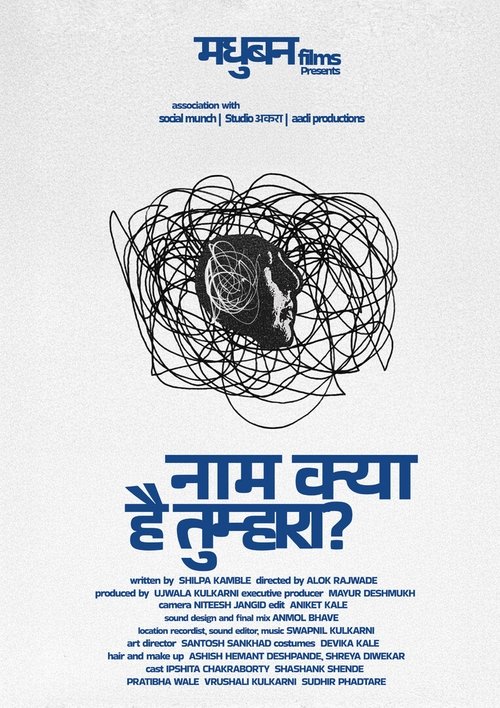
What is Your Name?(2025)
A government job brings Seema Valmiki to Mumbai. On her first day, she hears two remarks: a casteist comment from a female officer and a loud “Jai Bhim” from the liftman.Trying to fit in, Seema hides her surname and avoids the liftman's greetings. But Seema is changed when the liftman is fired for wanting to celebrate Dr. Ambedkar’s birth anniversary.
What is Your Name? (2025) OTT release date is not officially announced yet — GudVibe tracks its streaming availability daily.
Where to watch:Quick Facts
- Theatrical Release
- 7 August 2025
- Director
- Alok Rajwade
- Language
- Hindi
- Runtime
- 18m
Storyline
Seema moves to Mumbai for a government job. She faces a casteist remark and tries to avoid a friendly liftman who proudly says "Jai Bhim." Her perspective changes when the liftman is fired for wanting to celebrate Dr. Ambedkar's birthday.
“A name she hides. A truth she must face.”
Film Details
Parental Guide
Vibe & Tags
Cast & Crew
Trivia
- The film's title is inspired by a common question asked when people first meet, highlighting identity struggles.
- Director Alok Rajwade previously acted in Marathi theatre and cinema before making his Hindi directorial debut.
- The movie was shot on location in Mumbai to capture authentic government office and housing colony settings.
- It explores caste dynamics in urban workplaces, a theme rarely shown in mainstream Hindi dramas.
- The film's release date in 2025 coincides with the 134th birth anniversary of Dr. B.R. Ambedkar.
- The script was developed through workshops with actors to refine dialogues about everyday casteism.
- It avoids using background music in key scenes to emphasize the realism of social tensions.