M. F. Hussain
M. F. Hussain is an Indian director, best known for Tamil cinema. M. F. Hussain began their career in 2000. With 30 credits to their name and an average audience rating of 6.2, M. F. Hussain remains one of the most prolific and celebrated talents in the industry. An emerging voice in Tamil cinema, M. F. Hussain is already attracting significant attention for their distinctive work.
Career Milestones
Film debut
View film →Highest rated: Meenaxi: A Tale of Three Cities (7.3)
View film →Defining Moments
Golden Bear at Berlin
His first film 'Through the Eyes of a Painter' won the Golden Bear at the Berlin International Film Festival.
Controversy and Exile
Faced intense controversy and legal cases over his paintings of Hindu deities, leading to his eventual self-exile from India.
Qatari Citizenship
Accepted Qatari citizenship after living in self-imposed exile.
M. F. Hussain by the Numbers
If you watched every M. F. Hussain film back-to-back, you'd be at it for roughly 4 hours.
Filmography
See all 30 credits →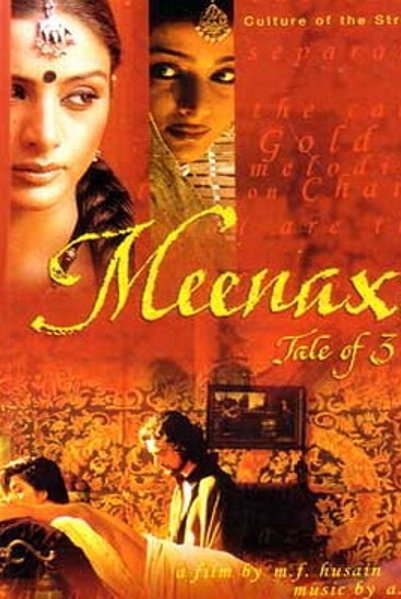
Career Analytics
Language Distribution
Films by Decade
Did You Know?
M. F. Husain was a founding member of the Bombay Progressive Artists' Group in 1947.
He was often called the 'Picasso of India' for his modern and prolific artistic output.
He began his career painting cinema hoardings in Mumbai.
His first solo exhibition was in Zurich in 1952.
He was nominated to the Rajya Sabha, the upper house of Indian Parliament, in 1986.
Legacy & Influence
Maqbool Fida Husain, known as M.F. Husain, was a foundational figure in modern Indian art, and his foray into cinema was a bold, controversial, and influential extension of his artistic vision. While primarily celebrated as the 'Picasso of India' for his paintings, his cinematic work represents a significant, if less prolific, contribution to Indian cultural discourse. His film career was not a commercial pursuit but an avant-garde experiment in translating his painterly aesthetics and thematic preoccupations onto celluloid. His most notable film, 'Through the Eyes of a Painter' (1967), won the National Film Award for Best Experimental Film and the Golden Bear for Best Short Film at the Berlin International Film Festival. This film, devoid of dialogue, was a visual poem that directly applied the principles of his canvas—bold color, form, and movement—to moving images, challenging narrative conventions. His feature-length films, notably 'Gaja Gamini' (2000) starring Madhuri Dixit and 'Meenaxi: A Tale of Three Cities' (2004) starring Tabu, were elaborate, non-linear visual spectacles. They were less traditional stories and more cinematic paintings, exploring themes of feminine divinity, myth, and artistry. These films were critically polarizing; hailed by some as masterpieces of visual art, they were often criticized for being narratively opaque. His cinematic journey was abruptly and tragically curtailed by controversy. His paintings and later his film 'Meenaxi' faced violent protests from certain groups alleging disrespect, leading to legal cases and threats. This compelled Husain to live in exile from 2006 until his death, a period during which he was unable to work freely in India. His legacy in cinema is that of a pioneering interdisciplinary artist who refused to be bound by medium. He demonstrated that a filmmaker could work as a pure visual artist, using the camera as a brush. His films stand as unique, uncompromising artifacts in Indian cinema, expanding its formal language and proving its potential for abstract, painterly expression. They remain essential viewing for understanding the intersection of modern Indian art and film, and a testament to a creative spirit that faced severe persecution for its freedom.