Basu Bhattacharya
Basu Bhattacharya is an Indian director, best known for Tamil cinema. Basu Bhattacharya began their career in 1979. With 30 credits to their name and an average audience rating of 6.5, Basu Bhattacharya remains one of the most prolific and celebrated talents in the industry. Spanning 40+ years, Basu Bhattacharya's career remains one of the longest and most celebrated in Tamil cinema.
Career Milestones
Film debut
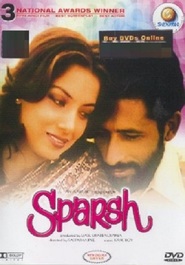
View film →Highest rated: Sparsh (8.1)
View film →Defining Moments
National Film Award for 'Teesri Kasam'
His directorial debut 'Teesri Kasam' won the National Film Award for Best Feature Film, establishing his reputation.
Launch of Marital Trilogy
He began his acclaimed trilogy exploring marital relationships with the film 'Anubhav', starring Sanjeev Kumar and Tanuja.
National Film Award for 'Aavishkar'
His film 'Aavishkar', part of his marital trilogy, won the National Film Award for Best Feature Film in Hindi.
Basu Bhattacharya by the Numbers
If you watched every Basu Bhattacharya film back-to-back, you'd be at it for roughly 11 hours.
Filmography
See all 30 credits →
Career Analytics
Language Distribution
Films by Decade
Did You Know?
Basu Bhattacharya was a prominent Indian film director and screenwriter known for his realistic and introspective films.
He was the son-in-law of legendary filmmaker Bimal Roy, having married his daughter Rinki Bhattacharya.
Bhattacharya was a key figure in the Indian parallel cinema movement of the 1970s.
He founded the film production company 'Bimal Roy Productions' after his father-in-law's death.
His film 'Teesri Kasam' (1966), starring Waheeda Rehman and Raj Kapoor, won the National Film Award for Best Feature Film.
Legacy & Influence
Basu Bhattacharya was a significant figure in Indian parallel cinema, renowned for his intimate, psychologically nuanced explorations of marital relationships and urban middle-class life. Emerging in the late 1960s, his work stood in stark contrast to the mainstream musical melodramas of the time, offering a stark, realistic, and often minimalist aesthetic. His career trajectory is defined by a trilogy of films on marital discord—"Anubhav" (1971), "Avishkaar" (1974), and "Griha Pravesh" (1979)—which are considered landmark studies of relationship dynamics. These films, often featuring powerful performances from actors like Sanjeev Kumar and Sharmila Tagore, delved into themes of alienation, communication breakdown, and existential angst within marriage, presented with a quiet, observational style. His contribution lies in expanding the thematic and formal vocabulary of Hindi cinema, bringing a European art-house sensibility to Indian narratives. He prioritized character interiority over plot, using silences, domestic spaces, and everyday rituals to build tension and meaning. While not a prolific filmmaker, his focused oeuvre influenced later directors interested in realist domestic dramas. His film "Teesri Kasam" (1966), though directed by his brother Basu Chatterjee, was produced by him and is celebrated as a poetic classic. Bhattacharya's work remains a crucial reference point for the Indian New Wave, cementing his legacy as a sensitive chronicler of the human heart and its quiet disillusionments within the confines of social structures.