Vijaya Mehta
Vijaya Mehta is an Indian director, best known for Tamil cinema. Vijaya Mehta began their career in 1986. With 30 credits to their name, Vijaya Mehta remains one of the most prolific and celebrated talents in the industry. Spanning 40+ years, Vijaya Mehta's career remains one of the longest and most celebrated in Tamil cinema.
Career Milestones
Film debut
View film →Highest rated: Pestonjee (7.5)
View film →Iconic Roles
Rao Saheb
A complex role that earned her the National Film Award for Best Actress.
Savithri
Portrayal of the pioneering social reformer and educator.
Mohan Joshi Hazir Ho!
A role in a satirical film about the legal system, directed by Saeed Akhtar Mirza.
Defining Moments
National Film Award for Best Actress
Won the award for her performance in the Marathi film 'Rao Saheb'.
Padma Shri Award
Received the Padma Shri for her contributions to Indian theatre and cinema.
Director of National School of Drama
Appointed as the director of the prestigious National School of Drama, shaping a generation of theatre artists.
Vijaya Mehta by the Numbers
If you watched every Vijaya Mehta film back-to-back, you'd be at it for roughly 7 hours. Most-paired with Anupam Kher — 2 films together.
Filmography
See all 30 credits →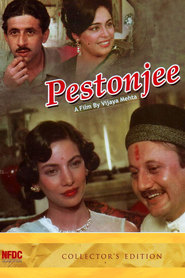
Collaboration Network
Career Analytics
Language Distribution
Films by Decade
Top Co-Actors
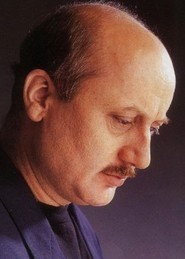
See all →Vijaya Mehta has worked most frequently with Anupam Kher (2 films).
Did You Know?
Vijaya Mehta is a renowned Indian actress and director in Marathi and Hindi theatre and cinema.
She co-founded the theatre group Rangayan with playwright Vijay Tendulkar and actor Arvind Deshpande.
She received the Padma Shri, India's fourth-highest civilian award, in 1988.
She served as the director of the National School of Drama (NSD) in New Delhi.
She is known for her pioneering work in experimental and modern Indian theatre.
Legacy & Influence
Vijaya Mehta is a foundational figure in modern Indian theatre and a significant presence in parallel cinema. Her career trajectory is marked by a pioneering synthesis of experimental stagecraft with cinematic storytelling. She co-founded the avant-garde theatre group Rangayan in Mumbai in the 1960s alongside playwrights like Vijay Tendulkar and Arvind Desai, which became a crucible for the New Indian Theatre movement, challenging conventional narratives and forms. Her directorial transition to film is most famously marked by 'Rao Saheb' (1986), a critically acclaimed work that deconstructed the memory and legacy of a deceased patriarch through a non-linear, feminist lens. The film won the National Film Award for Best Feature Film, establishing her as a formidable film director. Her earlier film 'Smriti Chitre' (1974) was also a notable experiment. In cinema, she is equally recognized for her powerful acting, particularly in Shyam Benegal's seminal work 'Mandi' (1983), where her portrayal of the shrewd madam, Rukmini Bai, became iconic. Her contributions extend to administration, having served as the Chairperson of the National School of Drama (1981-84) and the Director of the Nehru Centre in London, where she fostered cultural exchange. Her legacy lies in breaking barriers between stage and screen, championing actor-driven, text-based narratives, and mentoring generations of artists in both theatre and independent film. She is revered as a bridge between the radical Indian theatre of the post-independence era and the realism of Indian parallel cinema.