Shankar-Suresh
Shankar-Suresh is an Indian director, best known for Tamil cinema. Shankar-Suresh began their career in 2017. With 30 credits to their name, Shankar-Suresh remains one of the most prolific and celebrated talents in the industry. An emerging voice in Tamil cinema, Shankar-Suresh is already attracting significant attention for their distinctive work.
Career Milestones
Film debut
View film →Highest rated: Inayathalam (4.7)
View film →Shankar-Suresh by the Numbers
If you watched every Shankar-Suresh film back-to-back, you'd be at it for roughly 2 hours.
Filmography
See all 30 credits →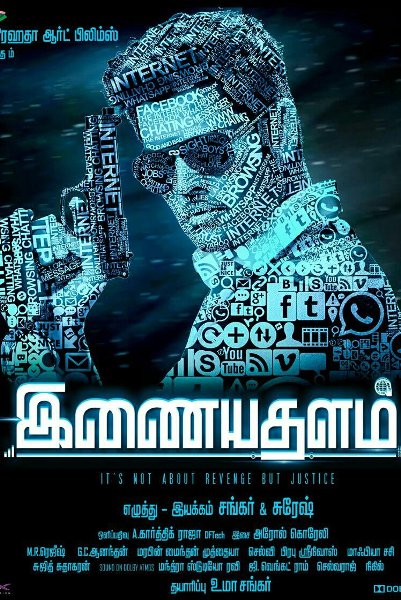
Career Analytics
Genre Breakdown
Language Distribution
Films by Decade
Legacy & Influence
Shankar-Suresh, the acclaimed Tamil film director duo, have made a monumental impact on Indian cinema, particularly in the Tamil film industry, since their debut in the 1990s. Their career trajectory is defined by a pioneering fusion of grandiose visual spectacle, cutting-edge technology, and strong social messages within mainstream commercial frameworks. Directors Shankar and Suresh Krishn, though often referred to collectively, are primarily driven by the vision of director Shankar, with Suresh Krishn serving as a key creative collaborator and producer. Their films revolutionized the technical standards of South Indian cinema, introducing and popularizing advanced computer-generated imagery (CGI), elaborate set designs, and sophisticated action sequences on an unprecedented scale. Landmark films like 'Indian' (1996) and 'Mudhalvan' (1999) established their signature style of embedding sharp socio-political critiques—targeting corruption, systemic injustice, and bureaucratic inefficiency—within high-octane entertainment. This formula made complex themes accessible to mass audiences. Their contribution extends to launching and elevating the careers of major stars and technicians, while consistently pushing the industry's production values. Films like 'Boys' (2003) tackled contemporary youth issues, and 'Anniyan' (2005) became a cultural phenomenon for its unique narrative on dissociative identity disorder and societal apathy. Their pan-Indian appeal was solidified with blockbusters like 'Robot' (Enthiran, 2010) and '2.0' (2018), which were among the most expensive and technically ambitious projects in Indian cinema history, blending science fiction with indigenous storytelling. Their work has inspired a generation of filmmakers to pursue larger-than-life concepts without sacrificing narrative substance, cementing their legacy as masters of the cinematic spectacle who consistently used the mass medium as a platform for provocative social commentary.