Shankha Ghosh
Shankha Ghosh is an Indian director, best known for Tamil cinema. Shankha Ghosh began their career in 2018. With 30 credits to their name, Shankha Ghosh remains one of the most prolific and celebrated talents in the industry. An emerging voice in Tamil cinema, Shankha Ghosh is already attracting significant attention for their distinctive work.
Career Milestones
Film debut
View film →Defining Moments
Sahitya Akademi Award
Awarded the Sahitya Akademi Award for his poetry collection 'Babarer Prarthana'.
Padma Bhushan
Conferred the Padma Bhushan by the Government of India for his contributions to literature and education.
Jnanpith Award
Received the Jnanpith Award, India's highest literary honor, for his lifetime contribution to Bengali literature.
Shankha Ghosh by the Numbers
If you watched every Shankha Ghosh film back-to-back, you'd be at it for roughly 4 hours.
Filmography
See all 30 credits →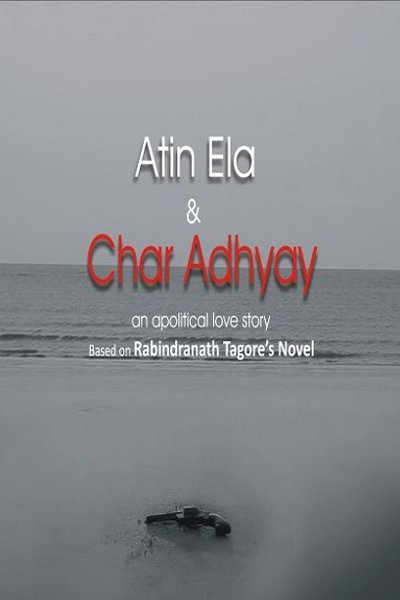
Career Analytics
Language Distribution
Films by Decade
Did You Know?
Shankha Ghosh was a renowned Bengali poet and literary critic.
He was awarded the Sahitya Akademi Award in 1977 for his poetry collection 'Babarer Prarthana'.
He received the Padma Bhushan, India's third-highest civilian award, in 2011.
He was honored with the Jnanpith Award, India's highest literary honor, in 2016.
He served as a professor at several universities, including Jadavpur University and Visva-Bharati University.
Legacy & Influence
Shankha Ghosh was a revered Bengali poet, critic, and academic, not a film industry professional. His primary and monumental contributions were to Bengali literature, where he is celebrated as one of the most significant poets of the post-Tagore era. His influence on Indian cinema, while indirect, was profound and cultural. His poetry, characterized by its intellectual depth, humanism, and engagement with contemporary social and political realities, became a rich source for filmmakers and composers. Numerous renowned directors, including Satyajit Ray, Mrinal Sen, and Rituparno Ghosh, adapted his poems or used them as songs in their films, lending a lyrical and philosophical weight to the cinematic narrative. His work provided a voice to the Bengali middle-class consciousness, exploring themes of alienation, urban life, and existential quest, which resonated deeply with the parallel cinema movement. As a literary critic and scholar, his essays and analyses shaped intellectual discourse around art and culture, influencing how narratives were constructed and perceived. While he did not have a filmography, his words were cinematically immortalized, making him a foundational cultural figure whose textual legacy continuously informs and enriches the artistic landscape of Bengali and, by extension, Indian cinema. His role was that of a poet whose verses transcended the page to become an integral part of the region's auditory and visual heritage.