Revathy S. Varma
Revathy S. Varma is an Indian director, best known for Tamil cinema. Revathy S. Varma began their career in 2006. With 30 credits to their name, Revathy S. Varma remains one of the most prolific and celebrated talents in the industry. An emerging voice in Tamil cinema, Revathy S. Varma is already attracting significant attention for their distinctive work.
Biography
Revathy S. Varmha is an Indian director working across Tamil, Malayalam, and Hindi cinema, best known for her debut feature film June R (2006), a Tamil family drama starring Jyothika and Khushbu Sundar. Her filmography includes June R (2006), Aap Ke Liye Hum (2011), and Maad Dad (2013). She began her career writing scripts for commercials at age 16 and had directed over 480 commercials by 2005, bringing a strong visual storytelling background to feature films. June R was based on a real incident from her own life, centering on a mother-daughter relationship, reflecting her tendency to draw from personal experience for her narratives.
Career Milestones
Began directing TV commercials in New Delhi
Feature film directorial debut
View film →Malayalam film directorial debut
Revathy S. Varma by the Numbers
If you watched every Revathy S. Varma film back-to-back, you'd be at it for roughly 2 hours.
Filmography
See all 30 credits →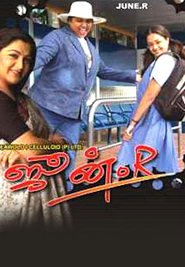
Career Analytics
Language Distribution
Films by Decade
Legacy & Influence
Revathy S. Varma is a distinguished Indian film editor whose career has been defined by a meticulous and artistically sensitive approach to storytelling. Primarily associated with Malayalam cinema, she has forged a long-standing and critically acclaimed collaboration with director Adoor Gopalakrishnan, a partnership that has significantly shaped the aesthetic and narrative rhythm of some of Indian parallel cinema's most revered works. Her editing is not merely technical but deeply interpretative, characterized by a deliberate, contemplative pace that allows the psychological depth of characters and the weight of social themes to unfold with profound impact. This is evident in seminal films like 'Mathilukal' (1990), 'Vidheyan' (1993), and 'Nizhalkkuthu' (2002), where her precise sense of timing and structure is integral to their power. Her work extends beyond this iconic partnership, contributing to notable films by other directors such as 'Perumthachan' (1991) and more contemporary works like 'Munnariyippu' (2014). By championing an editing style that prioritizes emotional truth and narrative integrity over conventional pacing, Revathy has played a crucial role in defining the 'slow cinema' movement within Indian arthouse filmmaking. Her career demonstrates how an editor functions as a co-author of the film's final form, using rhythm, juxtaposition, and silence as essential narrative tools. Her influence is seen in the respect and creative authority accorded to editors in serious Indian cinema and in inspiring a generation of filmmakers to value the editorial process as a core creative endeavor, not just a technical finality.