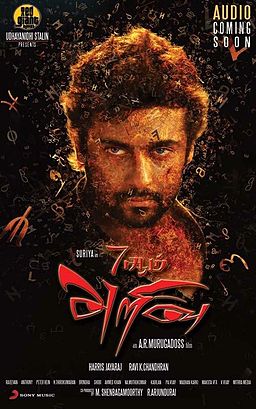
7aam Arivu Full Story Explained (2011)
Imagine a virus so deadly it could wipe out an entire country. Now imagine the only person who can stop it is a circus performer who doesn't even know his own power. That's the wild ride of 7aam Arivu, a 2011 Tamil sci-fi action film directed by A.R. Murugadoss. Suriya plays two roles — the ancient monk Bodhidharma and his modern-day descendant Aravind, a shy trapeze artist. Shruti Haasan plays Subha, a genetics student who discovers the connection. The film pits ancient wisdom against modern bioterrorism, with a Chinese mercenary named Dong Lee threatening to unleash a biological war on India. It's a story about rediscovering lost knowledge, facing your fears, and the power of the seventh sense — the ability to unlock your full potential.
A deadly virus returns
In modern-day Chennai, a Chinese mercenary named Dong Lee injects a virus into a stray dog. This is no ordinary virus — it's the same ancient plague that Bodhidharma cured 1,500 years ago. Lee works for the Chinese government, and his mission is called Operation Red. He plans to start a biological war against India. The dog becomes a walking time bomb, carrying a disease that has no modern cure.
Full Plot
The film opens in 6th century India. Bodhidharma, a prince of the Pallava dynasty, becomes a Buddhist monk. His guru sends him to China to stop a deadly epidemic from spreading to India. The Chinese initially mock him as a barbarian. But when Bodhidharma cures a sick girl and defeats the local bullies, they begin to worship him. He teaches them medicine, hypnotism, and martial arts — skills that later become the foundation of Shaolin kung fu. After many years, Bodhidharma wants to return to India. But the Chinese villagers, fearing their village will lose his protection, poison him and bury him near a temple. He accepts his death willingly.
In modern-day Chennai, a Chinese mercenary named Dong Lee arrives with a mission called Operation Red. He works for the Chinese government, and his goal is to start a biological war against India. Lee injects a virus into a stray dog — the same ancient plague that Bodhidharma once cured. The virus begins spreading through the city.
Meanwhile, Subha Srinivasan is a genetics student researching Bodhidharma. She discovers that if she can find a living descendant of Bodhidharma, she can revive the monk's skills through DNA matching. She finds that descendant in Aravind, a shy trapeze artist working at the Great Bombay Circus. Aravind has no idea about his royal bloodline. He lives with his uncle and aunt and struggles with his feelings for Subha.
Subha approaches Aravind for help, but he doesn't trust her. A year earlier, Subha had visited his family pretending to be someone else to gather information for her research. When Aravind discovers this lie, he feels betrayed. But eventually, he forgives her and agrees to help. They begin working together to unlock Bodhidharma's powers inside Aravind.
Dong Lee learns about Subha's research and decides to eliminate everyone involved. He discovers that Aravind is Bodhidharma's descendant. Lee tries to hypnotize Aravind, but it fails — Aravind's mind is too strong. This makes Lee even more determined to kill him.
Subha and Aravind discover that Subha's own professor is working with Lee. The professor sold his country for money. They break into his apartment and learn the details of Operation Red. But the professor betrays them again, and Lee tracks them down. Lee kills two of their friends — Malathi and Imran. The group barely escapes in a van, but Lee catches them. Aravind is knocked unconscious.
Just when all hope seems lost, Aravind awakens with the full power of Bodhidharma. He fights Lee in an epic battle and kills him. Then he uses an ancient herbal medicine from Bodhidharma's book to cure the virus. Aravind marries Subha, and together they hold a press conference. Aravind tells the world that Indian history and ancient knowledge are valuable — they can save lives even today.
Characters
Bodhidharma / Aravind
Played by Suriya
Suriya plays two roles. Bodhidharma is a 6th-century Pallava prince who becomes a monk. He travels to China, cures an epidemic, and teaches martial arts and medicine. Aravind is his modern-day descendant, a shy circus trapeze artist who doesn't know his own power. By the end, Aravind fully awakens Bodhidharma's abilities and uses them to stop a biological attack. He marries Subha and becomes a public advocate for Indian history.
Subha Srinivasan
Played by Shruti Haasan
Subha is a genetics student who discovers the link between Bodhidharma and Aravind. She is smart, determined, and willing to lie to achieve her goals. She approaches Aravind for help and eventually earns his trust. She helps him unlock his powers and stop Operation Red. In the end, she marries Aravind.
Dong Lee
Played by Johnny Trí Nguyễn
Dong Lee is a Chinese mercenary with powerful hypnotic abilities. He works for the Chinese government and leads Operation Red — a plan to start a biological war against India. He is ruthless and kills without hesitation. He tracks down Subha and her friends, murdering two of them. He is finally killed by Aravind in their final battle.
Professor Rangarajan
Played by Ramanathan
Professor Rangarajan is Subha's genetics professor. He secretly works with Dong Lee for money. He helps Lee by providing information about Subha's research. When caught, he pretends to help Subha but betrays her again. He survives the film but is exposed as a traitor.
Malathi
Played by Dhanya Balakrishna
Malathi is one of Subha's friends who helps her in the mission. She is part of the group that hides in the research centre. Dong Lee tracks her through her phone and kills her. Her death is a turning point that raises the stakes.
Imran
Played by Saahil Chitkara
Imran is another friend of Subha. He helps her and Aravind in their mission. He is also tracked and killed by Dong Lee. His death, along with Malathi's, shows how dangerous Lee is.
Themes
Rediscovering history
The film argues that ancient knowledge is still valuable. Bodhidharma's medicine and martial arts are not outdated — they can solve modern problems like a biological attack. Aravind's journey is about rediscovering his heritage and using it to save lives. The ending message is clear: we must respect our past.
The seventh sense
The title refers to the seventh sense — the ability to unlock your full potential. Aravind starts as a shy circus performer, but when he awakens Bodhidharma's powers, he becomes a hero. The film suggests that everyone has hidden abilities waiting to be unlocked. It's about believing in yourself.
Good vs evil science
Science can be used for good or evil. Subha uses genetics to save lives. The professor uses science for money and betrayal. Dong Lee uses biology as a weapon. The film shows that knowledge itself is neutral — it's how you use it that matters.
Sacrifice and duty
Bodhidharma sacrifices his life to save China from disease. Aravind risks his life to stop Operation Red. Both characters put duty above personal safety. The film celebrates selflessness and the idea that one person can make a difference.
Ending Explained
The ending of 7aam Arivu is both action-packed and emotional. Aravind, after being knocked unconscious, finally awakens Bodhidharma's full power. He fights Dong Lee in a brutal battle that involves martial arts, hypnotism, and superhuman strength. Aravind kills Lee with a single powerful strike, ending the threat of Operation Red. He then uses an ancient herbal medicine from Bodhidharma's book to cure the virus that has been spreading through Chennai. The cure works instantly, saving countless lives. After the battle, Aravind marries Subha. They hold a press conference where Aravind speaks to the media. He tells them that Indian history is not just stories — it contains real knowledge that can save lives. He urges everyone to respect and study their heritage. The film ends with Aravind smiling, finally proud of his identity as Bodhidharma's descendant. The message is clear: the past is not dead. It lives in us, and it can guide us through the darkest times.
Frequently Asked Questions
The film is inspired by the real historical figure Bodhidharma, a Buddhist monk who traveled from India to China in the 6th century. He is credited with bringing Zen Buddhism and martial arts to China. However, the modern-day plot about a biological attack and a circus performer descendant is completely fictional.
The seventh sense refers to the ability to unlock your full hidden potential. In the film, Aravind awakens Bodhidharma's powers through DNA memory. It represents the idea that ancient knowledge and skills can be revived and used in the modern world.
Suriya played both Bodhidharma and his descendant Aravind. He wore special makeup and blue contact lenses to look like the historical monk. Suriya trained in martial arts and watched videos of Osho to capture the calm, mystical quality of Bodhidharma.
Yes, the film was a commercial success. It grossed over ₹100 crore worldwide, making it Suriya's first film to cross that mark. It was the third highest-grossing Tamil film at the time of its release. However, it received mixed reviews from critics.
Yes, the film faced criticism for historical inaccuracies about Bodhidharma. Buddhist scholars pointed out that the film showed him as a young man when he was actually 150 years old when he reached China. They also said the film ignored his role in spreading Buddhism and focused too much on martial arts and medicine.