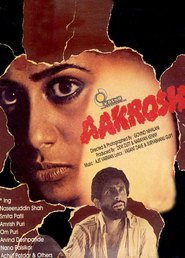
Aakrosh Full Story Explained (1980)
Imagine a man so broken by the world that he stops speaking. That is Bhiku Lahanya. Aakrosh (1980) is a Hindi legal drama directed by Govind Nihalani. It stars Om Puri as Bhiku, a silent tribal peasant. Naseeruddin Shah plays his lawyer, Bhaskar Kulkarni. The film shows how the powerful crush the weak. Bhiku is framed for murder. But the real crime is what was done to him first. This is a story about injustice, silence, and the final scream of a man who has nothing left to lose. It is based on a true incident from a local newspaper. The film won the National Award for Best Feature Film in Hindi. It will shake you to your core.
The Silent Man Screams
Bhiku Lahanya stands by a burning funeral pyre. It is his father's body. Police guards watch him, his hands in chains. He sees the foreman staring at his young sister. The same foreman who raped his wife. Bhiku knows what will happen next. He cannot stop it. So he picks up an axe. He kills his own sister to save her from a worse fate. Then he screams into the sky. This is the first sound he has made in the entire film.
Full Plot
Aakrosh tells the story of Bhiku Lahanya, a poor tribal peasant. He lives in a small village in Maharashtra. He works as a daily laborer for wealthy landowners. His wife Nagi works beside him. They are barely surviving. The local foreman notices Nagi. He wants her. One day, when Bhiku is away, the foreman rapes Nagi. She is devastated by the shame. She cannot live with the pain. She commits suicide by hanging herself. The foreman then frames Bhiku for her murder. Bhiku is arrested and thrown in jail. He does not speak a single word. He is too traumatized to explain what happened. The police beat him. They try to force a confession. But Bhiku remains silent. He has learned that his voice does not matter. The powerful never listen to him. A young lawyer named Bhaskar Kulkarni arrives to defend Bhiku. Bhaskar is from the city. He believes in the law. He thinks he can win the case with evidence. He starts investigating. He finds out about the rape. He discovers that the foreman is a known predator. Other women have been attacked. But no one dares to testify. The landowners control everything. They pay off the police. They threaten the witnesses. Bhaskar brings his evidence to court. The public prosecutor, Dusane, fights him at every step. Dusane is on the side of the rich. The judge is biased. The case seems hopeless. While Bhiku is in prison, his father dies. The police escort Bhiku to the funeral in handcuffs. At the cremation ground, Bhiku sees his young sister. She is standing alone. The foreman is also there. He looks at her with the same lustful eyes. Bhiku realizes what will happen. His sister will be raped next. The system will not protect her. No one will stop the foreman. Bhiku makes a desperate choice. He grabs an axe from the funeral pyre. He walks to his sister and kills her with one blow. He does this to save her from a worse fate. The police and villagers are shocked. They try to arrest him again. But Bhiku does not resist. He drops the axe. He looks up at the sky. He opens his mouth and screams. It is the first sound he has made in the entire film. The scream is filled with rage, grief, and despair. Bhaskar watches in horror. He understands why Bhiku did it. But the law cannot accept this. Bhiku is now a murderer. Bhaskar realizes the system is broken. It never gave Bhiku a chance. It only punished him for being poor. The film ends with Bhiku's scream echoing. It is a cry against the injustice of the world.
Act Breakdown
The Crime and the Arrest
We meet Bhiku and his wife Nagi. They are poor tribal laborers. The foreman rapes Nagi. She commits suicide. Bhiku is framed for her murder. He is arrested. He does not speak. Bhaskar Kulkarni arrives to defend him. The stage is set for the courtroom drama.
The Investigation Begins
Bhaskar starts investigating. He learns the truth about the rape. He finds witnesses. He brings evidence to court. But the system fights him. The prosecutor Dusane blocks everything. The judge is biased. Bhaskar realizes the case is rigged. The tension builds towards a breaking point.
The Funeral and the Murder
Bhiku's father dies. Bhiku is taken to the funeral in chains. At the cremation ground, he sees the foreman staring at his sister. He realizes she will be next. He makes a desperate choice. He kills his sister with an axe. He screams for the first time. The act changes everything.
The Final Scream
Bhaskar watches the murder in horror. He understands why Bhiku did it. But the law cannot accept it. Bhiku is now a murderer. Bhaskar realizes his fight was pointless. The system is broken. The film ends with Bhiku's scream echoing. It is a cry against the injustice of the world.
Characters
Bhiku Lahanya
Played by Om Puri
Bhiku is a poor tribal peasant. He works as a laborer for wealthy landowners. He is a quiet and hardworking man. His wife Nagi is raped by the foreman. She commits suicide. Bhiku is framed for her murder. He is so traumatized that he does not speak for almost the entire film. In the end, he kills his own sister to save her from the same fate. He then screams in rage and grief. He is a symbol of the voiceless poor.
Bhaskar Kulkarni
Played by Naseeruddin Shah
Bhaskar is a young, idealistic lawyer from the city. He comes to defend Bhiku in court. He believes in justice and the law. He fights hard to prove Bhiku's innocence. He discovers the truth about the rape. But he fails to win the case. He watches Bhiku kill his sister. He realizes the system is corrupt. He loses his faith in justice by the end. He is a man who learns the painful truth about power.
Nagi Bhiku
Played by Smita Patil
Nagi is Bhiku's wife. She is a loving and hardworking woman. She is raped by the foreman while Bhiku is away. She is filled with shame and trauma. She cannot bear the pain. She commits suicide by hanging herself. Her death is the event that sets the entire story in motion. She appears only in flashbacks. But her suffering is the heart of the film.
Dusane
Played by Amrish Puri
Dusane is the public prosecutor. He is a powerful and cunning man. He works with the landowners and the foreman. He uses the law to protect the rich. He fights against Bhaskar in court. He suppresses evidence and intimidates witnesses. He is not a cartoon villain. He is a man who has made peace with the system. He represents the institutional corruption of the judiciary.
Bhonsle
Played by Mohan Agashe
Bhonsle is the chairman of the Zilla Parishad. He is a local politician. He is allied with the landowners and the foreman. He uses his power to influence the case. He pressures the police and the court. He represents the political corruption that keeps the poor oppressed. He is a calm and calculating man.
Bhiku's Sister
Played by Bhagyashree Kotnis
She is Bhiku's young sister. She is innocent and vulnerable. She lives with Bhiku and Nagi. After Nagi's death, she is alone. At their father's funeral, the foreman looks at her with lust. Bhiku sees this. He kills her with an axe to save her from being raped. She is a tragic victim of the cycle of violence.
Scene Highlights
The Rape of Nagi
This scene is shown in a flashback. The foreman enters Bhiku's hut. Nagi is alone. He rapes her. The scene is not graphic. But the horror is clear. We see Nagi's face. She is broken. This act sets the entire tragedy in motion. It is the crime that the system ignores.
The Courtroom Confrontation
Bhaskar presents his evidence in court. He names the foreman as the real criminal. Dusane objects. The judge dismisses the evidence. Bhaskar argues passionately. But he is overruled. The scene shows the power of the system. Truth does not matter. Only power matters.
The Funeral Pyre
Bhiku stands by his father's burning body. He is in handcuffs. Police guards surround him. He sees his sister. He sees the foreman. He makes a decision. He picks up the axe. The scene is slow and tense. We know what is coming. But we cannot look away.
The Killing of the Sister
Bhiku walks to his sister. She looks at him with trust. He raises the axe. He kills her with one blow. The sound is sharp. The blood is visible. The police rush to stop him. But it is too late. Bhiku drops the axe. He has done the unthinkable.
The Final Scream
Bhiku looks up at the sky. He opens his mouth. He screams. It is a long, raw, animal sound. It contains all his pain. It is the first sound he has made. The camera stays on his face. The scream does not stop. It is the most powerful moment in the film.
Cast & Context
Aakrosh brought together three titans of Indian parallel cinema. Om Puri, Naseeruddin Shah, and Amrish Puri were all at the peak of their powers. Om Puri had already impressed in films like Aakrosh and later Ardh Satya. Naseeruddin Shah was known for his intense method acting. Amrish Puri was famous for his villainous roles. This was their first major collaboration in a film that demanded raw, naturalistic performances. The casting was perfect. Each actor brought a deep understanding of their character's psychology. The film became a landmark for all three careers.
Themes
The Silence of the Oppressed
Bhiku does not speak for almost the entire film. He has learned that his voice has no power. The powerful never listen to him. His silence is not weakness. It is a survival mechanism. When he finally screams at the end, it is more powerful than any words. The film shows how the system silences the poor.
Corrupt Justice System
The court is not a place of truth. It is a tool of the powerful. The judge is biased. The prosecutor lies. The police beat confessions out of innocent men. Bhaskar believes in the law. But he learns that the law protects the rich. The film is a harsh critique of the Indian judicial system.
Cycle of Violence
Violence begets more violence. The foreman rapes Nagi. This leads to her suicide. Bhiku is framed and imprisoned. He then kills his sister to prevent another rape. The system creates this cycle. The poor have no legal way to escape. They are forced into desperate acts. The film asks: who is really responsible?
Caste and Class Oppression
Bhiku is a tribal man. He is at the bottom of the social ladder. The landowners, the foreman, and the politicians are upper caste and rich. They treat Bhiku like an animal. They exploit his labor. They take his wife. They take his freedom. The film shows how caste and class are used to crush the poor.
Loss of Innocence
Bhaskar arrives as an idealist. He believes in justice. He leaves as a broken man. He has seen the truth. Bhiku's sister is a child. She is killed to protect her innocence. The film shows how the world destroys innocence. There is no happy ending. Only pain and loss.
Music & Soundtrack
ComposerAjit Varman
The music of Aakrosh is sparse but powerful. The song 'Kanha Re' is a haunting folk melody. It reflects the pain of the tribal community. 'Tu Aisa Kaisa Mard' is a sharp, satirical song. It is performed as a street corner nautanki dance. The music does not distract from the story. It enhances the mood of despair and anger.
Similar Films
Also directed by Govind Nihalani and starring Om Puri. It explores police corruption and the violence of the system. The tone is similarly dark and realistic.
Written by Vijay Tendulkar. It deals with the oppression of women in a feudal society. The theme of power and helplessness is very similar to Aakrosh.
A Shyam Benegal film about the exploitation of dairy farmers. It shares Aakrosh's focus on class struggle and the voice of the poor.
Another Govind Nihalani film. It deals with the horrors of the Partition. The raw depiction of violence and human suffering is similar to Aakrosh.
Ending Explained
The ending of Aakrosh is devastating. Bhiku is at his father's funeral. He is in handcuffs. He sees the foreman staring at his young sister. He knows exactly what will happen. The foreman will rape her. The system will not stop him. Bhiku cannot let that happen. He grabs an axe from the burning pyre. He walks to his sister. He kills her with one blow. He does it to save her from a life of suffering. The police and villagers are frozen in shock. Bhiku drops the axe. He looks at the sky. He opens his mouth and screams. It is the first sound he has made in the entire film. The scream is pure rage and grief. It is a cry against God, against society, against everything. Bhaskar watches from a distance. He understands. He knows that Bhiku is not a monster. He is a victim pushed to the edge. The film ends with the scream echoing. There is no resolution. There is no justice. The message is clear: the system failed Bhiku completely. It left him with no choice. The final scream is the voice of every oppressed person who was never heard.
Aakrosh is not an easy watch. It is slow, bleak, and deeply disturbing. But it is also one of the most powerful Indian films ever made. If you want a happy, entertaining movie, look elsewhere. If you want to see a masterpiece of social realism, watch this. Om Puri's silent performance is unforgettable. Naseeruddin Shah brings genuine passion. The film's critique of the justice system is still relevant today. The only weakness is the slow pace. Some viewers may find it difficult. But the payoff is worth it. This is essential viewing for anyone who loves serious cinema.
Frequently Asked Questions
Yes, Aakrosh is based on a real incident. The story was inspired by a small news item on page seven of a local newspaper. The film's writer, Vijay Tendulkar, used this real event to create the story of Bhiku. The film is a fictionalized version, but the core injustice is real.
Bhiku does not speak because he is deeply traumatized. He has been oppressed his entire life. He has learned that his voice has no power. The powerful never listen to him. His silence is a powerful symbol of the voiceless poor. When he finally screams at the end, it is his only way to express his rage.
Aakrosh won several major awards. It won the National Film Award for Best Feature Film in Hindi. It also won the Golden Peacock Award for Best Film at the 8th International Film Festival of India. Naseeruddin Shah won the Filmfare Award for Best Actor. Om Puri won the Filmfare Award for Best Supporting Actor.
Aakrosh was directed by Govind Nihalani. It was his debut feature film as a director. He was already a well-known cinematographer. He had worked on films like Nishant and Manthan. Aakrosh established him as a major director of Indian parallel cinema. He later made other classics like Ardh Satya and Tamas.
Aakrosh is a Hindi word. It translates to 'Outrage' or 'Cry of Anguish' in English. The title perfectly describes the film. It is about the outrage of a man who has been pushed too far. It is also about the cry of the oppressed. The title captures the raw emotion of the story.