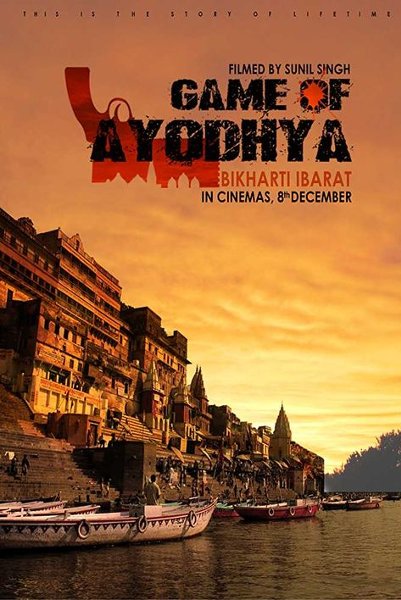
Game Of Ayodhya Full Story Explained (2017)
Imagine a love story caught in the middle of a fire. That is 'Game of Ayodhya' (2017). This Hindi film is set against the real-life Ram Temple-Babri Mosque conflict. It shows how riots broke out and fear took over every home. The movie follows a couple whose love is tested by hatred and violence between communities. Directed by Sunil Singh, it stars Ravi Kishan, Arun Bakshi, Abhay Bhargava, and Makrand Deshpande. They play people trying to find love and peace in a divided town. The film asks a simple question: can love survive when the world around you is burning? It is a raw, emotional story that feels real and urgent.
Love in a Burning Town
A young couple holds hands in a narrow lane. But their joy is short-lived. Shouting crowds fill the streets nearby. Stones fly through the air. The couple's families belong to different faiths. And the Ram Temple-Babri Mosque dispute has turned their town into a war zone. This is the world of 'Game of Ayodhya'.
Full Plot
'Game of Ayodhya' is a love story set during the Ram Temple-Babri Mosque riots in Ayodhya. The film opens with a young man, played by Ravi Kishan, falling in love with a woman from a different community. Their love is pure and simple. But the town around them is anything but peaceful. The Ram Temple-Babri Mosque dispute has sparked violent riots. Fear grips every household. Neighbors turn against each other. The streets are filled with angry mobs and broken glass. The young man and his love try to meet in secret. But the hatred between their communities makes every meeting dangerous. Both families are against the relationship. The woman's family locks her inside the house. The young man's relatives tell him to stay away. But the couple refuses to give up. They believe love can conquer hate. The violence escalates as the riots spread across Ayodhya. Shops are burned. People are beaten. The police struggle to control the mobs. The young man and his love continue to meet in hidden corners. But their secret is at risk. A friend or relative betrays them. The woman's family finds out about the meetings. She is beaten and locked away. The young man is chased by an angry mob. He barely escapes with his life. He is left alone and broken. His family has disowned him. He cannot see his love. He sits in a ruined temple, crying. He wonders if love was ever worth this pain. He thinks about leaving Ayodhya forever. But then he finds strength. He decides to fight back. Not with violence, but with courage. He finds a way to reach his love. He speaks to her through a broken wall. They promise to wait for each other. The riots slowly calm down. The film shows that even in the darkest times, love can find a crack of light. The couple holds on to hope. The ending shows them standing together in a ruined street. They have lost their homes, their families, and their peace. But they have each other. The message is clear: love is stronger than hate. But the cost is heartbreaking. The final shot shows Ayodhya's broken walls. The couple walks away, hand in hand, into an uncertain future. The film sums up with a message that is relevant to today's time. It reminds us that love can survive even the worst divisions.
Act Breakdown
Love in a Divided City
We meet the young couple in Ayodhya. They fall in love despite belonging to different communities. The Ram Temple-Babri Mosque riots are just beginning. Fear starts to spread through the town. The couple tries to keep their relationship a secret from their families.
The Riots Explode
The violence escalates. Shops are burned and people are beaten. The couple's families find out about their relationship. The woman is locked inside her house. The young man is chased by a mob. The betrayal happens, and hope seems lost. The film reaches its darkest point.
Fighting for Love
The young man is alone and broken. He sits in a ruined temple and cries. But he finds the courage to fight back. He finds a way to reach his love through a broken wall. They promise to wait for each other. The riots slowly begin to calm down.
Walking Away Together
The couple meets in the ruined street. They have lost everything: their homes, families, and peace. But they have each other. They walk away hand in hand into an uncertain future. The final shot shows the broken walls of Ayodhya. The message is that love is stronger than hate.
Characters
Young Man
Played by Ravi Kishan
He is a young man from one community in Ayodhya. He falls in love with a woman from the other side. His heart is full of hope, but his world is full of hate. He wants to build a future with her, but the riots make it almost impossible. In the end, he chooses love over fear and walks away with her.
Young Woman
Played by Arun Bakshi
She is the love interest of the young man. She belongs to a different community. Her family locks her inside the house when they find out about the relationship. She is beaten and isolated. But she never stops loving him. She waits for him and holds on to hope until the end.
Family Members
Played by Abhay Bhargava, Makrand Deshpande
They are the parents and relatives of the young couple. They are deeply affected by the riots. They refuse to accept the relationship because of the community divide. They lock their children away and disown them. They represent the fear and hatred that the riots create.
The Betrayer
Played by Sunil Singh
This character is a friend or relative of the young man. He betrays the couple by telling the woman's family about their secret meetings. His actions lead to the woman being beaten and locked away. He represents how the riots turn even close people into enemies.
Scene Highlights
The Secret Meeting
The young couple meets in a narrow lane at night. They whisper to each other, afraid of being seen. The tension is high because the riots are getting worse. This scene shows their love and their fear. It is a quiet moment in a loud, violent world.
The Betrayal
A friend or relative tells the woman's family about the secret meetings. The family storms into her room. She is beaten and locked away. The young man is chased by an angry mob. This scene is shocking and painful. It shows how the riots turn people against each other.
The Broken Wall
After the betrayal, the young man finds a way to reach his love through a broken wall. They speak to each other through the crack. They promise to wait. This scene is full of hope and sadness. It shows that love can find a way even in the darkest times.
The Final Walk
The couple walks together through the ruined streets of Ayodhya. The riots are over, but the town is broken. They have lost everything. But they hold hands and walk away. This scene is the emotional climax of the film. It leaves the audience with a feeling of hope mixed with loss.
Cast & Context
The film features Ravi Kishan in the lead role. Ravi Kishan is a well-known actor in Hindi, Bhojpuri, and Tamil cinema. He has acted in over 750 films. He is also a Member of Parliament. His presence brings a sense of authenticity to the film. Arun Bakshi, Abhay Bhargava, and Makrand Deshpande are experienced character actors. They have appeared in many Hindi films and TV shows. Their performances add depth to the family roles. The casting is notable for using actors who are known for playing grounded, real characters.
Themes
Love vs. Hate
The film shows love trying to survive in a world full of hate. The young couple loves each other, but the riots and community hatred threaten to tear them apart. The movie asks if love can be stronger than the hate that divides people. The ending suggests that love can win, but at a great cost.
Community Division
The Ram Temple-Babri Mosque issue has split Ayodhya into two warring sides. Neighbors become enemies. Families turn against their own children. The film shows how this division destroys lives and relationships. It is a powerful reminder of how politics can poison everyday life.
Fear and Courage
Fear grips every household in the film. People are afraid of the mobs, the police, and their own neighbors. But the young couple shows courage. They meet in secret despite the danger. They refuse to give up on each other. The film celebrates small acts of bravery in the face of overwhelming fear.
Loss and Sacrifice
The couple loses everything: their homes, their families, and their peace. They sacrifice their old lives for love. The film does not shy away from showing the pain of this loss. It reminds us that love sometimes requires giving up everything you have.
Music & Soundtrack
The music in 'Game of Ayodhya' is used to heighten the emotional moments. The songs are placed randomly, according to some reviews, and do not always fit the scenes. The background score tries to capture the tension and sadness of the riots.
Similar Films
Both films deal with the pain of division and the impact of communal violence on ordinary people's lives.
Both films are set in Uttar Pradesh and explore themes of caste and community division in modern India.
Both films tackle the subject of communal tension and the fear that grips a city after a terrorist or riot situation.
Ending Explained
The film ends with the young couple standing together in a ruined street. The riots have finally calmed down, but Ayodhya is broken. The young man and his love have lost their homes and their families. They have been disowned and beaten. But they have each other. They walk away hand in hand into an uncertain future. The final shot shows the broken walls of Ayodhya. The message is clear: love is stronger than hate. But the cost is heartbreaking. The director leaves the audience with a feeling of hope mixed with sadness. The couple's survival is a victory, but it is a victory that came at a terrible price. The film reminds us that even in the darkest times, love can find a way. But it also shows that division and hatred leave deep scars that take a long time to heal.
'Game of Ayodhya' is a film with a powerful subject. It tries to show how love can survive even the worst communal violence. The story is emotional and the message is important. But the execution is weak. The acting, cinematography, and music are all poorly done. The script feels amateurish. If you are interested in the Ram Temple-Babri Mosque issue, you might find the subject compelling. But for most viewers, this film will be a frustrating watch. It is not worth your time unless you are a very curious student of Indian cinema. Skip this mess and watch a better film on the same topic.
Frequently Asked Questions
Yes, the film is set against the real-life Ram Temple-Babri Mosque dispute. The riots and fear shown in the movie are based on actual events that happened in Ayodhya and other parts of India. The love story is fictional, but the backdrop is real.
The film was directed by Sunil Singh. He also wrote the script. This is one of his directorial works. The film was produced by Saroj Entertainment.
The film has a runtime of 2 hours and 28 minutes, which is 148 minutes. It is a full-length feature film.
The film was shot on location in Ayodhya, Uttar Pradesh, India. The real streets and buildings of the city were used to create an authentic backdrop for the story.
The film has an IMDb rating of 7.1 out of 10 based on 12 user ratings. It has received mixed reviews, with some praising its subject and others criticizing its execution.