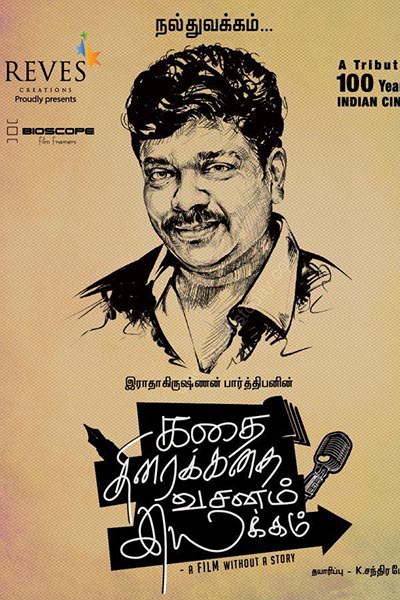
Kathai Thiraikathai Vasanam Iyakkam Full Story Explained (2014)
Imagine you want to make your first movie. But you have no story. That is exactly the problem Tamizh faces. This 2014 Tamil film is written and directed by Radhakrishnan Parthiban. It stars Santhosh Prathap as Tamizh, Thambi Ramaiah as Seenu, and Vijay Ram as Murali. The movie is special because it is a film about making a film. It shows the real struggles, arguments, and dreams of people in the cinema industry. The tagline says it all: 'A film without a story.' And yet, it tells a very honest and emotional tale about friendship, art, and life itself.
A filmmaker with no story
Tamizh wants to direct his first film. But he has no script ready. He feels stuck and frustrated. His personal life is also a mess. He calls his friends to help him write a story. This meeting changes everything.
Full Plot
Tamizh is a young man who wants to become a film director. He has no money and no script. But he has a dream. He calls his friends to his house for a script discussion. The group includes Seenu, an old man who has been trying to direct a film for 40 years. Murali is a cinematographer who thinks he knows everything. Three young assistant directors also join. They are Aravind, Murthy, and another unnamed assistant. Tamizh's girlfriend Daksha is also around. She supports him but is tired of his obsession.
The meeting starts with excitement. Everyone shares their ideas. But soon, the arguments begin. Seenu believes only old-style cinema works. Murali wants fancy camera work. The young assistants want modern, trendy stories. Tamizh wants something in between. They cannot agree on anything. The discussion becomes a mess. Personal insults fly. Seenu feels his 40 years of experience are ignored. The young assistants feel bullied. Murali is arrogant about his craft.
Meanwhile, Tamizh's personal life is falling apart. He owes money to people. His relationship with Daksha is strained. She wants him to be practical. He wants to chase his dream. They fight often. Tamizh feels trapped between his ambition and his responsibilities. He starts to doubt himself. He wonders if he is even good enough to be a director.
The group takes a break. They go out and meet various people from the industry. They see actors, producers, and technicians. Everyone has a story of struggle and failure. Tamizh realizes that the film industry is full of broken dreams. But he also sees that every successful filmmaker started exactly where he is now. This gives him hope.
Back at the house, the discussion resumes. This time, it is calmer. They start talking about their own lives. Seenu shares his regrets. Murali talks about his fears. The young assistants speak about their hopes. Tamizh listens. He realizes that their real lives are more interesting than any fictional story. He decides to make a film about exactly this — a group of people trying to make a film.
In the final act, Tamizh makes peace with Daksha. He apologizes for being selfish. She agrees to support him one more time. Seenu, Murali, and the assistants also agree to work together. They drop their egos. They decide to make a film about their own script meeting. The movie ends with Tamizh shouting 'Action!' and the camera rolling. The audience realizes that the film they just watched is the film Tamizh made. It is a meta-film. A story about the struggle to tell a story.
Characters
Tamizh
Tamizh is the main character. He is a young aspiring director with a big dream. He wants to make a meaningful film but has no script. He gathers his friends to help him. By the end, he finds his story in his own life.
Seenu
Seenu is an old man who has been trying to direct a film for 40 years. He is full of experience but has never succeeded. He is stubborn and believes in old-school cinema. He argues with everyone but eventually joins Tamizh's project.
Murali
Murali is a cinematographer. He is confident and sometimes arrogant about his skills. He wants the film to look perfect. He clashes with Seenu over creative choices. In the end, he agrees to work as a team.
Daksha
Daksha is Tamizh's girlfriend. She is practical and worried about their future. She loves Tamizh but is tired of his obsession with filmmaking. She almost leaves him. But she stays and supports him in the end.
Aravind
Aravind is one of the three young assistant directors. He is eager and full of modern ideas. He represents the new generation of filmmakers. He learns to respect the older generation's experience.
Murthy
Murthy is another assistant director. He is quiet but passionate. He observes more than he speaks. He adds a calm voice to the chaotic discussions. He is part of the team that finally makes the film.
Themes
The struggle of art
The film shows how hard it is to create art. Tamizh and his friends argue, fight, and almost give up. Making a film is not just about creativity. It is about money, ego, and patience. The movie shows the real, ugly side of the creative process.
Friendship and ego
The group of friends cannot agree because of their egos. Seenu thinks his experience matters most. Murali thinks his skill matters most. The young assistants think their new ideas matter most. Only when they drop their egos do they succeed. Friendship wins over pride.
Life imitates art
The movie is a meta-film. The characters are making a film about making a film. Their real lives become the story. This theme shows that the best stories come from real experiences. You do not need to invent drama. Life itself is dramatic enough.
Chasing dreams
Tamizh refuses to give up his dream even when everything is hard. He has no money, no script, and a strained relationship. But he keeps going. The film celebrates the courage to chase your passion, even when the world says no.
Ending Explained
The ending of Kathai Thiraikathai Vasanam Iyakkam is clever and emotional. After all the arguments, Tamizh finally understands what his film should be about. He realizes that the story was never outside. It was inside the room all along. The story is about five people trying to write a story. Tamizh apologizes to Daksha. She forgives him and agrees to support his dream one last time. Seenu, Murali, and the assistants also make peace. They decide to work together without ego. The final scene shows Tamizh sitting behind a camera. He looks at his friends. He takes a deep breath. Then he shouts 'Action!' The camera starts rolling. The audience suddenly understands that the entire movie we just watched is the film Tamizh made. It is a perfect loop. The director, Radhakrishnan Parthiban, leaves us with a powerful message: sometimes the most honest story is the story of your own struggle. The ending is hopeful. It says that dreams can come true if you are willing to fight for them, even when you have no idea what you are doing.
Frequently Asked Questions
No, it is not a true story. But it is based on the real experiences of many filmmakers in the Tamil film industry. The struggles shown in the movie are very real and relatable.
The tagline says it is a film without a story because the main character cannot find a story to tell. But ironically, the movie itself has a very clear story about the struggle to create art.
Many famous actors appear as guest stars. They include Arya, Vijay Sethupathi, Vishal, Amala Paul, Prakash Raj, Taapsee Pannu, and Vimal. They play themselves or small roles.
The title translates to 'Story, Screenplay, Dialogue, Direction' in English. These are the four key elements of filmmaking. The title itself tells you what the movie is about.
The movie has a U/A certification in India. It deals with adult themes like relationship struggles and financial problems. Some dialogues are mature. It is better suited for older teenagers and adults.