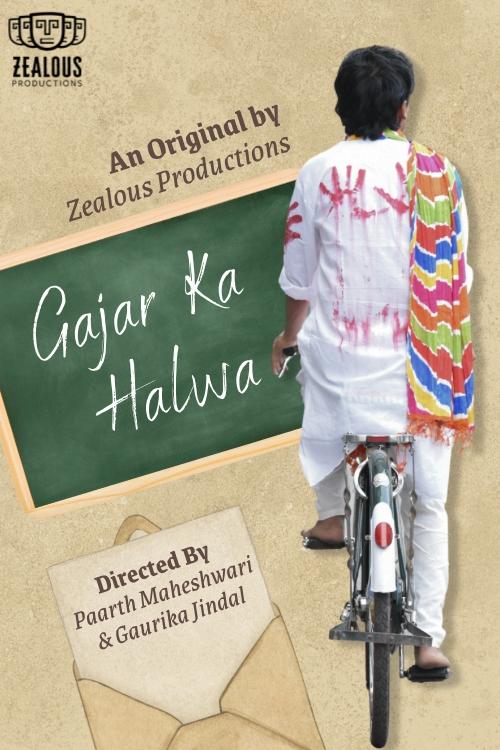
गाजर का हलवा(2025)
Set in 1948, a year after independence, Gajar Ka Halwa is a deeply personal tale of love, loss, and the invisible scars of Partition. In the fictional town of Navkot, a father and daughter, Ardaas and Baani, wait for the return of Harman, their wife, and mother, whilst clinging onto hope through letters and a simple recipe that carries memories of home. But this is no ordinary story. Told through the voice of Laqeer, a personified boundary burdened by the weight of separation, the film explores the quiet aftermath of the Partition- not just the displacement, but the lingering absence, the unanswered letters, the daunting secrets, and the wounds that time cannot heal. With poetry, music, and unforgettable characters, Gajar Ka Halwa is a poignant reflection on love that lingers- warm, wistful, and bittersweet, just like the first bite of something once familiar yet forever changed.
गाजर का हलवा (2025) OTT release date is not officially announced yet — GudVibe tracks its streaming availability daily.
Where to watch:Quick Facts
- Theatrical Release
- 20 March 2025
- Language
- Hindi
- Runtime
- 1h
Storyline
In 1948, a father and daughter wait for their missing wife and mother to return after the Partition of India. They hold onto hope through her letters and a special family recipe. The story is told from the unique perspective of the border itself, which carries the heavy burden of all the separation and loss.
“A border witnesses a family's wait for a lost love.”
Film Details
Parental Guide
Vibe & Tags
Cast & Crew
Trivia
- The film's narrator is a personified boundary named Laqeer, a unique creative choice to represent Partition's lingering pain.
- Director Paarth Maheshwari reportedly used family recipes to create the gajar ka halwa shown in key emotional scenes.
- The fictional town of Navkot was built as a full-scale set to avoid modern visual elements, capturing 1948 authentically.
- Many background actors in crowd scenes were descendants of families directly affected by the 1947 Partition.
- The film's score incorporates a rare, nearly forgotten folk instrument from the Punjab region to evoke memory and loss.
- Principal photography was completed in just 42 days, a tight schedule to maintain the film's intimate, focused atmosphere.
- Several props, including vintage postal letters, were sourced from private collectors of Partition-era memorabilia.