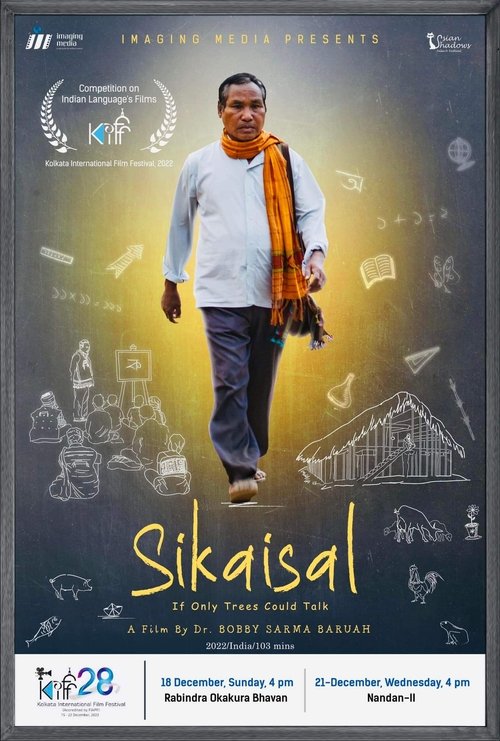
If Only Trees Could Talk(2022)
The story is set in Ulukunchi of West Karbo Anglong. Sikaisal is a dream built by Maheshwar Patar who had tasted the fruits of knowledge in his native land. His journey begins as a sole primary school teacher. He sees a ray of hope when the school gets recognition from the government and he retires peacefully. His dream is shattered when he understands that education was never the priority for the people of his native land. The film has been made in Tiwa language.
If Only Trees Could Talk (2022) OTT release date is not officially announced yet — GudVibe tracks its streaming availability daily.
Where to watch:Quick Facts
- Theatrical Release
- 19 December 2022
- Director
- Bobby Sarma Baruah
- Language
- Hindi
- Runtime
- 1h 42m
Storyline
A teacher builds a school in his remote village and feels hopeful when it earns government approval. After he retires, he is heartbroken to realize his community never truly valued education.
“When a teacher's dream meets a village's silence.”
Film Details
Parental Guide
Vibe & Tags
Cast & Crew
Trivia
- The film is entirely in the Tiwa language, a lesser-known indigenous language of Assam, making it a rare cinematic representation.
- Director Bobby Sarma Baruah is known for her work in Assamese cinema, and this is one of her projects focusing on indigenous communities.
- It was shot on location in Ulukunchi, West Karbi Anglong, using local non-professional actors for authenticity.
- The film highlights the real-life challenges of education in remote tribal areas of Assam, based on true events.
- It had a very limited theatrical release, primarily in Assam, focusing on festival circuits and regional audiences.
- The movie's title metaphorically refers to the silent witnesses (trees) to the community's struggles and dreams.
- It was produced with support aimed at preserving and promoting the Tiwa language and culture through cinema.