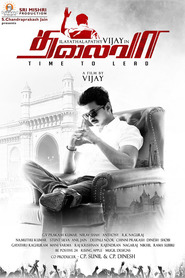
Thalaivaa Full Story Explained (2013)
Imagine a son who runs away from his father's dangerous world, only to be pulled back into it. That's the heart of Thalaivaa, a 2013 Tamil action thriller starring Vijay as Vishwa. The film released on August 9, 2013, and it's packed with emotion, violence, and family loyalty. Directed by A. L. Vijay, this movie shows how a simple Australian boy becomes a powerful leader in Mumbai's slums. It's not just about fights — it's about a father's love and a son's duty. You will cry, cheer, and feel every punch.
A son runs from destiny
Vishwa lives a happy life in Australia. He dances, he laughs, and he loves his girlfriend. But his father sends him away to keep him safe. Vishwa has no idea his father is a mafia don in Mumbai.
Full Plot
The film opens in 1988 with the death of Varadarajan Mudaliar, the king of Dharavi. His murder sparks a violent power struggle between rival gangs. Sathyaraj plays a powerful don who wants to keep peace, but his enemies want total control. He decides to send his son Vishwa away to Australia to protect him from this bloody world.
Vishwa grows up in Sydney as a happy, carefree young man. He runs a dance group and falls in love with Mithra, played by Amala Paul. They plan to get married. Vishwa calls his father to Australia for the wedding, but his father refuses. Vishwa feels rejected and angry. He doesn't know his father is a mafia don trying to keep him safe.
Back in Mumbai, Vishwa's father is attacked by a rival gang led by a man named Anna. He survives but is badly wounded. Vishwa learns the truth and rushes to Mumbai. He sees his father's world for the first time — the slums, the power, the danger. He decides to stay and help his father. He starts as a reluctant gangster, but soon he is forced to kill to protect his family.
Vishwa's father is eventually murdered by Anna's men. Vishwa is devastated. He loses his father, his girlfriend Mithra leaves him because she can't handle the violence, and his friends are killed one by one. He hits rock bottom. He hides in a temple and prays. But then he finds new strength. He decides to avenge his father and take control of Dharavi.
Vishwa gathers his father's loyal followers. He plans a massive attack on Anna's gang. The final battle is brutal and bloody. Vishwa kills Anna with his bare hands. He becomes the new leader of Dharavi. The people accept him as their Thalaivaa. But the victory comes at a huge cost. Vishwa has lost his family, his love, and his innocence. He is now a cold, hardened leader.
Characters
Vishwa
Vishwa is the son of a Mumbai mafia don. He starts as a happy dancer in Australia who wants a normal life. After his father's death, he becomes a violent gang leader. He wins the war but loses his peace forever.
Sathyaraj's character
Played by Vishwa's father
He is a powerful don who controls Dharavi. He sends Vishwa to Australia to protect him from the underworld. He is killed by rival gangsters. His death forces Vishwa to take over his empire.
Mithra
Mithra is Vishwa's girlfriend. She is a smart, independent woman from Australia. She loves Vishwa but cannot accept his violent life. She leaves him after his father's death. She represents the normal life Vishwa can never have.
Anna
Played by the villain
Anna is the main rival gang leader. He kills Vishwa's father and tries to take over Dharavi. He is ruthless and cunning. Vishwa kills him in the final fight to avenge his father.
Santhanam's character
He is Vishwa's loyal friend and comic relief. He follows Vishwa from Australia to Mumbai. He provides humor in dark moments. He survives until the end and supports Vishwa's rise as leader.
Themes
Father-son duty
Vishwa's father sends him away to protect him. But Vishwa feels abandoned. After his father's death, Vishwa must honor his legacy. The film shows how a son's love for his father can turn into a violent duty.
Loss of innocence
Vishwa starts as a happy, innocent dancer. By the end, he is a cold-blooded killer. The film shows how violence destroys a person's soul. Vishwa wins power but loses his happiness forever.
Power and corruption
Dharavi's underworld is built on blood and money. Vishwa's father tried to rule with some fairness. But after his death, the rivals show only cruelty. The film asks: can power ever be clean?
Love vs violence
Mithra loves Vishwa but cannot accept his violent world. She leaves him because she wants peace. Vishwa chooses his father's war over her love. The film shows how violence destroys relationships.
Ending Explained
In the final scenes, Vishwa has killed Anna and taken control of Dharavi. He stands on a rooftop looking at the slums below. The people chant 'Thalaivaa' and celebrate their new leader. But Vishwa's face shows no joy. He remembers his father, his lost love Mithra, and his dead friends. He whispers to himself, 'I am Thalaivaa now.' The camera zooms out to show the vast slums. The message is clear: Vishwa won the war, but he lost everything that made him human. He is now trapped in the same bloody cycle that killed his father. The director leaves us with a haunting image of a leader who is powerful but completely alone. The victory feels empty.
Frequently Asked Questions
No, Thalaivaa is a fictional story. But it is inspired by real events in Mumbai's Dharavi slums. The power struggles between gangsters in the film mirror real underworld conflicts in India during the 1980s and 1990s.
Thalaivaa is a Tamil word that means 'The Leader' or 'The Boss'. In the film, it is the title given to the don who controls Dharavi. Vishwa earns this title after he kills his father's murderer and takes over the empire.
No, Vishwa does not marry Mithra. They are engaged and plan to marry. But after Vishwa's father is killed, Mithra leaves him because she cannot accept his violent life. They never reunite.
Thalaivaa was directed by A. L. Vijay, who is credited simply as Vijay. He is known for making commercial Tamil films with strong emotional stories. Thalaivaa is one of his most popular action films.
Thalaivaa was filmed in multiple locations. The Australian scenes were shot in Sydney. The Mumbai scenes were filmed in real slums and studio sets. Some songs were also shot in foreign locations like Switzerland.