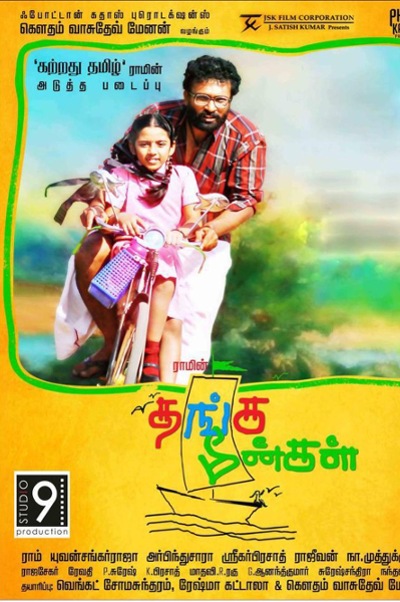
Thanga Meenkal Full Story Explained (2013)
Imagine a father who will do anything to see his daughter smile. That is the heart of 'Thanga Meenkal', a 2013 Tamil film directed by Ram. The story follows Kalyana Raman, a poor laborer, and his eight-year-old daughter Chellamma. Ram also plays the lead role, alongside newcomer Sadhana as Chellamma. The film released on 30 August 2013 and won three National Film Awards. It is a simple, emotional tale about love, struggle, and the bond between a parent and child. The movie shows how far a father will go to give his daughter a happy life, even when everything seems impossible.
A father's desperate love
Kalyana Raman loves his daughter Chellamma more than anything in the world. He works hard every day as a laborer, but money is never enough. His wife Kunjumani worries about their debts and their future. Chellamma is a sweet, cheerful girl who struggles at school. Her teachers complain she cannot keep up with her classmates. Kalyana Raman refuses to let anyone make his daughter feel small.
Full Plot
Kalyana Raman is a poor laborer living in Nagercoil with his wife Kunjumani, his eight-year-old daughter Chellamma, and his elderly father. He loves Chellamma deeply and calls her his 'thanga meenkal' — golden fish. But life is hard. He struggles to find steady work, and the family barely makes ends meet. Kunjumani constantly worries about money and argues with Kalyana Raman about his inability to provide. His father offers financial help, but accepting it makes Kalyana Raman feel like a failure.
Chellamma is a sweet, cheerful girl who loves her father more than anyone. But she struggles at school. She cannot read well, and her teachers complain that she is slow. They scold her in front of the class, making her feel stupid and alone. Her classmates tease her. Only her father gives her comfort and confidence. He tells her she is perfect just the way she is.
Desperate for money, Kalyana Raman takes a job far away from home. The work is hard and the pay is just enough, but it means leaving Chellamma behind. He will only see her once every few weeks. He tells himself it is for her future, but the separation breaks both their hearts. Chellamma becomes quiet and sad. She stops playing and her grades drop even lower. Her mother scolds her, and her teachers humiliate her.
When Kalyana Raman returns for a visit, he is shocked by how much Chellamma has changed. She is thin, pale, and barely smiles. He learns about her suffering at school and at home. He realizes that his absence is hurting her more than poverty ever could. He breaks down, feeling like a complete failure. He asks himself if any job is worth his daughter's happiness.
Kalyana Raman makes a brave decision. He quits his job and returns home for good. He tells Kunjumani that money does not matter more than their daughter. He starts working small jobs near home, earning less but being present. He spends every free moment with Chellamma, reading to her and playing with her. Slowly, her smile returns. The film ends with them sitting by a river, holding hands, laughing together. The message is clear: a child's happiness is worth more than any amount of money. Love, not wealth, is what truly matters.
Characters
Kalyana Raman
A poor laborer who loves his daughter Chellamma more than anything. He works hard but struggles to make enough money. He takes a job far from home to provide for his family, but realizes his absence hurts Chellamma. In the end, he chooses to be with her, even if it means earning less.
Chellamma
An eight-year-old girl with a sweet, cheerful nature. She struggles at school and is often scolded by teachers. She loves her father deeply and feels safe only with him. When he leaves for work, she becomes sad and withdrawn. Her happiness returns only when her father comes back home for good.
Kunjumani
Kalyana Raman's wife and Chellamma's mother. She is constantly worried about money and argues with her husband about their debts. She wants a better life for her family but does not understand the emotional cost of Kalyana Raman's absence. She learns to value her daughter's happiness over money.
Kalyana Raman's father
An old man who lives with the family. He offers financial help to his son, but Kalyana Raman hates depending on him. He represents the pressure and shame of not being able to stand on one's own feet.
Stella Miss
Chellamma's teacher at school. She is strict and impatient with Chellamma's slow learning. She scolds Chellamma in front of the class, making her feel humiliated and alone. She represents the harsh education system that fails to understand children.
Themes
Father-daughter bond
The entire film revolves around the love between Kalyana Raman and Chellamma. He calls her his 'golden fish' and promises to protect her. Their bond is tested when he must leave for work, but it never breaks. In the end, his love for her guides every decision he makes.
Poverty and sacrifice
The family struggles with money throughout the film. Kalyana Raman takes a job far from home, sacrificing time with his daughter for financial stability. The film shows how poverty forces parents to make painful choices. It asks whether money is worth the emotional cost.
Education system pressure
Chellamma struggles at school because she learns differently. Her teachers scold her and her classmates tease her. The film criticizes a system that values grades over understanding. It shows how pressure can crush a child's spirit and confidence.
Self-worth and dignity
Kalyana Raman hates depending on his father for money. He wants to stand on his own feet and provide for his family. His struggle is not just about money, but about his sense of dignity. The film shows that true worth comes from love, not from financial success.
Ending Explained
The film ends with Kalyana Raman making a life-changing decision. He quits his job far from home and returns to his family for good. He tells his wife Kunjumani that no amount of money is worth their daughter's happiness. He starts working small jobs near home, earning less but being present for Chellamma. He spends every free moment with her, reading, playing, and laughing together. Slowly, Chellamma's smile returns. The final scene shows them sitting by a river. Kalyana Raman holds her hand and calls her his 'golden fish'. She laughs, and for a moment, all their troubles disappear. The director leaves the audience with a clear message: a child's happiness is worth more than any amount of money. Love, not wealth, is what truly matters. The ending is hopeful and warm, showing that sometimes the bravest thing a parent can do is choose their child over everything else.
Frequently Asked Questions
'Thanga Meenkal' means 'Golden Fishes' in Tamil. It is the nickname Kalyana Raman gives to his daughter Chellamma. He calls her his 'golden fish' because she is precious and beautiful to him.
The film is not based on a specific true story. But it is inspired by real-life struggles of poor families in Tamil Nadu. Director Ram wrote the story with his daughter Shri Sankara Gomathy Ram, drawing from their observations of society.
Chellamma was played by Baby Sadhana, a young girl from Chennai. She was chosen after Ram auditioned over 150 girls for the role. Her performance won her the National Film Award for Best Child Artist.
Yes, the film won three National Film Awards in 2014: Best Tamil Film, Best Child Artist for Sadhana, and Best Lyricist for Na. Muthukumar. It also won three Filmfare Awards South and three South Indian International Movie Awards.
The film was shot in Nagercoil and Achankoil, both towns in Tamil Nadu. The cinematography by Arbhindu Saaraa captures the beautiful landscapes of the region. The natural settings add to the film's emotional and realistic tone.