Vikram Sugumaran
Vikram Sugumaran is an Indian director, best known for Tamil cinema. Vikram Sugumaran began their career in 2013 and has been a prominent figure in the industry for over 13 years. With 30 credits to their name and an average audience rating of 6.3, Vikram Sugumaran remains one of the most prolific and celebrated talents in the industry. Vikram Sugumaran is one of the most closely watched talents of their generation, with a rapidly growing body of acclaimed work.
- Born
- Age
- 49
Biography
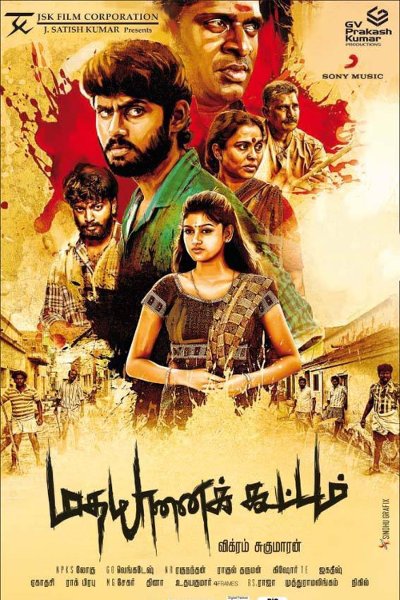
Vikram Sugumaran (11 April 1977 – 2 June 2025) was a Tamil film director, screenwriter, and actor from Paramakudi, Ramanathapuram, known for his rural-realist storytelling rooted in southern Tamil Nadu. He made his directorial debut with Madha Yaanai Koottam (2013), a drama thriller exploring caste conflicts that became a sleeper hit, and returned a decade later with Raavana Kottam (2023), starring Shanthanu Bhagyaraj and Anandhi, which examined land rights and caste politics. Before directing, he worked as an associate director and dialogue writer under Vetrimaaran on Polladhavan and the National Award-winning Aadukalam (2011). His films were distinguished by naturalistic performances, native dialects, and a minimalist visual style that gave authentic voice to Tamil Nadu's rural interior.
Career Milestones
Associate director and dialogue writer for National Award-winning film Aadukalam under Vetrimaaran
Directorial debut with Madha Yaanai Koottam, a critically acclaimed drama exploring caste conflicts
View film →Directed Raavana Kottam, his second feature film after a 10-year gap
Defining Moments
Climax confrontation where Parthiban accidentally kills Veera Thevar's son while protecting his stepbrother, resolving the caste-driven family feud with tragic inevitability
The climax distills the film's central thesis — that caste pride and vengeance lead only to senseless loss. Widely praised by critics as one of the most restrained yet powerful endings in Tamil rural cinema of that era.
View film →The funeral boycott sequence where Boologarasa's stepmother and half-siblings are threatened with village ostracism for attending their own family's last rites
A defining scene that exposes caste discrimination's reach into the most intimate human moments; cited by reviewers as the film's emotional core and a stark commentary on social hierarchy in rural Tamil Nadu.
View film →The political mobilisation climax of Raavana Kottam depicting grassroots resistance against feudal power structures
Continuing Sugumaran's signature theme of subaltern voices challenging entrenched power, the film was noted for its raw political energy and commitment to underrepresented rural narratives.
Vikram Sugumaran by the Numbers
If you watched every Vikram Sugumaran film back-to-back, you'd be at it for roughly 4 hours. Most-paired with Oviya — 2 films together.
Filmography
See all 30 credits →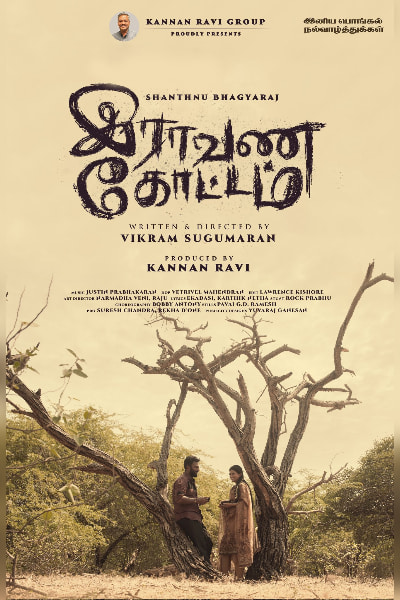
Collaboration Network
Career Analytics
Genre Breakdown
Language Distribution
Films by Decade
Top Co-Actors
See all →Vikram Sugumaran has worked most frequently with Oviya (2 films).

Legacy & Influence
Vikram Sugumaran is a notable figure in the Tamil film industry, primarily recognized as a film director and screenwriter. He made a significant impact with his debut feature film, 'Joker' (2016), which he wrote and directed. The film, starring Srikanth and Ramya Pandian, was a notable attempt at blending social satire with commercial cinema, exploring themes of rural life, superstition, and systemic corruption. Its narrative ambition and distinct visual style, set against a village backdrop, marked Sugumaran as a filmmaker willing to tackle unconventional subjects within mainstream frameworks. His work is often discussed for its focus on societal issues and character-driven stories, contributing to a strand of Tamil cinema that uses genre storytelling to provoke thought and commentary. While his filmography is not extensive, the attention garnered by 'Joker' for its conceptual risk and execution has cemented his place as a director with a unique voice. His career trajectory demonstrates a commitment to original storytelling, influencing conversations around the space for satirical and socially conscious narratives in Indian regional cinema. His contribution lies in expanding the thematic palette of commercial Tamil films, encouraging a focus on writing and conceptual depth alongside cinematic presentation.