Shannon Esra
Shannon Esra is an Indian actor, best known for Tamil cinema. Shannon Esra began their career in 2007. With 30 credits to their name, Shannon Esra remains one of the most prolific and celebrated talents in the industry. An emerging voice in Tamil cinema, Shannon Esra is already attracting significant attention for their distinctive work.
Career Milestones
Film debut
View film →Highest rated: Salaam-e-Ishq: A Tribute to Love (4.8)
View film →Shannon Esra by the Numbers
If you watched every Shannon Esra film back-to-back, you'd be at it for roughly 2 hours.
Filmography
See all 30 credits →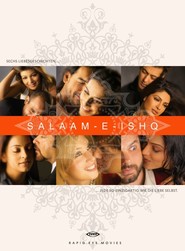
Career Analytics
Language Distribution
Films by Decade
Legacy & Influence
Shannon Esra's contribution to Indian cinema is defined by her selective yet impactful presence in a pivotal era of cross-cultural filmmaking. Her most notable role was in the 2007 ensemble romantic drama 'Salaam-e-Ishq: A Tribute to Love', directed by Nikhil Advani. The film, an ambitious multi-narrative project inspired by 'Love Actually', featured a large cast of prominent Bollywood stars and aimed to explore diverse facets of relationships. Esra's participation, though her specific character details remain less documented, placed her within a significant cinematic experiment that attempted to bridge narrative styles for a pan-Indian audience. Her career trajectory in India, while brief, represents a period where the industry was increasingly open to international talent, integrating them into mainstream storytelling without necessarily typecasting them in stereotypical 'foreigner' roles. This openness contributed to the evolving visual and cultural texture of Hindi cinema in the mid-2000s. Beyond this film, her work in Indian cinema is not widely recorded, making her legacy one of a distinctive presence in a singular, high-profile project. Her involvement underscores a moment of expansion and genre exploration within Bollywood, where large ensemble casts became a vehicle for ambitious, interconnected storytelling. While not a major star with a lengthy filmography, her association with 'Salaam-e-Ishq' ensures her a place in discussions about the film's international casting and its attempt to create a modern, cosmopolitan love story. Her contribution is thus contextual, marking a point in the industry's ongoing dialogue with global cinematic forms and talent pools.