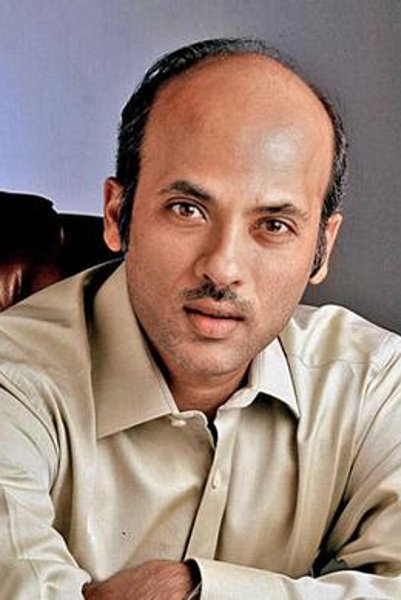
Sooraj R. Barjatya
Sooraj R. Barjatya is an Indian director, best known for Tamil cinema. Sooraj R. Barjatya began their career in 1989 and has been a prominent figure in the industry for over 37 years. With 30 credits to their name and an average audience rating of 6.0, Sooraj R. Barjatya remains one of the most prolific and celebrated talents in the industry. Spanning 30+ years, Sooraj R. Barjatya's career remains one of the longest and most celebrated in Tamil cinema.
- Born
- Age
- 62
Biography
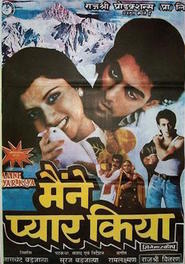
Sooraj R. Barjatya is an Indian film director, producer, screenwriter and distributor, predominantly working in Hindi Cinema. Sooraj Barjatya began his career as an assistant director to Mahesh Bhatt. He made his directorial debut with the cult classic Maine Pyar Kiya in 1989, a romantic musical film about friendship.
Career Milestones
Film debut
View film →Highest rated: Vivah (7.2)
View film →Defining Moments
Directorial Debut with 'Maine Pyar Kiya'
The film became a cult classic and one of the highest-grossing Indian films of the year, defining the template for family-oriented romantic musicals.
Release of 'Hum Aapke Hain Koun..!'
The film redefined the commercial Hindi cinema landscape with its focus on wedding celebrations and family values, becoming an all-time blockbuster.
Release of 'Hum Saath-Saath Hain'
This large ensemble family drama solidified his signature filmmaking style and was a major commercial success.
Sooraj R. Barjatya by the Numbers
If you watched every Sooraj R. Barjatya film back-to-back, you'd be at it for roughly 16 hours. Most-paired with Anupam Kher — 4 films together.
Filmography
See all 30 credits →

Collaboration Network
The Constellation
Top 7 most-paired collaborators. Bubble size and line thickness reflect how many films they share with Sooraj R. Barjatya.
Career Analytics
Genre Breakdown
Language Distribution
Films by Decade
Top Co-Actors
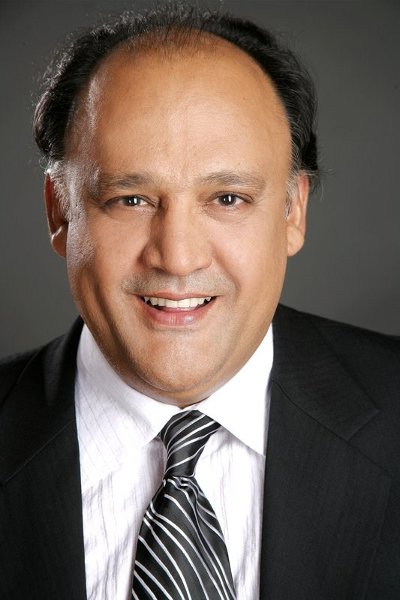
See all →Sooraj R. Barjatya has worked most frequently with Anupam Kher (4 films), Salman Khan (4 films), Reema Lagoo (3 films), Alok Nath (3 films), and Mohnish Bahl (2 films).





Did You Know?
Sooraj R. Barjatya is the grandson of Tarachand Barjatya, who founded the family-run production and distribution company Rajshri Productions in 1947.
His directorial debut, 'Maine Pyar Kiya' (1989), was a massive commercial success and launched the careers of Salman Khan and Bhagyashree.
He is known for making large, ensemble family dramas, often referred to as 'family entertainers', celebrating traditional Indian values and festivals.
His films frequently feature grand wedding sequences and the celebration of the festival of Karva Chauth.
He has a long-standing collaboration with actor Salman Khan, having directed him in multiple blockbusters including 'Maine Pyar Kiya', 'Hum Aapke Hain Koun..!', and 'Hum Saath-Saath Hain'.
Legacy & Influence
Sooraj R. Barjatya is a seminal figure in Indian cinema, renowned for defining and popularizing the 'family-oriented' Bollywood blockbuster. His directorial debut, the 1989 romantic musical 'Maine Pyar Kiya', was a cultural phenomenon that re-established the box-office dominance of clean, wholesome entertainment in an era of increasing violence and complexity. The film launched the career of Salman Khan and set a template for storytelling that Barjatya would refine over decades. His subsequent films, most notably the 'Hum Aapke Hain Koun..!' (1994) and 'Hum Saath-Saath Hain' (1999), are epochal works that cemented his signature style. This style is characterized by sprawling joint-family narratives, elaborate wedding sequences, reverence for tradition, saccharine romance devoid of overt physicality, and an abundance of songs that became national anthems. Technically, his films showcased lavish production design and became events due to their lengthy runtimes and intermissions. Barjatya's contribution lies in creating a distinct cinematic universe—often dubbed 'Barjatya's Sansar' (world)—that presented an idealized, conflict-light, and morally upright vision of Indian family life. This vision resonated powerfully with the mainstream, middle-class audience across the country, making his films some of the highest-grossing of their time. His influence is evident in the wave of family-centric films that followed in the 1990s and early 2000s, and his template continues to be referenced, even if often satirized, for its distinct ethos. While later films like 'Vivah' (2006) successfully revisited this formula, his legacy is firmly anchored in the 1990s, where he provided a counter-narrative to other cinematic trends and shaped audience expectations for grand, celebratory, and 'safe' entertainment. His work with Rajshri Productions, his family's banner, also underscores a rare model of integrated production and distribution focused on tier-two and tier-three cities, ensuring a wide reach for his brand of cinema.