Deepa Mehta
Deepa Mehta is an Indian director, best known for Tamil cinema. Deepa Mehta began their career in 1996. With 30 credits to their name and an average audience rating of 6.2, Deepa Mehta remains one of the most prolific and celebrated talents in the industry. An emerging voice in Tamil cinema, Deepa Mehta is already attracting significant attention for their distinctive work.
Career Milestones
Film debut
View film →Highest rated: 1947 Earth (7.2)
View film →Defining Moments
Release of 'Fire'
The release of 'Fire' sparked major controversy and national debate in India over its themes of sexuality and tradition, establishing Mehta as a bold, provocative filmmaker.
Release of 'Water'
Completed after years of delays and protests, 'Water' premiered at the Toronto International Film Festival and later earned an Academy Award nomination, marking a major career achievement.
Appointed to the Order of Canada
Deepa Mehta was appointed as an Officer of the Order of Canada, one of the country's highest civilian honors, recognizing her impact on cinema and culture.
Deepa Mehta by the Numbers
If you watched every Deepa Mehta film back-to-back, you'd be at it for roughly 4 hours. Most-paired with Nandita Das — 2 films together.
Filmography
See all 30 credits →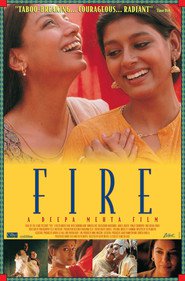
Collaboration Network
Career Analytics
Language Distribution
Films by Decade
Top Co-Actors
See all →Deepa Mehta has worked most frequently with Nandita Das (2 films).

Did You Know?
Deepa Mehta is an Indian-born Canadian filmmaker known for her Elements Trilogy: 'Fire' (1996), 'Earth' (1998), and 'Water' (2005).
Her film 'Water' was nominated for the Academy Award for Best Foreign Language Film in 2007.
She co-founded Hamilton-Mehta Productions with her husband, producer David Hamilton.
Deepa Mehta was awarded the Order of Canada in 2013 for her contributions to cinema.
Her film 'Fire' sparked significant controversy and protests in India for its depiction of a lesbian relationship.
Legacy & Influence
Deepa Mehta is a seminal Indo-Canadian filmmaker whose work has profoundly shaped the landscape of Indian and international cinema through her fearless exploration of social taboos, gender politics, and post-colonial identity. Her career trajectory began in India with documentaries and the feature film 'Sam & Me' (1991), but she achieved global recognition with her Elements Trilogy: 'Fire' (1996), 'Earth' (1998), and 'Water' (2005). This trilogy, confronting themes of lesbian desire, Partition trauma, and widow ostracization, respectively, established her as a director of immense courage and artistic vision. 'Fire' sparked intense controversy and protests in India for its depiction of homosexuality, igniting national debates on censorship and freedom of expression. 'Water', which faced violent opposition during its initial shoot in Varanasi, went on to become an Oscar-nominated film (Best Foreign Language Film), bringing international attention to deeply entrenched social issues. Mehta's contribution lies in her unflinching narrative style that challenges patriarchal structures and religious orthodoxy, creating a space for dialogue on human rights within mainstream and arthouse cinema. Her films, often featuring strong female protagonists, have influenced a generation of filmmakers to tackle socially relevant subjects with nuance. Works like 'Midnight's Children' (2012), an adaptation of Salman Rushdie's novel, further demonstrate her engagement with the complex legacy of Indian history. While operating largely outside the commercial Bollywood system, her cinema has been instrumental in expanding the thematic and aesthetic boundaries of stories considered 'Indian,' making her a pivotal figure in diasporic and parallel cinema.