Kamala Kannan
Kamala Kannan is an Indian director, best known for Tamil cinema. Kamala Kannan began their career in 2012. With 30 credits to their name, Kamala Kannan remains one of the most prolific and celebrated talents in the industry. An emerging voice in Tamil cinema, Kamala Kannan is already attracting significant attention for their distinctive work.
Biography
Kamalakannan is a Tamil cinema director born in 1989 in Chennai, Tamil Nadu, known for his socio-political and socially conscious filmmaking. His directorial debut Madhubana Kadai (2012) was a socio-political satire about a TASMAC liquor shop, notably featuring real-life individuals in leading roles and launching actors Rafeeq and Ishwarya. His short film Solla Maranthuten (2013) won the People's Choice Award at a Short Film gala. He continued directing with Vattam (2022) on Disney Hotstar and Kurangu Pedal (2024) on Amazon Prime.
Kamala Kannan by the Numbers
If you watched every Kamala Kannan film back-to-back, you'd be at it for roughly 2 hours.
Filmography
See all 30 credits →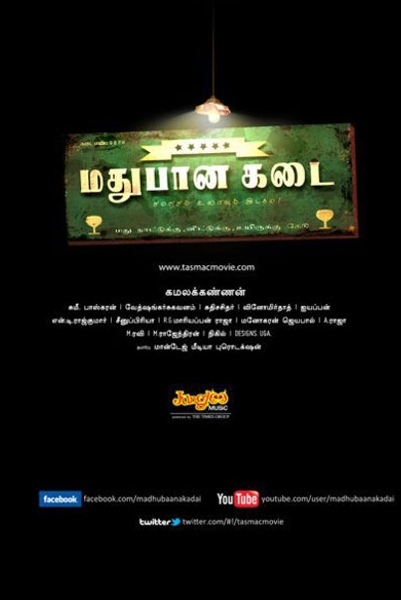
Career Analytics
Language Distribution
Films by Decade
Legacy & Influence
Kamala Kannan is a prominent figure in Indian cinema, specifically recognized as a distinguished cinematographer and director in the Tamil film industry. His career trajectory began in the technical domain, where he established a strong foundation in cinematography. He honed his craft working as an assistant to veteran cinematographers, absorbing the visual language of cinema. This technical expertise became the cornerstone of his later work as a director, allowing him to create films with a distinct and compelling visual signature. Kannan's directorial debut, 'Kana Kandaen' (2005), starring Prasanna and Gopika, was noted for its fresh narrative and visual treatment, marking him as a promising new voice. He further demonstrated his versatility by directing the fantasy-adventure film 'Aayirathil Iruvar' (2010). However, his most significant and widely acclaimed contribution came with the 2014 socio-fantasy film 'Mynaa'. Starring Prabhu and Amala Paul, the film was a critical and commercial success, praised for its poignant storytelling, strong performances, and, most notably, its breathtaking cinematography which Kannan directed himself. 'Mynaa' is often cited as a benchmark for visual storytelling in rural-based Tamil cinema, using its imagery to powerfully enhance the emotional core of the narrative. His work is characterized by a strong sense of realism blended with artistic composition, often capturing the raw beauty of natural landscapes and rural settings to serve the story. While his filmography as a director is selective, each project reflects a meticulous approach to visual narrative. His primary legacy lies in elevating the role of cinematography within directorial vision, proving that a deep understanding of camera, light, and frame is instrumental in crafting immersive and emotionally resonant cinema. He has influenced a generation of technicians and directors to prioritize visual language as an integral component of storytelling, not merely a decorative afterthought.