Ananda Kannan
Ananda Kannan is an Indian actor, best known for Tamil cinema. Ananda Kannan began their career in 2012 and has been a prominent figure in the industry for over 14 years. With 30 credits to their name, Ananda Kannan remains one of the most prolific and celebrated talents in the industry. An emerging voice in Tamil cinema, Ananda Kannan is already attracting significant attention for their distinctive work.
- Born
- Age
- 53
Career Milestones
Breakthrough as theatre actor in Ravindran Drama Group's production
Best Actor Award for Indian Cultural Month
Best Host Award at Vasantham Pradhana Vizha
Film role in India's first Tamil 3D film featuring dinosaurs
View film →Posthumous Lifetime Achievement Award from Mediacorp
Ananda Kannan by the Numbers
If you watched every Ananda Kannan film back-to-back, you'd be at it for roughly 2 hours.
Filmography
See all 30 credits →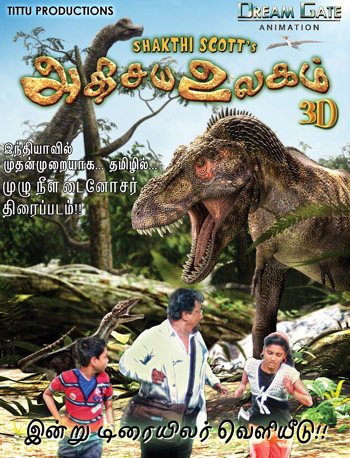
Career Analytics
Language Distribution
Films by Decade
Legacy & Influence
Ananda Kannan's contribution to Indian cinema is primarily defined by his pioneering role as the director of 'Adhisaya Ulagam-3D' (2012), a landmark Tamil science-fiction film. This project holds historical significance as it was marketed and recognized as India's first stereoscopic 3D live-action film, preceding other major 3D productions in the country. By championing this ambitious technical endeavor, Kannan demonstrated a forward-thinking approach to filmmaking, pushing the boundaries of visual spectacle and immersive storytelling in Indian regional cinema during the early 2010s. His work on this film represents a notable, though singular, attempt to integrate advanced cinematic technology into a mainstream Tamil narrative, aiming to expand the genre palette available to audiences. The film's production and release sparked discussions about the feasibility and future of 3D technology within the cost structures and creative frameworks of the Indian film industry. While the film itself did not achieve major commercial success, Kannan's role as its director and visionary ensures his place in chronicles of Indian cinema as an early adopter and risk-taker in the domain of visual effects and new-format filmmaking. His career trajectory, though not widely documented beyond this project, is emblematic of filmmakers who pursue technological innovation, contributing to the industry's gradual evolution in production techniques. His specific contribution lies in this catalytic attempt to modernize presentation formats, which encouraged subsequent experiments in 3D and visual effects within South Indian cinema.