Thiagarajan Kumararaja
Thiagarajan Kumararaja is an Indian director, best known for Tamil cinema. Thiagarajan Kumararaja began their career in 2011. With 30 credits to their name and an average audience rating of 7.9, Thiagarajan Kumararaja remains one of the most prolific and celebrated talents in the industry. Thiagarajan Kumararaja is one of the most closely watched talents of their generation, with a rapidly growing body of acclaimed work.
Biography
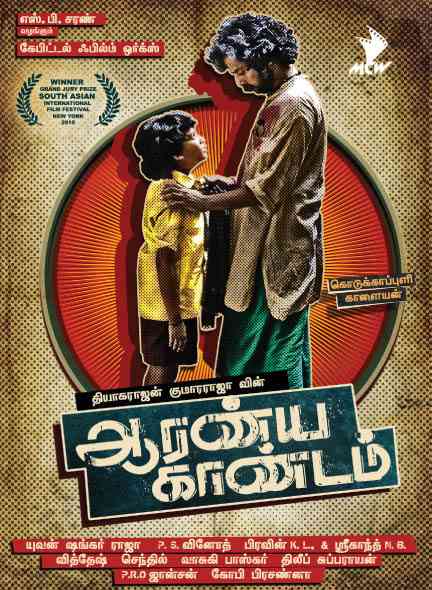
Thiagarajan Kumararaja is a Tamil film director and screenwriter based in Chennai, known for crafting unconventional, non-linear narratives in Tamil cinema. His debut feature Aaranya Kaandam (2011), a neo-noir gangster film, won him the Indira Gandhi Award for Best Debut Film of a Director at the 59th National Film Awards. His second directorial Super Deluxe (2019), an anthology featuring Vijay Sethupathi, Fahadh Faasil, and Samantha, is noted for its interwoven storylines exploring identity, morality, and human frailty. He is regarded as one of Tamil cinema's most distinctive auteurs, with a style marked by dark humor, moral ambiguity, and bold thematic choices that challenge mainstream conventions.
Career Milestones
Short film Becky won first prize at Ability Fest
Won Grand Jury Award for Best Film at South Asian International Film Festival
View film →Directorial debut with neo-noir gangster film Aaranya Kaandam
View film →Won Indira Gandhi Award for Best Debut Film of a Director at National Film Awards
View film →Released Super Deluxe, a critically acclaimed multi-narrative anthology exploring identity and morality
View film →Defining Moments
The opening sequence introducing the underworld power dynamics of Chennai through voice-over narration and stylized character introductions in the neo-noir tradition
Marked Tamil cinema's first true neo-noir debut. The controlled, mythology-like narration style set Kumararaja apart instantly and earned him the National Award for Best Debut Director.
View film →The apex-predator finale of Aaranya Kaandam where the jungle logic of power plays out to its coldly inevitable conclusion
Established Kumararaja's worldview — that society operates on predatory hierarchies with no moral salvation. The ending is discussed in Indian cinema circles as one of the bleakest and most honest crime film conclusions in Tamil cinema.
View film →Shilpa's return home as a transgender woman — the son Rasukutty's unconditional acceptance ('Be a man or be a woman, just be with us') is the emotional climax of the film
Widely cited as one of Tamil cinema's most nuanced portrayals of a transgender character. Vijay Sethupathi's performance as Shilpa and the child actor's reaction became defining images of the film. The scene sparked major discourse on gender representation in Indian cinema.
View film →The interweaving climax where all four parallel storylines converge and resolve simultaneously, tied together by a cosmic/alien narrative that recontextualizes human morality
Acclaimed as an audacious structural achievement in Tamil cinema. The multi-strand convergence is frequently cited as proof of Kumararaja's singular filmmaking vision — ambitious, nihilistic, and deeply humanist at once.
View film →The blackly comic scene where the pervert SI Berlin is confronted — mixing dark humor with social commentary in a single, unsettling sequence
Frequently referenced in reviews as exemplifying Kumararaja's ability to make audiences laugh and feel deeply uncomfortable simultaneously — his signature tone of nihilistic black comedy.
View film →Thiagarajan Kumararaja by the Numbers
If you watched every Thiagarajan Kumararaja film back-to-back, you'd be at it for roughly 4 hours. Most-paired with Yuvan Shankar Raja — 2 films together.
Filmography
See all 30 credits →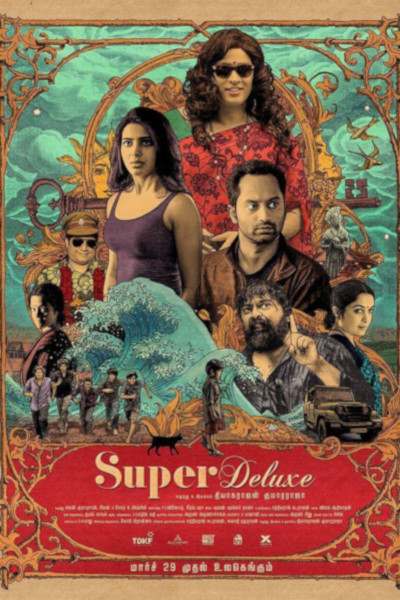
Collaboration Network
Career Analytics
Genre Breakdown
Language Distribution
Films by Decade
Top Co-Actors
See all →Thiagarajan Kumararaja has worked most frequently with Yuvan Shankar Raja (2 films).

Did You Know?
Thiagarajan Kumararaja is an Indian film director and screenwriter known for his work in Tamil cinema.
He made his directorial debut with the 2012 film 'Aaranya Kaandam'.
'Aaranya Kaandam' won the Best Feature Film in Tamil at the 59th National Film Awards.
His second directorial venture was the 2021 film 'Super Deluxe'.
He is known for his nonlinear storytelling and genre-blending filmmaking style.
Legacy & Influence
Thiagarajan Kumararaja is a pivotal figure in contemporary Indian cinema, celebrated for his distinctive directorial voice that has significantly influenced the landscape of Tamil and pan-Indian filmmaking. His career trajectory, though marked by a deliberate and selective pace, has established him as a filmmaker synonymous with sophisticated, genre-bending narratives and meticulous craft. Kumararaja's debut, the neo-noir black comedy 'Aaranya Kaandam' (2011), is widely regarded as a watershed moment in Tamil cinema. The film broke conventional storytelling molds with its non-linear plot, morally ambiguous characters, and raw, stylized treatment of a gangster narrative. Its critical and cult success demonstrated the commercial and artistic viability of auteur-driven, content-first cinema in mainstream circuits, paving the way for a new wave of experimental and high-concept films in the industry. His second feature, the anthology film 'Super Deluxe' (2019), further cemented his reputation as a visionary. The film is a masterclass in interweaving multiple complex narratives—exploring themes of gender identity, infidelity, faith, and scientific curiosity—into a cohesive and profound cinematic experience. Its bold themes, technical brilliance, and ensemble cast performance garnered widespread critical acclaim. Kumararaja's primary contribution lies in expanding the formal and thematic boundaries of commercial Indian cinema. He operates within popular genres but subverts them with literary depth, philosophical inquiry, and a unique visual grammar. His work has inspired a generation of filmmakers and writers to pursue personal, unconventional stories without compromise, proving that artistic integrity and audience engagement are not mutually exclusive. His influence is evident in the increased acceptance and production of multi-narrative, character-driven films in Indian cinema. By setting a benchmark for writing and directorial control, Kumararaja has elevated audience expectations and encouraged producers to back similarly ambitious projects. His legacy is that of a trailblazer who redefined the possibilities of Tamil cinema, moving it towards greater narrative complexity and global artistic recognition.