Krishnakumar
Krishnakumar is an Indian actor, best known for Tamil cinema. Krishnakumar began their career in 2010. With 30 credits to their name, Krishnakumar remains one of the most prolific and celebrated talents in the industry. An emerging voice in Tamil cinema, Krishnakumar is already attracting significant attention for their distinctive work.
Krishnakumar by the Numbers
If you watched every Krishnakumar film back-to-back, you'd be at it for roughly 2 hours.
Filmography
See all 30 credits →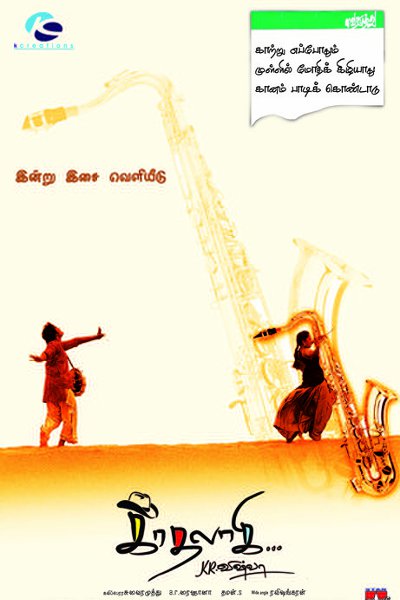
Career Analytics
Language Distribution
Films by Decade
Legacy & Influence
Krishnakumar, known professionally as K.K., was a preeminent playback singer in Indian cinema whose voice defined a generation of Hindi film music and beyond. His career, spanning over two decades, began with advertising jingles before his breakthrough in the 1999 film 'Hum Dil De Chuke Sanam' with the song 'Tadap Tadap'. K.K. possessed a distinctive, versatile, and emotionally resonant voice that was not classically trained in the traditional sense, which allowed him to bring a unique, contemporary, and relatable quality to his singing. This made him the voice of choice for a new wave of composers in the 2000s, including Pritam, Vishal-Shekhar, and Shankar-Ehsaan-Loy. He excelled across genres, from the poignant 'Tujhe Sochta Hoon' ('Jannat') and the melancholic 'Alvida' ('Life in a... Metro') to the energetic 'Khuda Jane' ('Bachna Ae Haseeno') and the iconic rock anthem 'Zara Sa' ('Jannat'). His contribution extended beyond Bollywood to Tamil, Telugu, Malayalam, and Bengali cinema, as well as a prolific independent album and live performance career. K.K. was renowned for his impeccable live concerts, where his powerful, unfiltered voice matched studio recordings, earning him a massive fan following. He avoided the typical film industry trappings, maintaining a reputation for professionalism and humility. His sudden passing in 2022 sent shockwaves through the industry, highlighting his immense and enduring popularity. K.K.'s legacy lies in modernizing playback singing for the post-millennial era; his voice conveyed raw emotion without excessive ornamentation, making songs feel personal and direct. He paved the way for a more naturalistic vocal style in Indian film music and remains a towering figure whose vast catalog continues to be celebrated.