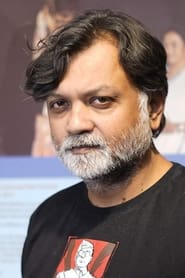
Srijit Mukherji
Srijit Mukherji is an Indian director, best known for Tamil cinema. Srijit Mukherji began their career in 2017 and has been a prominent figure in the industry for over 9 years. With 30 credits to their name, Srijit Mukherji remains one of the most prolific and celebrated talents in the industry. Srijit Mukherji is one of the most closely watched talents of their generation, with a rapidly growing body of acclaimed work.
- Born
- Age
- 48
Biography
Srijit Mukherji (born 23 September 1977), is a film director and screenwriter who predominantly works in Bengali cinema.\n\nHis first feature film Autograph (2010), was a critical and commercial successHis fifth film, Jaatishwar, won four national awards at India's 61st National Film Awards (2014). He won the National Film Award for Best Director and Best Original Screenplay for his sixth film, Chotushkone, at India's 62nd National Film Awards. His eighth film, Rajkahini had been remade by him into a Hindi film titled, Begum Jaan, starring Vidya Balan in 2017. His 2018 release Ek Je Chhilo Raja won the 'Best Bengali Film' Award at India's National Film Awards. He plans to make a film with each of the English alphabets and already made films with 22 English alphabets as of 2022. The missing four alphabets would be I, Q, T and W.
Career Milestones
Film debut
View film →Highest rated: Shabaash Mithu (5.9)
View film →Defining Moments
Directorial Debut with 'Autograph'
His first feature film 'Autograph' was released to critical acclaim and commercial success, establishing him as a major director in Bengali cinema.
National Award Success with 'Jaatishwar'
His film 'Jaatishwar' won four National Film Awards at the 61st National Film Awards, including Best Feature Film in Bengali.
Launch of Byomkesh Bakshi Series
He directed 'Byomkesh Bakshi', launching a successful film series based on the popular detective character, starring Abir Chatterjee.
Hindi Film Debut with 'Begum Jaan'
He made his Hindi directorial debut with 'Begum Jaan', a remake of his Bengali film 'Rajkahini', starring Vidya Balan.
Srijit Mukherji by the Numbers
If you watched every Srijit Mukherji film back-to-back, you'd be at it for roughly 7 hours.
Filmography
See all 30 credits →


Career Analytics
Genre Breakdown
Language Distribution
Films by Decade
Did You Know?
Srijit Mukherji's first feature film 'Autograph' (2010) was a tribute to Satyajit Ray's 'Nayak' and became a critical and commercial success.
He won four National Film Awards for his film 'Jaatishwar' (2014) including Best Feature Film in Bengali.
He is known for his 'Byomkesh Bakshi' film series, starting with 'Byomkesh Bakshi' (2015), starring Abir Chatterjee.
He directed the Hindi film 'Begum Jaan' (2017), starring Vidya Balan, which was a remake of his own Bengali film 'Rajkahini' (2015).
He is an alumnus of the Indian Institute of Technology, Kharagpur, where he studied chemical engineering.
Legacy & Influence
Srijit Mukherji emerged as a pivotal figure in the Bengali film industry's modern revival with his debut feature, Autograph (2010). A contemporary reinterpretation of Satyajit Ray's classic Nayak, the film was both a critical and commercial triumph, signaling a new wave of commercially viable yet content-driven cinema in Bengal. Mukherji's career is characterized by its thematic and stylistic diversity, ranging from intense political thrillers like Baishe Srabon (2011) and Vinci Da (2019) to poignant period dramas such as Jaatishwar (2014) and Ek Je Chhilo Raja (2018). His work often delves into historical narratives, psychological complexities, and socio-political commentary, reviving genres that had become scarce in mainstream Bengali cinema. A significant contribution is his role in popularizing the franchise model, most notably with the detective series featuring 'Byomkesh Bakshi' and the psychological thriller series beginning with 'Vinci Da'. He has consistently collaborated with a recurring ensemble of actors and technicians, fostering a distinct creative unit. His film Jaatishwar, a musical drama exploring reincarnation and cultural legacy, was a landmark achievement, winning four National Film Awards. Mukherji's influence extends beyond direction; as a screenwriter, he crafts intricate plots with memorable dialogues, and he has been instrumental in bringing theatrical productions to the screen. By balancing artistic ambition with mainstream appeal, he has successfully bridged the gap between parallel and commercial cinema, inspiring a generation of filmmakers and playing a crucial role in reshaping the contemporary landscape of Bengali and Indian cinema.