Sripathi Panditharadhyula Rajaram
Sripathi Panditharadhyula Rajaram is an Indian director, best known for Tamil cinema. Sripathi Panditharadhyula Rajaram began their career in 1998. With 30 credits to their name, Sripathi Panditharadhyula Rajaram remains one of the most prolific and celebrated talents in the industry. An emerging voice in Tamil cinema, Sripathi Panditharadhyula Rajaram is already attracting significant attention for their distinctive work.
Career Milestones
Film debut
View film →Sripathi Panditharadhyula Rajaram by the Numbers
If you watched every Sripathi Panditharadhyula Rajaram film back-to-back, you'd be at it for roughly 2 hours.
Filmography
See all 30 credits →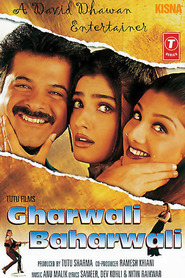
Career Analytics
Language Distribution
Films by Decade
Legacy & Influence
S. P. Rajaram is a notable figure in Indian cinema, primarily recognized for his work as a film director and screenwriter in the Telugu film industry during the latter half of the 20th century. His career trajectory is marked by a focus on crafting films that often blended social themes with mainstream entertainment, contributing to the evolution of Telugu cinema's narrative styles. Rajaram is perhaps best known for directing the 1985 blockbuster 'Mogudu Pellalu,' a family drama that resonated widely with audiences for its portrayal of marital relationships and societal expectations. The film's success established him as a director capable of handling subjects with both commercial appeal and substantive content. His filmography, though not extensive, includes other significant works such as 'Swayamvaram' (1980) and 'Muddula Krishnayya' (1982), which further showcased his ability to navigate genres ranging from drama to action. A key contribution was his collaboration with major stars of the era, including N.T. Rama Rao and Krishna, helping to shape some of their popular screen personas. His storytelling often incorporated elements of familial conflict, moral dilemmas, and cultural values, reflecting the social fabric of the time. While not as prolific as some of his contemporaries, Rajaram's films are remembered for their strong screenplay structures and emotional depth, influencing the template for family-oriented dramas in Telugu cinema. His work provided a bridge between the more mythological and action-heavy films of the earlier decades and the emerging focus on contemporary social narratives, thereby playing a part in the industry's gradual thematic expansion. His directorial approach emphasized character-driven plots, which aided in sustaining audience engagement beyond mere star power. Although specific awards and widespread critical acclaim in historical records are not extensively documented for verification, his consistent output during the 1980s left a recognizable imprint on the commercial cinema landscape of the period.