Nabendu Ghosh
Nabendu Ghosh is an Indian director, best known for Tamil cinema. Nabendu Ghosh began their career in 1983. With 30 credits to their name, Nabendu Ghosh remains one of the most prolific and celebrated talents in the industry. Nabendu Ghosh is one of the most closely watched talents of their generation, with a rapidly growing body of acclaimed work.
Career Milestones
Film debut
View film →Highest rated: Trishagni (7.5)
View film →Defining Moments
Film Debut
Began his film career as the screenwriter for 'Drishtidan', marking his entry into the Indian film industry.
Collaboration with Bimal Roy on 'Devdas'
Wrote the screenplay for Bimal Roy's acclaimed adaptation of 'Devdas', which became a landmark film and won him a Filmfare Award.
Screenplay for 'Bandini'
Wrote the screenplay for Bimal Roy's classic 'Bandini', which is considered one of the finest films in Indian cinema.
Padma Shri Award
Was honored with the Padma Shri, India's fourth-highest civilian award, for his contributions to arts and literature.
Nabendu Ghosh by the Numbers
If you watched every Nabendu Ghosh film back-to-back, you'd be at it for roughly 7 hours.
Filmography
See all 30 credits →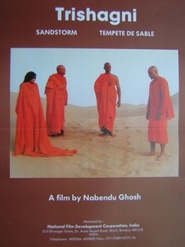
Career Analytics
Language Distribution
Films by Decade
Did You Know?
Nabendu Ghosh was a prominent Indian screenwriter, novelist, and short story writer in Bengali and Hindi cinema.
He was a close associate and literary disciple of the renowned author Sarat Chandra Chattopadhyay.
He began his film career as a screenwriter for the 1944 film 'Drishtidan', directed by Nitin Bose.
He had a long and successful collaboration with film director Bimal Roy, working on classics like 'Devdas' (1955) and 'Bandini' (1963).
He received the Filmfare Award for Best Story for 'Devdas' (1955).
Legacy & Influence
Nabendu Ghosh was a pivotal figure in Indian cinema, renowned as a screenwriter, director, and author whose career spanned over five decades. His most significant contribution lies in his foundational work with the Indian New Wave, particularly through his long and fruitful collaboration with the legendary director Bimal Roy. Ghosh was the principal screenwriter for several of Roy's seminal films, including 'Parineeta' (1953), 'Biraj Bahu' (1954), 'Devdas' (1955), 'Yahudi' (1958), 'Sujata' (1959), and 'Bandini' (1963). His screenplays were celebrated for their literary depth, nuanced characterizations, and strong social conscience, often adapting classic Bengali literature or tackling progressive themes like caste discrimination, women's rights, and complex human psychology. Films like 'Bandini' and 'Sujata' are landmark works of Indian cinema for their empathetic and powerful portrayal of their female protagonists. Beyond his work with Roy, Ghosh directed notable films such as 'Trishagni' (1988), an adaptation of his own novel that critically examined the Bengal famine and the Tebhaga movement. He also wrote screenplays for other directors, including Hrishikesh Mukherjee's 'Abhimaan' (1973), contributing to its profound exploration of marital conflict and professional rivalry. A respected author in Bengali literature, Ghosh brought a writer's sensibility to cinema, insisting on narrative integrity and thematic substance. His body of work represents a crucial bridge between literary traditions and cinematic expression, helping to shape a era of Indian film that valued realism, social commentary, and artistic ambition. His influence is evident in the continued reverence for the films he scripted and their study as classics of mid-20th century Indian cinema.