Chetan Anand
Chetan Anand is an Indian director, best known for Tamil cinema. Chetan Anand began their career in 1981. With 30 credits to their name, Chetan Anand remains one of the most prolific and celebrated talents in the industry. An emerging voice in Tamil cinema, Chetan Anand is already attracting significant attention for their distinctive work.
Career Milestones
Film debut
View film →Highest rated: Kudrat (6.6)
View film →Defining Moments
Directorial Debut with 'Neecha Nagar'
His first film 'Neecha Nagar' won the Grand Prix (now Palme d'Or) at the Cannes Film Festival, marking a historic achievement for Indian cinema.
Co-founding Navketan
He co-founded the influential production company Navketan with his brother Dev Anand, which produced many classic films.
Release of 'Haqeeqat'
Directed the seminal war drama 'Haqeeqat', celebrated for its realistic depiction of the 1962 Sino-Indian War and its poignant storytelling.
Chetan Anand by the Numbers
If you watched every Chetan Anand film back-to-back, you'd be at it for roughly 4 hours.
Filmography
See all 30 credits →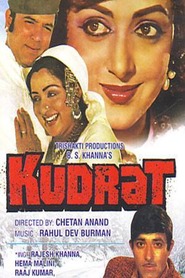
Career Analytics
Language Distribution
Films by Decade
Did You Know?
Chetan Anand was a pioneering Indian film director, screenwriter, and producer, known as one of the founders of the Indian New Wave cinema.
He co-founded the film production company Navketan with his younger brother Dev Anand in 1949.
His directorial debut was the critically acclaimed film 'Neecha Nagar' (1946), which won the Palme d'Or at the first Cannes Film Festival.
He was the elder brother of famous actors Dev Anand and Vijay Anand.
He directed the classic war film 'Haqeeqat' (1964), which is considered a landmark in Indian cinema for its realistic portrayal of war.
Legacy & Influence
Chetan Anand is a foundational figure in Indian cinema, celebrated as a pioneering director, screenwriter, and producer whose work significantly shaped the early trajectory of post-independence Hindi filmmaking. He is best known for co-founding Navketan Films in 1949 with his younger brother Dev Anand, a production house that became synonymous with quality, innovation, and a new wave of storytelling. His directorial debut, 'Neecha Nagar' (1946), was a landmark achievement, becoming the first Indian film to win the prestigious Palme d'Or (then Grand Prix) at the Cannes Film Festival. This international acclaim positioned Indian cinema on the global map and established a precedent for socially conscious, realist filmmaking. Anand's style often blended poetic realism with strong humanist themes, focusing on social inequality and the human condition, as seen in 'Neecha Nagar' and later in films like 'Aakhri Khat' (1966). While his brother Dev Anand became the iconic star of Navketan, Chetan Anand's directorial vision provided the artistic backbone for many of its early successes. He directed the critically acclaimed 'Haqeeqat' (1964), a poignant and realistic portrayal of the 1962 Sino-Indian War, which is still regarded as one of Hindi cinema's most authentic war films. His career trajectory showcases a filmmaker committed to substance over formula, often exploring themes of patriotism, social justice, and lyrical realism. His contribution lies not only in his individual films but in establishing Navketan as a creative crucible that nurtured talent and championed a progressive, content-driven approach during the golden age of Hindi cinema, influencing subsequent generations of filmmakers who valued narrative integrity and social commentary.