Gillian Anderson
Gillian Anderson is an Indian actor, best known for Tamil cinema. Gillian Anderson began their career in 2017. With 30 credits to their name and an average audience rating of 7.0, Gillian Anderson remains one of the most prolific and celebrated talents in the industry. An emerging voice in Tamil cinema, Gillian Anderson is already attracting significant attention for their distinctive work.
Career Milestones
Film debut
View film →Highest rated: Partition: 1947 (7.0)
View film →Gillian Anderson by the Numbers
If you watched every Gillian Anderson film back-to-back, you'd be at it for roughly 2 hours.
Filmography
See all 30 credits →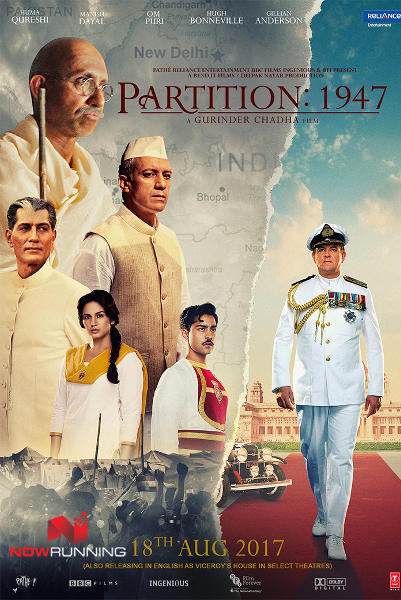
Career Analytics
Language Distribution
Films by Decade
Legacy & Influence
Gillian Anderson is a celebrated British-American actress whose primary career and acclaim are rooted in international film, television, and theatre, notably for her role as Dana Scully in 'The X-Files'. Her connection to Indian cinema is extremely limited and incidental. Her sole known involvement is a supporting role in the 2017 historical drama 'Partition: 1947' (titled 'Viceroy's House' internationally), directed by Gurinder Chadha. In the film, she played Edwina Mountbatten, the wife of the last Viceroy of India. This role did not constitute a sustained contribution to the Indian film industry. The film itself was a British-Indian co-production focusing on the 1947 partition of India, featuring a predominantly British and Indian cast. Anderson's participation brought international visibility to the project, leveraging her global star power to draw attention to this historical narrative for a wider audience. However, her impact on Indian cinema as an artistic or industrial force is negligible. She has not pursued further work in Indian productions, nor has she influenced acting styles, filmmaking trends, or industry practices within India. Her legacy in relation to India is confined to this single cinematic portrayal of a key historical figure during a pivotal moment in the subcontinent's history, as part of a director's (Chadha's) specific cinematic exploration. Therefore, while her performance was noted, it does not represent a formative contribution to the body, craft, or evolution of Indian cinema itself.