Rameshwar S Bhagat
Rameshwar S Bhagat is an Indian editor, best known for Tamil cinema. Rameshwar S Bhagat began their career in 2017. With 30 credits to their name and an average audience rating of 6.2, Rameshwar S Bhagat remains one of the most prolific and celebrated talents in the industry. An emerging voice in Tamil cinema, Rameshwar S Bhagat is already attracting significant attention for their distinctive work.
Career Milestones
Film debut
View film →Highest rated: Mubarakan (6.2)
View film →Rameshwar S Bhagat by the Numbers
If you watched every Rameshwar S Bhagat film back-to-back, you'd be at it for roughly 2 hours.
Filmography
See all 30 credits →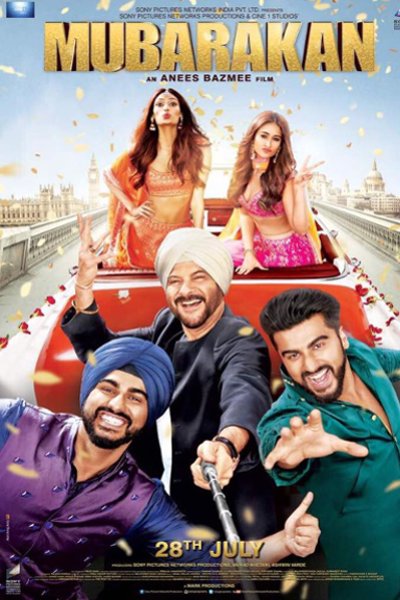
Career Analytics
Genre Breakdown
Language Distribution
Films by Decade
Legacy & Influence
Rameshwar S Bhagat is a significant but often under-acknowledged figure in Indian cinema, primarily recognized for his pioneering work as a film editor. His career trajectory is most famously linked to his collaboration with director Mani Ratnam, where his editorial expertise became a cornerstone of the narrative style that defined a new wave in Indian filmmaking. Bhagat's most celebrated contribution is his editing of the landmark Tamil film 'Nayakan' (1987), directed by Mani Ratnam and starring Kamal Haasan. His work on this film is widely studied for its rhythmic precision, seamless transitions, and its role in building the film's epic yet intimate tone, helping to craft a narrative that is both a gripping gangster saga and a profound character study. The editing of 'Nayakan' is frequently cited for its influence on the pacing and structure of Indian cinema, moving away from more formulaic patterns. He further solidified his reputation with his work on Ratnam's 'Anjali' (1990), where his sensitive editing was crucial in handling the film's delicate subject matter involving children. Bhagat's editorial philosophy emphasized serving the director's vision and the emotional core of the story, often using cuts to enhance performance and subtext rather than merely for continuity. His techniques influenced a generation of editors in South Indian and Bollywood cinema, demonstrating how editing could be an active, expressive force in storytelling. While his filmography is not extensively documented in the public domain, his key collaborations on seminal works ensure his legacy as a craftsman whose invisible art fundamentally shaped the impact and reception of some of Indian cinema's most important films from the late 1980s and early 1990s.