Kotagiri Venkateswara Rao
Kotagiri Venkateswara Rao is an Indian editor, best known for Tamil cinema. Kotagiri Venkateswara Rao began their career in 2017. With 30 credits to their name, Kotagiri Venkateswara Rao remains one of the most prolific and celebrated talents in the industry. An emerging voice in Tamil cinema, Kotagiri Venkateswara Rao is already attracting significant attention for their distinctive work.
Career Milestones
Film debut
View film →Highest rated: Ungarala Rambabu (6.2)
View film →Kotagiri Venkateswara Rao by the Numbers
If you watched every Kotagiri Venkateswara Rao film back-to-back, you'd be at it for roughly 4 hours.
Filmography
See all 30 credits →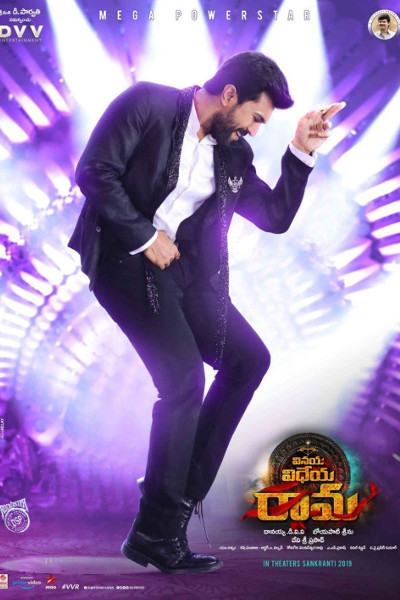

Career Analytics
Genre Breakdown
Language Distribution
Films by Decade
Legacy & Influence
Kotagiri Venkateswara Rao, known professionally as Kotagiri Venkateswara Rao, is a significant figure in Telugu cinema as a film editor. His career trajectory is defined by a long-standing and influential collaboration with director S. S. Rajamouli, establishing him as a crucial creative force behind some of Indian cinema's most monumental blockbusters. His primary contribution lies in his mastery of narrative pacing and action sequencing, which has been instrumental in shaping the epic scale and emotional rhythm of Rajamouli's filmography. His editing work is particularly noted for its precision in constructing elaborate, high-energy action set pieces and maintaining coherence across sprawling, multi-layered storylines. This skill set proved foundational for the success of the 'Baahubali' duology, where his editing was pivotal in managing the films' vast scope, complex visual effects sequences, and dual narrative timelines, contributing significantly to their nationwide appeal and record-breaking box office performance. His collaboration extended to other major Rajamouli films like 'Magadheera' and 'RRR', where his editorial craft helped realize the director's grand vision, blending mythological storytelling with technical spectacle. Through this partnership, Kotagiri Venkateswara Rao has not only elevated the technical standards and narrative ambition of Telugu cinema but has also played a key role in its pan-India and global reach. His work demonstrates how editorial discipline is essential in grounding cinematic spectacle, ensuring that visual grandeur serves the story and character arcs. His career exemplifies the critical, though often behind-the-scenes, role of the film editor in commercial Indian cinema, influencing a generation of technicians and underscoring the importance of editorial precision in large-scale filmmaking.