Ragesh Narayanan
Ragesh Narayanan is an Indian cinematographer, best known for Tamil cinema. Ragesh Narayanan began their career in 2018. With 30 credits to their name and an average audience rating of 6.4, Ragesh Narayanan remains one of the most prolific and celebrated talents in the industry. An emerging voice in Tamil cinema, Ragesh Narayanan is already attracting significant attention for their distinctive work.
Career Milestones
Film debut
View film →Highest rated: Vandi (6.4)
View film →Ragesh Narayanan by the Numbers
If you watched every Ragesh Narayanan film back-to-back, you'd be at it for roughly 2 hours.
Filmography
See all 30 credits →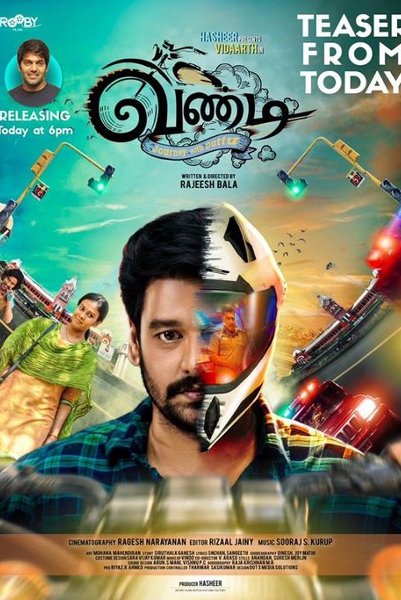
Career Analytics
Language Distribution
Films by Decade
Legacy & Influence
Ragesh Narayanan is a cinematographer whose work has contributed to the visual storytelling of contemporary Indian cinema, particularly in Malayalam and Tamil films. His career trajectory shows a progression from early work as an assistant cinematographer to establishing himself as a director of photography on notable projects. A significant contribution is his collaboration with director Lijo Jose Pellissery on the critically acclaimed film 'Jallikattu' (2019). Narayanan's cinematography in this film was pivotal, using dynamic camera movements, immersive close-ups, and a visceral color palette to amplify the film's raw, primal energy and thematic depth. His work helped translate the chaotic narrative of a buffalo chase into a compelling cinematic experience, earning widespread recognition for its technical prowess and artistic vision. This film's success at international festivals brought attention to the technical crews of Indian parallel cinema. Beyond 'Jallikattu', his filmography includes projects like 'Ajagajantharam' (2021) and 'Neru' (2023), demonstrating versatility across genres—from intense action dramas to courtroom thrillers. In 'Ajagajantharam', his camerawork adeptly captured the claustrophobic tension and physicality of a large-scale street fight in a single, extended sequence. His approach often emphasizes atmospheric realism and a grounded aesthetic, even in stylized settings. While not a prolific mainstream figure, his selective collaborations with directors focused on strong authorial voices have made him a respected technician. His contribution lies in enhancing narrative impact through a thoughtful visual language, proving the importance of cinematography as a key character in the filmmaking process. He represents a generation of cinematographers in Indian cinema who prioritize cohesive, director-driven visual storytelling over mere spectacle, thereby influencing the look and feel of modern auteur-driven films in the industry.