V. Senthil Kumar
V. Senthil Kumar is an Indian producer, best known for Tamil cinema. V. Senthil Kumar began their career in 2005. With 30 credits to their name, V. Senthil Kumar remains one of the most prolific and celebrated talents in the industry. Spanning 20+ years, V. Senthil Kumar's career remains one of the longest and most celebrated in Tamil cinema.
Biography
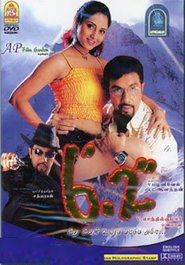
V. Senthil Kumar is a Tamil cinema director who made his directorial debut with the 2005 thriller 6'2, named after lead actor Sathyaraj's height of six feet two inches. The film, released on 12 May 2005, featured Sathyaraj, Vadivelu, and newcomer Sunitha Varma, with music by D. Imman, and was shot at AVM Studios and Ooty. Before directing, Senthil Kumar worked as an assistant director under K. Bhagyaraj, Praveenkanth, and Sakthi Chidambaram, grounding his filmmaking in Tamil commercial cinema traditions. No subsequent directorial projects or major awards are documented in public records following his debut.
Career Milestones
Film debut
View film →Highest rated: 6'2 (4.5)
View film →V. Senthil Kumar by the Numbers
If you watched every V. Senthil Kumar film back-to-back, you'd be at it for roughly 4 hours.
Filmography
See all 30 credits →
Career Analytics
Genre Breakdown
Language Distribution
Films by Decade
Legacy & Influence
V. Senthil Kumar is a prominent cinematographer in South Indian cinema, primarily known for his long-standing collaboration with director S. S. Rajamouli. His career trajectory is defined by his technical expertise in capturing large-scale visual spectacles, particularly in the Telugu film industry. Kumar's most significant contribution lies in his work on Rajamouli's landmark films, beginning with 'Sye' (2004) and solidifying with the globally successful 'Baahubali' duology. His cinematography for 'Baahubali: The Beginning' (2015) and 'Baahubali: The Conclusion' (2017) was instrumental in creating the epic scale and immersive visual language that defined the films, helping to elevate Indian cinematic production values to international recognition. His style often employs dynamic camera movements, meticulous framing for visual effects integration, and a bold color palette suited for mythological and action genres. Beyond the Baahubali series, his work on films like 'Eega' (2012) demonstrated innovative techniques in photographing computer-generated imagery alongside live action, contributing to the film's critical and commercial success. His partnership with Rajamouli has been central to defining the visual grandeur associated with modern Telugu blockbusters. While his filmography outside this collaboration is selective, his influence is evident in setting a new technical benchmark for cinematography in Indian cinema, inspiring a focus on visual storytelling that can compete on a global stage. His career exemplifies the critical role of the cinematographer as a key architect of a film's world, particularly in the realm of spectacle-driven cinema.