A. J. Murugan
A. J. Murugan is an Indian director, best known for Tamil cinema. A. J. Murugan began their career in 2004. With 30 credits to their name and an average audience rating of 6.5, A. J. Murugan remains one of the most prolific and celebrated talents in the industry. An emerging voice in Tamil cinema, A. J. Murugan is already attracting significant attention for their distinctive work.
Biography
A. J. Murugan is a Tamil cinema director best known for his debut feature Manmadhan (2004), a romantic psychological thriller that became a major blockbuster. The film, starring Silambarasan and Jyothika, ran for over 150 days theatrically following its Diwali release on 12 November 2004. Murugan later directed the Kannada remake Madana (2006). He was notably outspoken about behind-the-scenes conflicts during Manmadhan, alleging that Silambarasan pressured him to receive story and dialogue credits as a condition of his continued involvement as director.
Career Milestones
Directorial debut with blockbuster Manmadhan, a Tamil psychological thriller starring Silambarasan and Jyothika
View film →Directed second Tamil film Madana
A. J. Murugan by the Numbers
If you watched every A. J. Murugan film back-to-back, you'd be at it for roughly 2 hours.
Filmography
See all 30 credits →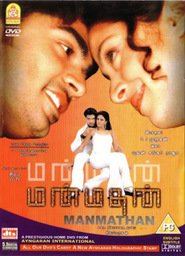
Career Analytics
Language Distribution
Films by Decade
Legacy & Influence
A. J. Murugan is a significant figure in the history of Indian cinema, primarily recognized for his pioneering work in the Tamil film industry during the late 1970s and 1980s. His most notable contribution lies in his role as a producer and director of films that are considered foundational to the 'soft-porn' or 'blue film' genre within the regional circuit, operating at the margins of mainstream cinema. His filmography, including titles like 'Muthukku Muthaaga' and 'Sila Nerangalil Sila Manithargal', often featured bold themes and semi-explicit content for their time, catering to a specific audience segment in rural and semi-urban Tamil Nadu. Murugan's work emerged during a period of shifting social mores and represented a distinct, commercially-driven underground stream of filmmaking that existed parallel to the established studio system. His career trajectory reflects the dynamics of a niche market, where low-budget production met a consistent, if controversial, demand. While not part of critical or mainstream acclaim, his films had a tangible cultural and economic impact, influencing the aesthetics and narrative templates of subsequent adult-oriented regional cinema. The production and distribution models associated with his work also represent a specific chapter in the political economy of Tamil film distribution. His legacy is complex; he is often cited in discussions about censorship, the boundaries of cinematic expression in India, and the history of non-mainstream film genres. His contributions provide a case study in the diverse and stratified nature of Indian cinema, illustrating how different industrial segments operate with their own codes, audiences, and historical significance.