Rajkapoor
Rajkapoor is an Indian director, best known for Tamil cinema. Rajkapoor began their career in 2002 and has been a prominent figure in the industry for over 24 years. With 30 credits to their name, Rajkapoor remains one of the most prolific and celebrated talents in the industry. An emerging voice in Tamil cinema, Rajkapoor is already attracting significant attention for their distinctive work.
- Born
- Age
- 67
Biography
Raj Kapoor is an Indian film director and actor who has worked predominantly in Tamil cinema, best known for directing mainstream commercial films across the 1990s and 2000s. His notable directorial works include Aval Varuvala (1998) starring Ajith and Simran, Sudhandhiram (2000), and Samasthanam (2002) featuring Sarath Kumar and Suresh Gopi. His films typically fall within the action-drama genre, often featuring ensemble casts with prominent Tamil and Malayalam stars. He has also appeared as a supporting actor in films across Telugu, Malayalam, and Kannada cinema in addition to his directing career.
Career Milestones
Debut as independent film director
Directed successful commercial film with top stars Prabhu and Khushbu
Directed Ajith Kumar and Simran in notable Tamil romantic film
Directed and acted in Tamil-language action drama
View film →Rajkapoor by the Numbers
If you watched every Rajkapoor film back-to-back, you'd be at it for roughly 2 hours.
Filmography
See all 30 credits →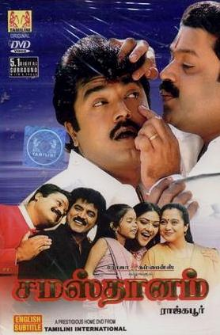
Career Analytics
Language Distribution
Films by Decade
Did You Know?
Raj Kapoor was often called 'The Showman' of Indian cinema.
He founded the film studio R.K. Films in 1948.
He was a member of the Kapoor family, one of the most prominent film dynasties in India.
He received the Padma Bhushan in 1971 and the Dadasaheb Phalke Award in 1987.
His film 'Awaara' (1951) was a major success in the Soviet Union and other countries.
Legacy & Influence
Raj Kapoor is widely regarded as one of the most influential figures in the history of Indian cinema, often called 'The Showman'. His career as an actor, director, and producer spanned over four decades, beginning in the late 1940s. He founded R.K. Films in 1948, which became a pioneering production house. Kapoor is celebrated for his distinct directorial style that blended social themes with grand romanticism and spectacle. His early directorial ventures like 'Awaara' (1951) and 'Shree 420' (1955) established his iconic 'tramp' persona, a Chaplinesque figure that explored the struggles of the common man against societal inequities. These films, with their memorable music and universal themes of love and social justice, achieved massive popularity not only in India but across the Soviet Union, the Middle East, and Africa, making him a global cinematic ambassador. His later directorial masterpieces, such as 'Jis Desh Mein Ganga Behti Hai' (1960), 'Sangam' (1964), and 'Mera Naam Joker' (1970), showcased his ambition and evolving narrative scope, though 'Joker' was a notable commercial failure at the time. His final directorial achievement, 'Ram Teri Ganga Maili' (1985), was a major success. Beyond direction, he launched and nurtured numerous careers, including those of actors like Nargis, Dimple Kapadia, and Mandakini, and music directors like Shankar-Jaikishan. His films consistently pushed technical boundaries in cinematography and editing. Raj Kapoor's legacy is that of a visionary auteur who crafted a unique cinematic language, merging entertainment with social commentary, and whose work continues to profoundly influence filmmakers and captivate audiences generations later.