Chanakya
Chanakya is an Indian composer, best known for Tamil cinema. Chanakya began their career in 1991. With 30 credits to their name, Chanakya remains one of the most prolific and celebrated talents in the industry. An emerging voice in Tamil cinema, Chanakya is already attracting significant attention for their distinctive work.
Biography
Chanakya is a Tamil cinema music composer known for his work on the 1991 horror film Vaa Arugil Vaa, for which he composed a seven-track soundtrack featuring playback singers K. J. Yesudas and S. Janaki. His other known credits include Mudhal Kadhal Mazhai (2010) and Vandana (2018). Detailed biographical records and award history for this composer are not widely documented in public sources.
Chanakya by the Numbers
If you watched every Chanakya film back-to-back, you'd be at it for roughly 2 hours.
Filmography
See all 30 credits →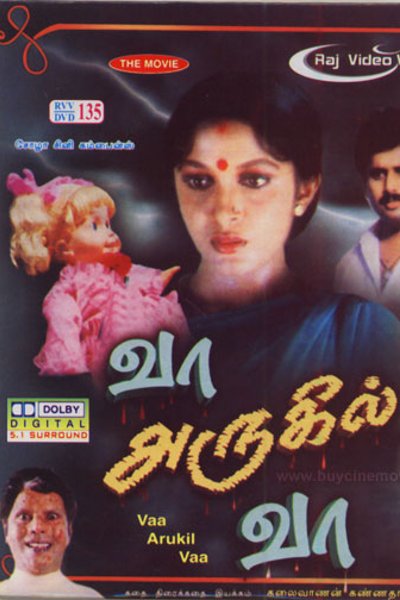
Career Analytics
Language Distribution
Films by Decade
Legacy & Influence
Chanakya, the ancient Indian philosopher, economist, and political strategist, has had a profound and enduring influence on Indian cinema, not as a film personality but as a timeless archetype and source of narrative inspiration. His legacy, derived from the historical treatise 'Arthashastra' and the folklore surrounding his role in establishing the Maurya Empire, provides a rich repository of themes on statecraft, realpolitik, cunning strategy, and intellectual mastery. This influence manifests primarily through cinematic adaptations and the recurring character archetype of the brilliant, shrewd, and often morally ambiguous strategist. The most direct cinematic interpretation is the landmark Hindi film 'Chanakya' (1991), a television series adaptation that brought his political saga to a mass audience, cementing his image as the ultimate political mentor and tactician. Beyond direct biopics, his influence is pervasive in the portrayal of characters who operate from the shadows, manipulating events through intellect rather than force. Numerous films across Indian languages, especially in political dramas and historical epics, feature protagonists or advisors whose dialogue, methods, and philosophical outlook are explicitly or implicitly drawn from Chanakyan principles. His famous concepts like 'Saam, Daam, Dand, Bhed' (the four methods of persuasion) are frequently referenced in dialogues to signify strategic depth. This cinematic adoption has played a significant role in popularizing and keeping relevant ancient Indian political thought for contemporary audiences. The character of Chanakya serves as a benchmark for intelligence and strategic plotting, influencing writers to create complex narratives of power, revenge, and nation-building. His legacy in cinema is thus not of a performer, but of an ideological and narrative cornerstone, providing a framework for stories that explore the intricate and often ruthless mechanics of power, leadership, and social order, ensuring his historical intellect continues to resonate in India's modern storytelling traditions.