R. Narayana Murthy
R. Narayana Murthy is an Indian director, best known for Tamil cinema. R. Narayana Murthy began their career in 1990 and has been a prominent figure in the industry for over 36 years. With 30 credits to their name and an average audience rating of 6.0, R. Narayana Murthy remains one of the most prolific and celebrated talents in the industry. Spanning 30+ years, R. Narayana Murthy's career remains one of the longest and most celebrated in Tamil cinema.
- Born
- Age
- 71
Biography
R. Narayana Murthy is an Indian actor, director, and producer in Telugu cinema, born on 31 December 1954 in Mallampet village, East Godavari district, best known for creating socially conscious films addressing class struggle, unemployment, and political unrest. He founded Sneha Chitra Pictures in 1984 and produced and directed 29 films between 1986 and 2018, including Ardharatri Swatantram (1986), Laal Salaam (1992), and Dalam (1996). His acting range spans lead roles—most notably in Orey Rickshaw (1995)—to supporting parts, such as playing Narendra Varma (Goutham's father) in Chandra Sekhar Yeleti's Sahasam (2013) opposite Gopichand. His career reflects a sustained commitment to rural and working-class narratives across four decades of Telugu filmmaking.
Defining Moments
Playing a revolutionary leader rallying oppressed rural communities against the establishment
One of his most cited politically charged performances, widely referenced in Telugu cinema circles for its unflinching depiction of class struggle
Powerful portrayal of a downtrodden villager resisting feudal oppression, earning him the Nandi Special Jury Award
His Nandi Award recognition validated his method of using raw, grounded performance to highlight social injustice — cementing his reputation as a serious socially conscious actor
Debut as lead actor in Orey Rickshaw, playing a rickshaw puller fighting against exploitation and systemic injustice
Marked his breakthrough as a lead actor after years as a supporting player; established his identity as a champion of working-class stories in Telugu cinema
Portraying tribal communities fighting for land rights against corporate encroachment
Considered among his most thematically rich directorial and acting works; highlighted environmental and indigenous rights decades before it became mainstream discourse
Veteran character role as Narendra Varma alongside Gopichand, bringing gravitas to the action drama
Demonstrated his enduring presence in mainstream Telugu cinema as a respected character actor, bridging his social-cinema legacy with commercial blockbusters
View film →R. Narayana Murthy by the Numbers
If you watched every R. Narayana Murthy film back-to-back, you'd be at it for roughly 1 day and 18h.
Filmography
See all 30 credits →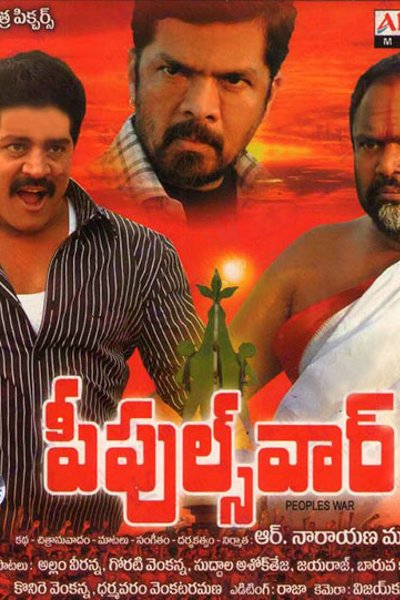
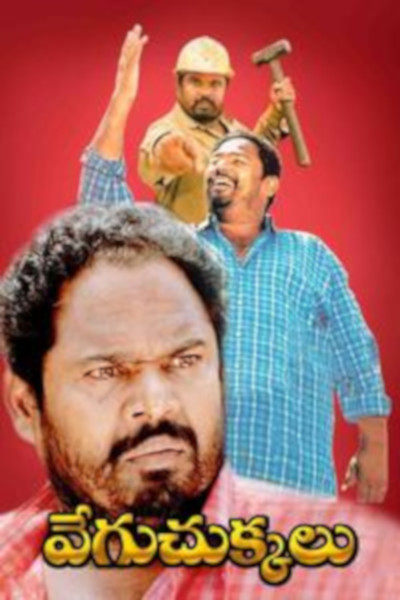
Career Analytics
Language Distribution
Films by Decade
Legacy & Influence
R. Narayana Murthy is a significant figure in Kannada cinema, primarily recognized as a pioneering film producer and distributor whose work in the 1970s and 1980s helped shape the regional industry. He founded the production and distribution company Poornima Enterprises, which became instrumental in backing numerous successful and critically acclaimed films. His most notable contribution was his consistent collaboration with acclaimed director Singeetam Srinivasa Rao, producing a series of innovative films that pushed creative boundaries. Their landmark collaboration, the 1978 Kannada science-fiction film "Ondanondu Kaladalli" (Once Upon a Time), directed by Girish Karnad, is widely regarded as a classic and a watershed moment for its artistic ambition and technical prowess, bringing a new level of cinematic sophistication to Kannada cinema. Murthy's role was crucial as a producer who supported such visionary, auteur-driven projects that were commercially risky but artistically vital. Through Poornima Enterprises, he also produced other important works like "Kaadu" (1973) and "Mooru Darigalu" (1971), further establishing a reputation for quality. His legacy lies in being a discerning producer with an eye for compelling storytelling and directorial talent, providing a platform for films that have endured as classics. He demonstrated that commercially minded production could successfully intersect with high art, thereby elevating the profile and aspirations of Kannada cinema during a key period of its evolution. His work helped create a space for narrative and genre experimentation, influencing subsequent producers and filmmakers to pursue ambitious projects.