S. Gopal Reddy
S. Gopal Reddy is an Indian director, best known for Tamil cinema. S. Gopal Reddy began their career in 2004 and has been a prominent figure in the industry for over 22 years. With 30 credits to their name and an average audience rating of 7.5, S. Gopal Reddy remains one of the most prolific and celebrated talents in the industry. An emerging voice in Tamil cinema, S. Gopal Reddy is already attracting significant attention for their distinctive work.
- Born
- Age
- 75
Biography
S. Gopal Reddy (born July 4, 1951, Krishna, Andhra Pradesh) is a Telugu and Hindi cinema cinematographer, director, and producer primarily known for his work as a cinematographer across more than 70 films over four decades. His directorial debut came with Naa Autograph (2004), a Telugu romantic drama starring Ravi Teja, Bhumika Chawla, and Prakash Raj — a remake of the Tamil film Autograph written by Cheran. As a cinematographer he won the Filmfare Best Cinematographer Award (South) for both Varsham (2004) and Sri Ramadasu (2006). Early in his career he served as chief cinematographer on Srivariki Premalekha (1984) directed by Jandhyala, and later collaborated with directors including Ram Gopal Varma and K. Raghavendra Rao.
Career Milestones
Began career as cinematographer apprentice at Venus Studios, Chennai
Debut as chief cinematographer
Co-produced cult action thriller Kshana Kshanam
Filmfare Best Cinematographer Award (South)
Directorial debut with critically acclaimed Telugu film
View film →S. Gopal Reddy by the Numbers
If you watched every S. Gopal Reddy film back-to-back, you'd be at it for roughly 2 hours. Most-paired with Bhoomika Chawla — 2 films together.
Filmography
See all 30 credits →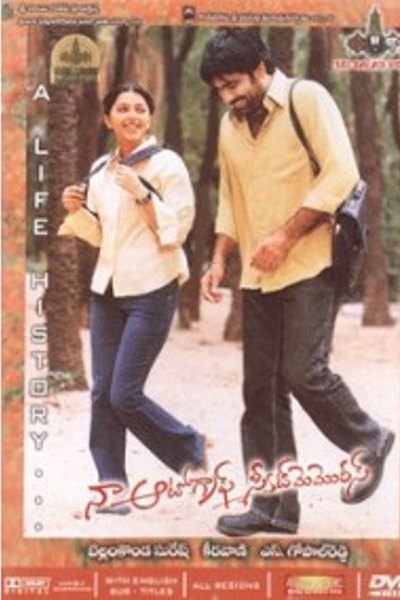
Collaboration Network
Career Analytics
Language Distribution
Films by Decade
Top Co-Actors
See all →S. Gopal Reddy has worked most frequently with Bhoomika Chawla (2 films).

Legacy & Influence
S. Gopal Reddy is a distinguished cinematographer in Indian cinema, renowned for his significant contributions primarily to Telugu and Tamil films. His career trajectory is marked by a long-standing and fruitful collaboration with director S.S. Rajamouli, a partnership that has been instrumental in shaping the visual grandeur of modern Indian epic cinema. Reddy's cinematography is characterized by a masterful command of scale, color, and dynamic camera movement, which has been pivotal in translating Rajamouli's expansive visions to the screen. His work is foundational to the 'larger-than-life' aesthetic that defines much of contemporary South Indian commercial cinema. A key contribution is his role in pioneering and perfecting the use of advanced visual effects and CGI integration within live-action shooting in India, particularly for mythological and historical subjects. His technical expertise and artistic eye have set new benchmarks for production value and visual storytelling. Films like 'Magadheera' (2009) and the 'Baahubali' duology (2015, 2017) under his cinematography are not just blockbusters but cultural landmarks that redefined the technical and artistic ambitions of the industry. The visual language he helped establish—combining sweeping landscapes, intricate set pieces, and dramatic lighting—has influenced a generation of cinematographers and filmmakers across the country. His work demonstrated that Indian films could achieve world-class visual spectacle, thereby expanding both domestic audience expectations and international recognition for Indian technical crews. While often celebrated for his big-budget spectacles, his versatility is also evident in other genres. Gopal Reddy's legacy is that of a craftsman who elevated the role of the cinematographer from a technical position to a central, co-authoring force in blockbuster filmmaking, permanently raising the bar for visual excellence in Indian cinema.