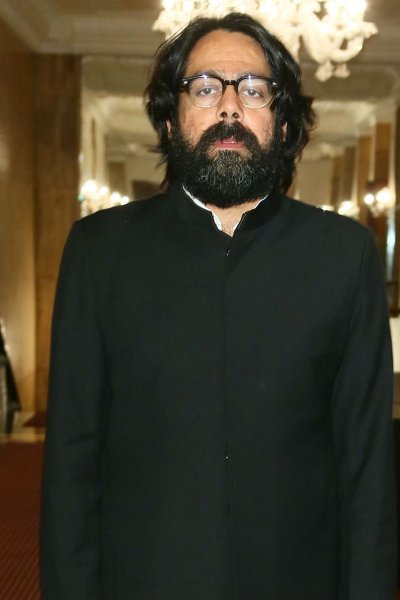
Ashim Ahluwalia
Ashim Ahluwalia is an Indian director, best known for Tamil cinema. Ashim Ahluwalia began their career in 2014. With 30 credits to their name, Ashim Ahluwalia remains one of the most prolific and celebrated talents in the industry. An emerging voice in Tamil cinema, Ashim Ahluwalia is already attracting significant attention for their distinctive work.
Biography
Ashim Ahluwalia is a Mumbai-born Indian filmmaker working in Hindi cinema, known for independent films that operate outside the mainstream Bollywood system. His debut documentary John & Jane (2005) won the National Film Award for Best First Non-Feature Film of a Director and premiered at the Toronto International Film Festival, while his narrative feature Miss Lovely (2012/2014) was officially selected at the Cannes Film Festival and won the National Film Award Special Jury Award and Best Production Design at the 61st National Film Awards. His directorial style blurs the boundaries between documentary realism and fiction, often exploring subcultures and criminal underworlds — as seen in Daddy (2017), a true-crime drama about gangster-turned-politician Arun Gawli. Ahluwalia studied film at Bard College, New York, and represents a new generation of Indian auteur filmmakers who prioritize festival circuits and unconventional storytelling over commercial Bollywood formulas.
Career Milestones
Directorial debut with documentary John & Jane, world premiere at Toronto International Film Festival
Won National Film Award for Best First Non-Feature Film of a Director
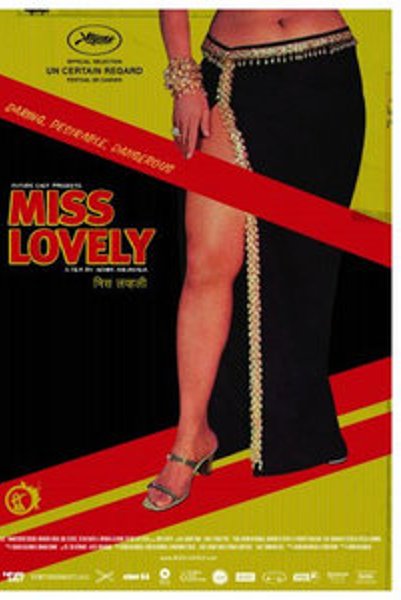
First narrative feature Miss Lovely premiered at Cannes Film Festival
View film →Won National Film Award – Special Jury Award (Feature Film)
View film →Only Indian director with official selections at Cannes, Berlin, Venice, Toronto, and SXSW film festivals
Defining Moments
Opening sequence plunging into Mumbai's C-grade film underworld — a hallucinatory montage of 1980s softcore horror film-within-film footage blended with period-accurate grime and neon, establishing the film's hypnotic visual register
Widely cited by Cannes critics as one of the most striking opening gambits in recent Indian cinema; the Un Certain Regard premiere made it a landmark of Indian indie filmmaking. Hollywood Reporter and Variety both highlighted this immersive world-building as Ahluwalia's signature achievement.
View film →The rooftop confrontation between the two Duggal brothers — Sonu's quiet, devastating breakdown as he realizes his obsession with the titular 'Miss Lovely' has destroyed both of them
Frequently cited as the film's emotional core; critics noted how Ahluwalia holds the scene in near-silence, letting the degraded, grainy visual texture do the dramatic work — a masterclass in restraint.
View film →Miss Lovely's closing image — Sonu adrift in a city that has swallowed his dreams, shot in long take against the decaying facades of 1980s Bombay
The film's National Award-winning production design and cinematography (K.U. Mohanan) peak here; the image became emblematic of a new wave of visually ambitious Indian independent cinema and is frequently reproduced in discussions of the film.
View film →The Dawood Ibrahim cricket match scene — a fleeting appearance of India's most wanted gangster watching an India-Pakistan match on TV, presented casually amid Arun Gawli's rise
Praised by Film Companion as an audaciously cool piece of historical filmmaking — the nonchalant framing of Dawood as background detail rather than spectacle was seen as a defining choice that elevated the film's credibility.
View film →Arun Gawli's prison sequences — documentary-style recreations of Dagdi Chawl and prison life that blur the line between biopic and ethnography
Film Companion's review called the production design 'immaculately detailed'; these sequences are widely discussed as the most convincing evocation of Mumbai's gangland era put on Indian screens.
View film →Ashim Ahluwalia by the Numbers
If you watched every Ashim Ahluwalia film back-to-back, you'd be at it for roughly 4 hours.
Filmography
See all 30 credits →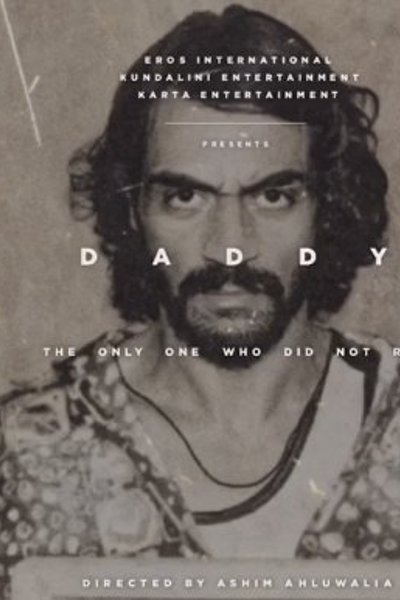
Career Analytics
Language Distribution
Films by Decade
Did You Know?
Ashim Ahluwalia's debut feature documentary 'John & Jane' premiered at the Toronto International Film Festival in 2005.
His film 'Miss Lovely' premiered in the Un Certain Regard section at the 2012 Cannes Film Festival.
He co-wrote and directed the 2015 film 'The Cinema Travellers', which won the L'Oeil d'Or (Golden Eye) award for best documentary at Cannes.
His work often explores subcultures and marginalized communities in urban India.
He is known for a distinctive visual style that blends documentary realism with stylized, atmospheric elements.
Legacy & Influence
Ashim Ahluwalia is a distinctive and influential voice in contemporary Indian cinema, known for his rigorous, genre-defying approach that challenges conventional narrative and aesthetic forms. Emerging from the world of visual arts and experimental film, Ahluwalia carved a unique path by focusing on marginal, subterranean, and often overlooked aspects of Indian society. His debut feature-length documentary, 'John & Jane' (2005), premiered at the Toronto International Film Festival and set the tone for his career. The film offered a haunting, stylized look at globalized call center culture in Mumbai, blending documentary observation with a dreamlike, cinematic sensibility. This established his signature style—one that merges the real with the hyperreal, often employing non-professional actors and a meticulously crafted visual palette. His most acclaimed work, the fictional feature 'Miss Lovely' (2012), premiered in the Un Certain Regard section at Cannes. A gritty, neon-soaked dive into the seedy underworld of 1980s Mumbai's C-grade horror-porn film industry, it was celebrated internationally for its authentic production design, atmospheric tension, and unflinching portrayal of a forgotten cinematic ecosystem. The film is considered a landmark in Indian independent cinema for its formal audacity and its excavation of a taboo cinematic history. Ahluwalia's subsequent film, 'The Prisoner' (documentary short, 2017), and his work as a producer and creative force continue to explore themes of confinement, desire, and societal edges. His contribution lies in expanding the very language of Indian filmmaking, moving it beyond mainstream commercial and parallel cinema traditions into a more personal, artistically ambitious, and internationally resonant space. He has influenced a newer generation of filmmakers to pursue bold, auteur-driven projects that prioritize visual storytelling and complex, often dark, subject matter, thereby enriching the diversity and global perception of Indian cinema.