Vinil Mathew
Vinil Mathew is an Indian director, best known for Tamil cinema. Vinil Mathew began their career in 2014. With 30 credits to their name and an average audience rating of 6.8, Vinil Mathew remains one of the most prolific and celebrated talents in the industry. Vinil Mathew is one of the most closely watched talents of their generation, with a rapidly growing body of acclaimed work.
Biography
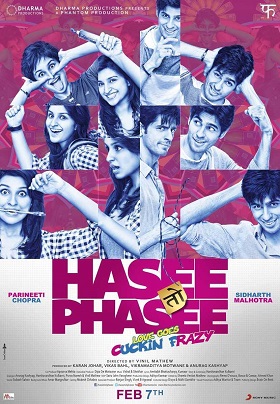
Vinil Mathew is a Delhi-born Malayalam-origin director in Hindi cinema, best known for blending romance with crime and thriller elements. His debut feature Hasee Toh Phasee (2014), produced by Dharma Productions and starring Sidharth Malhotra and Parineeti Chopra, was both a critical and commercial success. His second film, Haseen Dillruba (2021), a romantic thriller starring Taapsee Pannu, became the most-watched Hindi film on Netflix India that year with over 24 million views. A trained filmmaker from FTII Pune with an exchange stint at HFF Munich, Mathew also co-founded the production house Breathless Films and built his visual craft directing major brand campaigns for Vodafone, Nescafe, and Cadbury.
Career Milestones
Graduated from Film and Television Institute of India (FTII), Pune, and later trained at Hochschule für Fernsehen und Film (HFF) in Munich, Germany
Directed debut telefilm 'The Chosen One' for Star One, a coming-of-age story that won multiple awards in Indian television
Feature film directorial debut with Hasee Toh Phasee, produced by Dharma Productions starring Sidharth Malhotra and Parineeti Chopra, grossing ₹61.74 crore worldwide
View film →Directed Haseen Dillruba on Netflix, which became Netflix's most-watched Hindi film of the year with 24.63 million views and topped charts in 22 countries
View film →Defining Moments
Silent chemistry sequences between Nikhil and Meeta — intimate moments conveyed without heavy dialogue, including the understated lock-in-room scene where Nikhil casually deflects Meeta's protest, generating comedy and emotional depth through pure character interaction
Widely praised by critics as the film's standout directorial achievement; Variety noted the film was 'simply too well made and too enjoyable to be reflexively dismissed,' attributing it to Vinil's ability to find profound meaning in quiet, observable human moments — a hallmark of his advertising background applied to feature filmmaking
View film →Two-month pre-shoot workshop and rehearsal process for Hasee Toh Phasee — an unusually rigorous preparation regime for a Bollywood romantic comedy that resulted in naturalistic, lived-in performances from Sidharth Malhotra and Parineeti Chopra
Actor Sidharth Malhotra publicly credited the workshop for making the performances feel authentic; became a talking point about Vinil's methodical, FTII-trained approach standing apart from typical commercial Bollywood production culture
View film →The kitchen tea-making scene — Rani and Rishu share an unspoken truce while making tea together, transforming a mundane domestic act into a pivotal moment of emotional reconciliation
Cited by critics as one of the film's most effective sequences, exemplifying Vinil's signature style of finding charged emotional meaning in everyday rituals rather than relying on dramatic confrontation
View film →The rafting sequence shot in fast-moving rapids — Vinil and his DOP personally got into the raft carrying portable cameras ('holding the camera with one hand and our lives with the other') to capture the actors authentically
Became a much-discussed moment of directorial commitment; highlighted in interviews as an example of how Vinil pushes technical boundaries for emotional authenticity rather than relying on controlled studio setups
View film →The balcony-overlooking-river compositional motif — deliberate use of the Uttarakhand multi-level home's balconies against shimmering river water as a recurring visual anchor for the film's feverish romance
Noted by critics as a defining visual signature; Film Companion highlighted these frames as central to the film's atmosphere, demonstrating Vinil's advertisement-trained instinct for using space and environment to amplify emotional stakes
View film →Vinil Mathew by the Numbers
If you watched every Vinil Mathew film back-to-back, you'd be at it for roughly 4 hours.
Filmography
See all 30 credits →
Career Analytics
Genre Breakdown
Language Distribution
Films by Decade
Legacy & Influence
Vinil Mathew is a prominent Indian film director and advertising filmmaker recognized for his visually distinctive and emotionally resonant storytelling. He made a significant transition from a highly successful career in advertising, where he directed over 500 commercials and won numerous awards, to feature film direction. His cinematic debut, 'Hasee Toh Phasee' (2014), is widely regarded as a modern classic in the romantic comedy genre. The film, starring Sidharth Malhotra and Parineeti Chopra, was praised for its fresh narrative, nuanced characterizations, and departure from conventional Bollywood tropes, offering a more realistic and quirky take on relationships. Mathew's background in advertising is evident in his precise visual composition, attention to detail, and ability to craft compelling narratives within commercial frameworks. After a hiatus, he returned to direct the Netflix original film 'Mismatched' (2020), based on Sandhya Menon's novel, further establishing his relevance with a younger, digitally-native audience. The series was noted for its contemporary treatment of Gen-Z romance and aspirations. While his filmography is select, Vinil Mathew's contribution lies in bringing an advertiser's sharp, concept-driven sensibility to mainstream and streaming cinema, influencing a wave of visually sleek and character-driven narratives. His work bridges the gap between commercial appeal and substantive storytelling, marking him as a director who prioritizes craft and emotional authenticity. He is considered a key figure among directors who successfully migrated from advertising to films, expanding the visual and narrative vocabulary of popular Indian cinema.