Partho Gupte
Partho Gupte is an Indian actor, best known for Tamil cinema. Partho Gupte began their career in 2014. With 30 credits to their name and an average audience rating of 8.1, Partho Gupte remains one of the most prolific and celebrated talents in the industry. An emerging voice in Tamil cinema, Partho Gupte is already attracting significant attention for their distinctive work.
Biography
Partho Gupte is an Indian child actor and filmmaker working in Hindi cinema, best known for his lead role as Arjun Harishchand Waghmare in Amole Gupte's Hawaa Hawaai (2014). He made his acting debut in Stanley Ka Dabba (2011), directed by his father Amole Gupte, for which he won the National Film Award for Best Child Artist, a Filmfare Special Award, and a Best Actor Award at the Schlingel International Film Festival in Germany. As a filmmaker, he won the Inaugural Laszlo Pal Emerging Filmmaker Award and the Emerging Storytellers Grant sponsored by Jurassic World director Colin Trevorrow at the 2019 Scout Film Festival in Vermont. His short film Jasmine Stung (2017) won Best Short Short at the 2018 Glendale Film Festival, earning him a Certificate of Recognition from the California Legislature Assembly.
Career Milestones
Film debut as Stanley Fernandes in Stanley Ka Dabba, a critically acclaimed coming-of-age drama directed by his father Amole Gupte
Won DIAMOND Award for most convincing acting performance by a child at the Schlingel International Film Festival (Germany)
Won National Film Award for Best Child Artist
Appeared in Hawaa Hawaai as Arjun Harishchand Waghmare alongside Saqib Saleem in this sports drama directed by Amole Gupte
View film →Won Scout Emerging Storytellers Grant with mentorship from director Colin Trevorrow, transitioning from acting to filmmaking
Iconic Roles
Stanley Ka Dabba
A fourth-grade boy who hides his difficult home life from classmates while dealing with a greedy teacher who steals his food. The role won Partho the National Film Award for Best Child Artist.
Hawaa Hawaai
A determined young boy from a poor background who dreams of becoming a roller-skating champion, training under a mentor who sees his potential.
Defining Moments
Lunch break revelation — Stanley's friends discover he has been wandering the school during lunch because he has no food, and they begin secretly sharing their tiffins with him
The emotional centrepiece of the film; Partho conveys Stanley's pride and vulnerability without a word of direct admission, earning him the National Film Award for Best Child Artist and widespread critical acclaim as one of Indian cinema's finest child performances
Torn-pocket chocolate scene — Stanley tries to store a chocolate given by his teacher only to find his shirt pocket is torn, a small detail that wordlessly exposes his poverty
Frequently cited by critics as a masterclass in understated acting; the single image became the defining visual of the film and of Partho's naturalistic performance style
Candle-by-photograph scene — After the restaurant closes, Stanley lights a candle beside a photo of his parents before sleeping alone, quietly revealing his orphaned reality
The most discussed dramatic beat in the film; audiences and reviewers consistently cite it as the moment that elevates Stanley Ka Dabba from a school comedy to a deeply affecting portrait of childhood loss
Garbage-to-glory skate construction — Arjun's four friends build him a pair of roller skates from scrap materials and christen them 'hawaa hawaai', turning junk into a symbol of aspiration
The thematic and emotional centrepiece of the film; Partho's wide-eyed reaction to the handmade skates became the film's most-shared image and encapsulates the movie's core message about resourcefulness and solidarity
View film →Race-day collapse due to hepatitis — Arjun goes missing on competition day, collapsing from illness caused by malnutrition and overwork, before being revived by community support to compete and win
The dramatic climax that crystallises the film's social commentary; Partho's physical and emotional performance in this sequence drew comparisons to his Stanley Ka Dabba work and reinforced his reputation for authentic portrayals of impoverished children
View film →Partho Gupte by the Numbers
If you watched every Partho Gupte film back-to-back, you'd be at it for roughly 2 hours.
Filmography
See all 30 credits →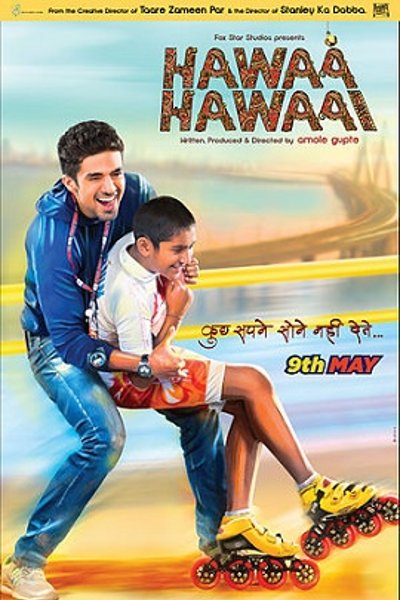
Career Analytics
Language Distribution
Films by Decade
Did You Know?
Partho Gupte is the son of acclaimed Indian filmmaker Amole Gupte.
He made his acting debut as a child artist in the film 'Stanley Ka Dabba' (2011), directed by his father.
For his debut in 'Stanley Ka Dabba', he won the National Film Award for Best Child Artist.
He is known for his naturalistic acting style, often portraying characters from modest backgrounds.
He has worked primarily in Hindi cinema, with his films often having strong social messages.
Legacy & Influence
Partho Gupte's contribution to Indian cinema, though emerging from a young career, is distinguished by his profound and authentic portrayals of childhood in complex social landscapes. He is best known for his debut lead role in the 2014 film 'Hawaa Hawaai', directed by his father, Amole Gupte. In the film, he played Arjun 'Armaan' Waghmare, a rural boy who dreams of becoming a champion inline skater despite immense socioeconomic hurdles. His performance was critically lauded for its remarkable naturalism, emotional depth, and physical dedication, avoiding the clichés often associated with child actors. The film itself is celebrated as a significant work in Indian children's cinema for tackling themes of class disparity, aspiration, and resilience without sentimentality. Partho's work established him not merely as a promising child actor but as a performer capable of carrying a nuanced narrative on his shoulders. His career trajectory, while selective, underscores a commitment to meaningful storytelling over commercial volume. By delivering a performance that was both heart-wrenching and inspiring, he contributed to a broader conversation within Indian film about representing the authentic voices and struggles of children from diverse backgrounds. His role in 'Hawaa Hawaai' remains a benchmark for child performances in Hindi cinema, demonstrating that films centered on young protagonists can possess substantial thematic weight and artistic merit.