Amrit Sagar Chopra
Amrit Sagar Chopra is an Indian director, best known for Tamil cinema. Amrit Sagar Chopra began their career in 2007. With 30 credits to their name and an average audience rating of 7.5, Amrit Sagar Chopra remains one of the most prolific and celebrated talents in the industry. Amrit Sagar Chopra is one of the most closely watched talents of their generation, with a rapidly growing body of acclaimed work.
Biography
Amrit Sagar Chopra (also credited as Amrit Sagar) is a Hindi cinema director, producer, and writer, grandson of legendary filmmaker Ramanand Sagar and son of producer Moti Sagar. His debut feature film 1971 (2007), a war drama starring Manoj Bajpayee as Major Suraj Singh and Ravi Kishan as Captain Jacob, won the National Film Award for Best Feature Film in Hindi. Trained in filmmaking at the California College of Arts where he won the Wood Malcolm Award for writing, he earlier directed the fantasy TV series Hatim on Star Plus, which achieved a 9.6 TRP rating. He followed 1971 with the romantic comedy Rabba Main Kya Karoon (2013), produced by Moti Sagar.
Career Milestones
Won Wood Malcolm Award for writing during film studies
Directed and produced debut feature film '1971'
View film →Won National Film Award for Best Feature Film in Hindi
View film →Multiple Best TV Show wins at Indian Television Academy Awards and Indian Telly Awards
Amrit Sagar Chopra by the Numbers
If you watched every Amrit Sagar Chopra film back-to-back, you'd be at it for roughly 4 hours.
Filmography
See all 30 credits →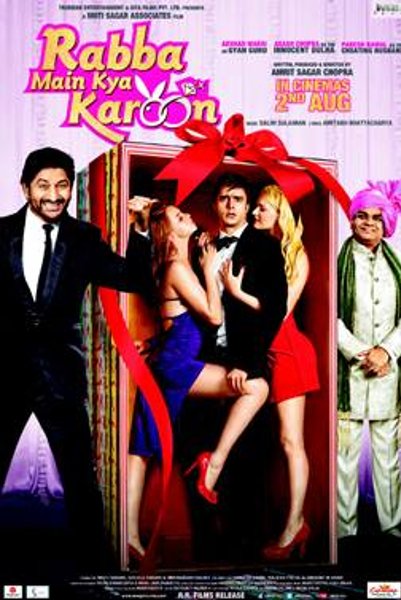
Career Analytics
Language Distribution
Films by Decade
Legacy & Influence
Amrit Sagar Chopra is a member of the prominent Chopra family, which has made significant contributions to Indian cinema across generations. As the son of filmmaker Ramanand Sagar and the brother of producer Subhash Sagar and director Prem Sagar, he is part of the creative lineage behind the iconic television epic 'Ramayan' (1987-1988). His primary contribution to the industry has been through his work as a producer and director, often in collaboration with his family's banner, Sagar Entertainment. He played a key role in the production and direction of the landmark television series 'Ramayan', which became a cultural phenomenon in India, achieving unprecedented viewership and leaving a lasting impact on Indian television and mythological storytelling. Following this, he was involved in other television productions like 'Vikram Aur Betaal' and 'Luv Kush', further cementing the Sagar family's reputation for producing quality mythological and historical content. His work helped establish a template for large-scale mythological adaptations on Indian television, influencing narrative styles, production design, and audience engagement for decades. While not as publicly prominent as some of his relatives, his behind-the-scenes role in steering major projects contributed to the family's enduring legacy in blending traditional stories with mass media, shaping a significant segment of India's visual culture in the late 20th century.