Faraz Haider
Faraz Haider is an Indian director, best known for Tamil cinema. Faraz Haider began their career in 2013. With 30 credits to their name, Faraz Haider remains one of the most prolific and celebrated talents in the industry. Faraz Haider is one of the most closely watched talents of their generation, with a rapidly growing body of acclaimed work.
Biography
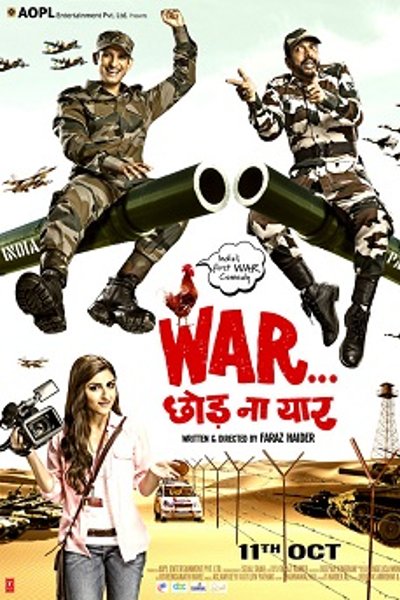
Faraz Haider is an Indian filmmaker, writer, and director working in Hindi cinema, best known for directing socially conscious comedies and dramas. He made his feature directorial debut with War Chhod Na Yaar (2013), India's first war comedy starring Sharman Joshi and Soha Ali Khan, and later directed the agriculture-based drama Mere Desh Ki Dharti (2022), starring Divyenndu Sharma and Anupriya Goenka, for which he won Best Director at the Golden Jury Film Festival 2022. A graduate of the Asian Academy of Film and Television with a Masters in Physics from Aligarh Muslim University, Haider brings a distinctively offbeat sensibility to his work, often blending satire with socially relevant subjects. His films frequently feature ensemble casts and address broader national themes, from Indo-Pak conflict to agrarian crisis.
Career Milestones
Directorial debut with War Chhod Na Yaar, a Bollywood war comedy
View film →Directed Mere Desh Ki Dharti, a rural drama screened at film festivals
View film →Won Best Director at the Golden Jury Film Festival
View film →Defining Moments
Soldiers from India and Pakistan playing cards across the Line of Control — a satirical scene where enemies bond over games and shared meals, undercutting the absurdity of war
Encapsulates the film's anti-war satire most sharply — critics cited this scene as the film's cleverest set-piece, illustrating the human cost and futility of conflict through dark comedy
View film →The opening border-bomb sequence where Indian and Pakistani captains (Sharman Joshi and Javed Jaffrey) are caught in an accidental escalation while fraternizing — setting up the film's satirical premise
Establishes Haider's directorial voice — using absurdist humor to critique Indo-Pak military tensions; reviewers noted it as a bold debut premise for a first-time filmmaker
View film →Engineers Ajay and Sameer confronting rate-fixing middlemen on behalf of farmers, using government schemes and grassroots innovation to break the exploitative supply chain
The film's dramatic climax that earned Faraz Haider the Best Director award at the Golden Jury Film Festival 2022; praised for its earnest portrayal of rural agrarian struggles
View film →Faraz Haider by the Numbers
If you watched every Faraz Haider film back-to-back, you'd be at it for roughly 4 hours. Most-paired with Dalip Tahil — 2 films together.
Filmography
See all 30 credits →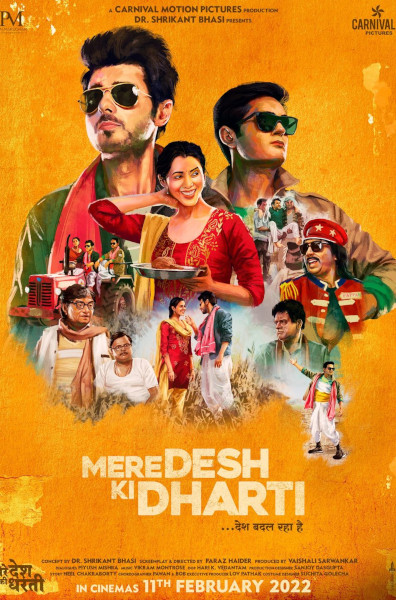
Collaboration Network
Career Analytics
Genre Breakdown
Language Distribution
Films by Decade
Top Co-Actors
See all →Faraz Haider has worked most frequently with Dalip Tahil (2 films).
Legacy & Influence
Faraz Haider is a noted Indian film director, writer, and producer primarily associated with Hindi cinema. He established his career with a distinct flair for comedy and satire, often weaving social commentary into accessible, mainstream narratives. His breakthrough came with the 2015 film 'Bhaag Johnny', a thriller, but he is most widely recognized for his 2017 directorial venture 'Fukrey Returns', the successful sequel to the 2013 cult hit 'Fukrey'. Haider's contribution lies in his ability to helm and expand a popular comedy franchise that resonated strongly with urban youth audiences. The 'Fukrey' series, known for its ensemble cast, relatable characters, and humorous take on the aspirations and misadventures of young men in Delhi, became a notable commercial success under his direction. His work on 'Fukrey Returns' demonstrated a capacity for managing a beloved property, delivering a film that met audience expectations for humor and continuity. While his filmography is selective, his involvement with the 'Fukrey' franchise cemented his place as a director capable of executing commercially viable, character-driven comedies within the mainstream Hindi film industry. His trajectory shows a focus on projects with mass appeal and a consistent tone, contributing to a specific sub-genre of youth-centric comedy in the 2010s.