Kuldip Ruhil
Kuldip Ruhil is an Indian actor, best known for Tamil cinema. Kuldip Ruhil began their career in 2011. With 30 credits to their name and an average audience rating of 6.5, Kuldip Ruhil remains one of the most prolific and celebrated talents in the industry. An emerging voice in Tamil cinema, Kuldip Ruhil is already attracting significant attention for their distinctive work.
Biography
Kuldip Ruhil is a Hindi cinema actor, writer, and director from Dehkora village near Sampla in Rohtak District, Haryana, trained in theatre direction at Punjab University Chandigarh. He is known for playing the character 'Doctor' in Sahi Dhandhe Galat Bande (2011), directed by Parvin Dabas and co-starring Anupam Kher and Sharat Saxena. Beyond acting, he contributed dialogue and script work on Mickey Virus (2013) and Brij Mohan Amar Rahe (2017), and made his directorial debut with Cheer Haran (2017). He has also appeared in the popular web series Aashram (2020) directed by Prakash Jha.
Career Milestones
Film acting debut
View film →Notable acting role as Banwari
Script/dialogue consultant credit
Directorial debut
Prominent web series role
Kuldip Ruhil by the Numbers
If you watched every Kuldip Ruhil film back-to-back, you'd be at it for roughly 2 hours.
Filmography
See all 30 credits →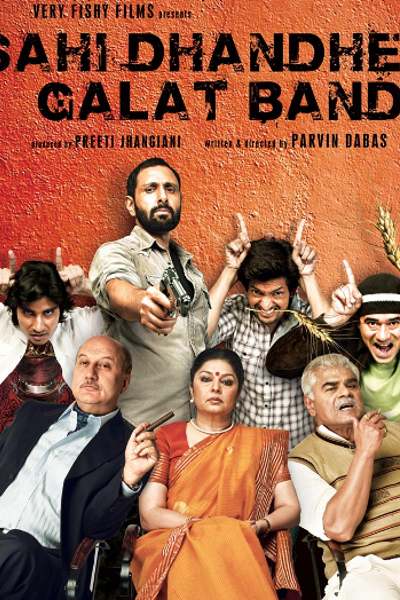
Career Analytics
Language Distribution
Films by Decade
Legacy & Influence
Kuldip Ruhil is a supporting actor in Indian cinema whose career is defined by brief but notable appearances in character-driven films. His most recognized role is as the Doctor in the 2011 social drama 'Sahi Dhandhe Galat Bande,' directed by Parvin Dabas. The film, which explores themes of farmer exploitation and activism in Delhi's outskirts, features Ruhil in a pivotal scene that underscores the narrative's tension between rural plight and urban politics. His performance, though limited in screen time, contributed to the film's grounded, realistic texture. Beyond this credit, his filmography appears sparse in mainstream records, suggesting a career focused on niche projects or regional cinema not widely documented. His contribution lies in embodying the archetypal character roles that populate the fabric of realist Hindi cinema, providing authentic supporting layers to central narratives. Without a substantial public biography or a long list of prominent credits, his impact remains within the realm of specific film contexts rather than industry-wide influence. He represents the many skilled character artists who, without achieving stardom, fulfill essential functions in storytelling, particularly in films aiming for social commentary. His career trajectory, as evidenced by available information, reflects the opportunities and limitations for actors specializing in minor but functional parts.