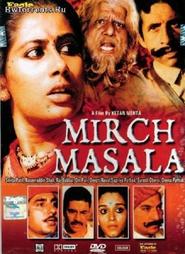
Mirch Masala Full Story Explained (1987)
Imagine a small village in 1940s colonial India. A powerful tax collector, the Subedar, rides in with his soldiers. He demands not just taxes, but also the women. One woman, Sonbai, refuses to be a victim. She slaps him and runs for safety into a spice factory. This is the story of her fight, and the fight of every woman inside that factory. Directed by Ketan Mehta, this 1987 Hindi film stars Smita Patil as the fearless Sonbai and Naseeruddin Shah as the terrifying Subedar. It is a story about courage, unity, and the power of ordinary people. The film won the National Award for Best Feature Film in Hindi. It remains a powerful and emotional watch even today.
A Slap That Changes Everything
The Subedar wants Sonbai. He sends his men to bring her to his camp. Sonbai refuses to go. When the Subedar tries to force himself on her, she does the unthinkable. She slaps him hard across the face. Then she runs. This single act of defiance sets the entire village on fire.
Full Plot
The film is set in a small Indian village in the early 1940s, during British colonial rule. The Subedar, a local tax collector, arrives with his soldiers. He is arrogant and cruel. He and his men scare the women who are fetching water. Only one woman, Sonbai, stands her ground. She politely asks them not to let their horses dirty the drinking water. The Subedar notices her confidence and becomes obsessed.
The Subedar sets up his camp. The village headman, Mukhi, visits him to pay respect. Mukhi is a weak man who bows to the Subedar's power. The Subedar's gramophone fascinates the village men. Meanwhile, Mukhi's wife, Saraswati, resents his frequent absences. The schoolmaster tries to get her to send her daughter to school, but other women mock her. Mukhi pulls his daughter out and beats his wife. Mukhi's younger brother is in love with a lower-caste girl, but he is too scared to tell anyone. When their relationship is discovered, the girl's father beats her. He asks Mukhi to agree to the marriage, but Mukhi refuses because of caste.
The Subedar's soldiers loot the village for food and supplies. Mukhi brings a woman to the Subedar, but the Subedar is disappointed she is not Sonbai. He beds her anyway. He continues to pursue Sonbai. He tries to be charming, but she rejects him. When he turns forceful, she slaps him and runs away. Enraged, he orders his soldiers to bring her to him.
Sonbai runs to the village spice factory. The old Muslim gatekeeper, Abu Mian, sees her fear. He shuts the factory doors and locks them. The soldiers cannot enter. The Subedar tries to pressure the factory owner and Mukhi to open the gates, but Abu Mian refuses. He says his job is to protect the factory workers, and he will not compromise.
The Subedar threatens to destroy the entire village. Mukhi calls a village panchayat. The villagers are scared. They blame Sonbai for everything. They decide she should go to the Subedar. The schoolmaster argues that if they give in once, the Subedar will demand more women, maybe even Mukhi's own wife. Mukhi beats the schoolmaster and throws him out. Mukhi tells the Subedar they will hand over Sonbai, but only if he promises not to make further demands. The Subedar laughs and has the schoolmaster tied to a post.
Mukhi pressures Sonbai, but she stands firm. Inside the factory, the women who once supported her now turn against her. They fear that if she does not yield, the Subedar will send his men to molest all the women. Sonbai nearly relents. But Abu Mian stops her. He chides the villagers for being cowards. He tells Sonbai to be strong. She resolves to fight.
The Subedar orders his soldiers to charge the factory. They smash down the door. Abu Mian shoots one soldier, but he is shot dead immediately. The Subedar enters and grabs Sonbai. But then, the women of the factory attack. They grab bags of fresh red chilli powder. In teams of two, they throw the powder into the Subedar's face and eyes. He screams in pain. The film ends with him on his knees, blinded and defeated.
Act Breakdown
The Subedar Arrives
The Subedar and his soldiers ride into the village. They scare the women fetching water. Sonbai alone stands her ground. The Subedar becomes obsessed with her. He tries to woo her, but she rejects him. The village men bow to his power. Mukhi brings him a woman, but he is disappointed it is not Sonbai.
The Slap and the Chase
The Subedar's demands turn forceful. Sonbai slaps him and runs away. She takes refuge in the spice factory. Abu Mian shuts the doors. The Subedar is enraged. He threatens to destroy the village if Sonbai is not handed over. The village panchayat decides to give her up. This sets up the second half of the film.
The Siege of the Factory
The villagers pressure Sonbai to give in. The women inside the factory also turn against her. She nearly relents, but Abu Mian stops her. He encourages her to fight. The Subedar orders his soldiers to break down the door. Abu Mian shoots one soldier but is killed. The Subedar enters the factory.
The Chilli Powder Attack
The Subedar grabs Sonbai. But the women of the factory attack him with bags of red chilli powder. They throw the powder into his face and eyes. He screams in pain and falls to his knees. The women defeat him. The film ends with the Subedar blinded and the women victorious.
Characters
Sonbai
Played by Smita Patil
Sonbai is a beautiful and confident village woman. Her husband works far away in the city. She is not afraid to speak up against injustice. When the Subedar tries to force himself on her, she slaps him and runs to the spice factory. She is the heart of the story. In the end, she leads the women in their final attack against the Subedar.
Subedar
Played by Naseeruddin Shah
The Subedar is the arrogant and cruel tax collector. He works for the British. He believes he can have anything and anyone he wants. He becomes obsessed with Sonbai after she rejects him. His ego drives him to destroy the village to get her. In the end, he is blinded and defeated by the women with chilli powder.
Abu Mian
Played by Om Puri
Abu Mian is the old Muslim gatekeeper of the spice factory. He is wise and brave. He shuts the factory doors to protect Sonbai from the Subedar. He refuses to give in to pressure from the village leaders. He encourages Sonbai to stand her ground. He sacrifices his life to protect her, getting shot by the soldiers.
Mukhi
Played by Suresh Oberoi
Mukhi is the village headman. He is weak and cowardly. He bows to the Subedar's power. He beats his wife for sending their daughter to school. He pressures Sonbai to give in to the Subedar to save the village. He represents the failure of the village men to protect their women. Suresh Oberoi won the National Award for Best Supporting Actor for this role.
Schoolmaster
Played by Benjamin Gilani
The schoolmaster is the voice of reason in the village. He tries to get Saraswati to send her daughter to school. He argues against the panchayat's decision to hand over Sonbai. He warns that the Subedar will not stop with one woman. For his courage, Mukhi beats him and the Subedar has him tied to a post.
Saraswati
Played by Deepti Naval
Saraswati is Mukhi's wife. She is unhappy with her husband's behavior. She wants her daughter to be educated. She sends her to school, but other women mock her. Mukhi pulls the daughter out and beats Saraswati for disobeying him. She is a victim of the patriarchal system in the village.
Scene Highlights
The Slap
The Subedar tries to force himself on Sonbai. He grabs her arm. She does not cry or beg. She looks him in the eye and slaps him hard across the face. The sound echoes. The Subedar is shocked. No one has ever done this to him. Sonbai runs away. This scene is the turning point of the entire film.
Abu Mian Shuts the Door
Sonbai runs into the spice factory, scared. Abu Mian sees her. He understands the danger. Without a word, he walks to the heavy wooden door. He pushes it shut. He locks it. The sound of the lock clicking is powerful. He has made a choice. He will protect her, even if it costs him his life.
The Panchayat Betrayal
The village men sit in a circle. The Subedar's threat hangs over them. They are scared. They blame Sonbai. The schoolmaster argues that giving in will only lead to more demands. Mukhi beats him and throws him out. The men decide to hand over Sonbai. It is a scene of deep cowardice and betrayal.
Abu Mian's Death
The soldiers smash down the factory door. Abu Mian stands alone with his old gun. He fires and kills one soldier. But the soldiers shoot him back. He falls to the ground. He is dead. The door is open. The Subedar walks in. It is a heartbreaking moment. The protector has fallen.
The Final Attack
The Subedar grabs Sonbai. The women watch. Then, something snaps. They grab bags of red chilli powder. In teams of two, they attack. They throw the powder into the Subedar's face. He screams. He cannot see. He falls to his knees. The women do not stop. They keep attacking until he is defeated. It is a shocking and triumphant ending.
Cast & Context
Mirch Masala brought together some of the finest actors of Indian parallel cinema. Smita Patil and Naseeruddin Shah were already icons of realistic, socially conscious cinema. They had worked together in films like 'Bhumika' and 'Aakrosh'. Om Puri, another giant of the art-house movement, played the noble Abu Mian. Suresh Oberoi, known for commercial films, delivered a career-best performance as Mukhi, winning the National Award. The film also featured talented actresses like Deepti Naval, Ratna Pathak Shah, and Supriya Pathak. This cast was a dream team for a film that aimed to be both artistic and impactful.
Themes
Women's Unity and Power
The film shows how women can overcome oppression when they unite. At first, the women inside the factory turn against Sonbai. They want her to give in to save themselves. But in the end, they all fight together. They use the chilli powder, their everyday tool, as a weapon. Their unity defeats the powerful Subedar.
Resistance Against Colonial Oppression
The Subedar represents British colonial rule. He is a local man working for the British, but he acts like a king. He loots the village and takes what he wants. Sonbai's resistance is a symbol of India's fight against colonial oppression. The film shows that ordinary people can stand up to powerful oppressors.
Cowardice of Patriarchy
The village men are shown as weak and cowardly. They bully their wives at home but cannot face the Subedar. Mukhi beats his wife for sending their daughter to school. The panchayat decides to hand over Sonbai to save themselves. Abu Mian calls them out for their cowardice. The film criticizes the patriarchal system that fails to protect women.
Sacrifice and Courage
Abu Mian sacrifices his life to protect Sonbai and the other women. He knows he will die, but he does not run. His courage inspires Sonbai to keep fighting. The film shows that true courage is standing up for what is right, even when it costs everything.
Music & Soundtrack
ComposerRaj Kamal
The film's music is subtle and atmospheric. It does not have typical Bollywood songs. The background score by Raj Kamal builds tension throughout the film. It uses traditional folk instruments to create a sense of time and place. The music plays a key role in the emotional climax, making the chilli powder attack even more powerful.
Similar Films
Both films are set in rural India and focus on the struggle of ordinary people against oppressive systems. They share a similar realistic style and social message.
This film also stars Om Puri and deals with themes of oppression and resistance. It has the same gritty, realistic tone as Mirch Masala.
Directed by Shyam Benegal, this film also tells the story of a woman who is abducted by powerful men. It shares the theme of women's resistance against feudal oppression.
Starring Naseeruddin Shah and Smita Patil, this film is about a tribal man who rebels against an oppressive system. It has the same raw energy and social commentary.
Ending Explained
The ending of Mirch Masala is both shocking and satisfying. The Subedar's soldiers break down the factory door. Abu Mian shoots one soldier, but he is shot dead immediately. The Subedar enters the factory. He grabs Sonbai. It looks like he has won. But then, something unexpected happens. The women of the factory do not run. They do not scream. They have been grinding red chillies all day. They grab bags of the fresh, fine chilli powder. In teams of two, they attack the Subedar. They throw the powder directly into his face and eyes. He screams in agony. He falls to his knees, blinded and burning. The women do not stop. They keep attacking until he is completely defeated. The film ends with the Subedar on his knees, screaming in pain. The women stand over him, covered in red dust. They have won. The message is clear: even the most powerful oppressor can be defeated when ordinary people unite and fight back with whatever they have. The ending is a powerful statement about resistance, unity, and the strength of women.
Mirch Masala is a must-watch for anyone who loves powerful, meaningful cinema. It is not a typical Bollywood film. There are no songs or dances. The pace is slow and deliberate. But the story is gripping. The performances are outstanding. Smita Patil is brilliant as Sonbai. Naseeruddin Shah is terrifying as the Subedar. The climax is one of the most satisfying in Indian cinema. If you enjoy films about resistance, women's empowerment, or colonial history, you will love this film. It is a classic that has only grown more relevant with time.
Frequently Asked Questions
No, Mirch Masala is not based on a true story. It is a fictional film written by Shafi Hakim and Hriday Lani. However, it is set in a real historical context. It shows the oppression of villagers by tax collectors during British colonial rule in India.
Mirch Masala translates to 'Hot Spice' in English. The name refers to the red chilli powder that is central to the film's climax. The women use the spice as a weapon to defeat the Subedar. The title is a perfect fit for the story.
The film won the National Film Award for Best Feature Film in Hindi. Suresh Oberoi won the National Film Award for Best Supporting Actor for his role as Mukhi. Sanjiv Shah won the National Award for Best Editing. The film was also nominated for the Golden Prize at the 15th Moscow International Film Festival.
Yes, Mirch Masala is widely considered a feminist film. It shows women rising up against a male oppressor. The village men are shown as weak and cowardly. The women are the ones who take action and defeat the villain. The film celebrates women's strength and unity.
Mirch Masala is available on YouTube. The National Film Development Corporation of India (NFDC) has uploaded the full film on their official channel. You can watch it for free. It is also sometimes available on other streaming platforms.