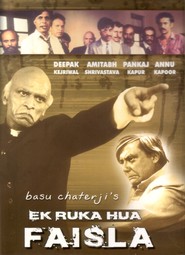
Ek Ruka Hua Faisla(1986)
'Ek Ruka Hua Faisla' is a 1986 Indian Hindi-language legal drama film directed by Basu Chatterjee. It stars Deepak Qazir Kejriwal, Amitabh Srivastav, Pankaj Kapur, S. M. Zaheer, and K. K. Raina. The film is a remake of the 1957 American film '12 Angry Men'. The story follows twelve jurors who must decide the fate of a teenage boy accused of murdering his father. The entire film takes place inside a single jury room. It is notable for its intense dialogue, lack of music, and powerful ensemble performances. The film was produced for Doordarshan and has since gained a cult following. It is widely considered one of the best Hindi remakes of a Hollywood film.
Ek Ruka Hua Faisla (1986) OTT release date is not officially announced yet — GudVibe tracks its streaming availability daily.
Where to watch:Quick Facts
- Theatrical Release
- 24 March 1986
- Director
- Basu Chatterjee
- Language
- Hindi
- Runtime
- 2h 7m
- Rating
- 4.8/10
Storyline
A teenage boy from a slum is on trial for killing his father. The evidence seems clear. Twelve jurors must decide his fate. Eleven of them vote guilty immediately. One man refuses to agree. He believes the case deserves a real discussion. He must convince the other eleven to look at the facts again.
“One voice can change everything.”
Film Details
Parental Guide
Vibe & Tags
Cast & Crew


Reunion Meter
Frequent partnerships reunited for Ek Ruka Hua Faisla
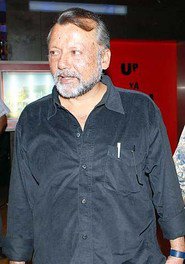
Cast reunions in this film: Annu Kapoor & Pankaj Kapur (3 films together), and Annu Kapoor & Ranjit Kapoor (2 films together).
Trivia
- The film was shot almost entirely in one room, with only a few brief scenes outside it.
- It was a direct remake of the 1957 Hollywood classic '12 Angry Men', keeping the same plot and structure.
- Actor Pankaj Kapur made his film debut with this movie, playing Juror No. 8, the role originally played by Henry Fonda.
- The film was not a major commercial success upon release but later gained a strong cult following on television and home video.
- Director Basu Chatterjee was known for light-hearted comedies, making this intense courtroom drama a departure from his usual style.
- The movie's dialogue-heavy script required precise timing from all twelve actors, who shared the screen for most of the runtime.
- Unlike many Hindi films of the era, it had no songs, keeping focus entirely on the tense jury deliberations.