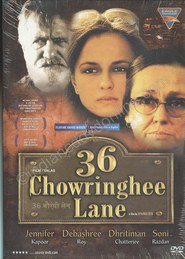
36 Chowringhee Lane Full Story Explained (1981)
Imagine being old, alone, and forgotten in a city that doesn't care. That's the life of Violet Stoneham, an Anglo-Indian teacher living in a tiny flat at 36 Chowringhee Lane in Calcutta. This 1981 film, directed by Aparna Sen in her debut, stars Jennifer Kendal in a heart-wrenching role. Violet teaches Shakespeare to bored schoolgirls, visits her dying brother, and talks to her cat. Her world is small and quiet. Then one Christmas, she meets a former student and her boyfriend. They use her kindness for their own gain. What follows is a gentle but devastating story about loneliness, trust, and the cruelty of being used. This film won awards and broke new ground for English-language Indian cinema. It will stay with you long after the credits roll.
A Lonely Christmas Day
It's Christmas in Calcutta. Violet Stoneham walks home from church alone. She has no family to celebrate with. Her only companion is her cat, Sir Toby. Then she spots a familiar face — Nandita, a former student. Nandita is with her boyfriend, Samaresh. Violet's face lights up. She invites them for coffee. They hesitate but agree. For Violet, this is a miracle. She has someone to talk to.
Full Plot
Violet Stoneham is an Anglo-Indian schoolteacher living alone in a small flat at 36 Chowringhee Lane in Calcutta. Her brother Eddie is senile and in a nursing home. Her niece Rosemary just got married and moved away. Her old friends have died or left. She has no one except her cat, Sir Toby. She teaches Shakespeare to bored schoolgirls who don't care. Her life is quiet, lonely, and routine.
One Christmas Day, Violet meets Nandita, a former student, and her boyfriend Samaresh on the street. She invites them for coffee. They accept reluctantly. They quickly realize Violet's flat is empty during the day. Samaresh asks if he can use it to write his novel. Violet agrees happily. For a while, the arrangement works. Samaresh and Nandita have privacy. Violet has company when she returns home. She grows fond of them and starts to see them as friends.
But Nandita and Samaresh are young and selfish. They don't truly care about Violet. They use her flat for their meetings. They don't invite her to their parties. They don't think about her feelings. Violet, desperate for connection, doesn't see the truth. She buys them gifts. She bakes a cake for their wedding. She imagines they are her family.
Time passes. Nandita and Samaresh get married and move into a new house. They have new friends and a new life. Violet is still alone in her flat. She wants to see them on Christmas. She bakes a cake. She calls them. They lie and say they are going out of town. Violet decides to drop the cake at their house anyway. She walks through the cold streets. When she reaches their door, she hears music and laughter. She sees the party through the window. They are home. They lied to her.
Violet leaves the cake at the door and walks away. She returns to her empty flat. Sir Toby is gone. She is completely alone. She sits down and opens King Lear. She begins to recite the lines aloud. A stray dog sits outside her window and listens. That is her only audience. The film ends with her voice fading into the night.
Act Breakdown
Violet's Lonely World
We meet Violet Stoneham. She is an Anglo-Indian teacher living alone in Calcutta. Her niece Rosemary gets married and leaves. Her brother Eddie is in a nursing home. She has no one except her cat. She teaches Shakespeare to bored students. Her life is quiet and empty. Then she meets Nandita and Samaresh on Christmas. She invites them home. A new chapter begins.
A False Friendship
Nandita and Samaresh start using Violet's flat. Samaresh says he wants to write, but really he wants privacy with Nandita. Violet is happy to help. She grows attached to them. She buys them gifts. She bakes for them. She starts to believe they are her friends. The audience can see the imbalance. Violet is giving everything. The couple is taking without giving back.
The Wedding and the Lie
Nandita and Samaresh get married. Violet is invited but feels out of place. After the wedding, the couple moves on. They buy a house. They make new friends. Violet is forgotten. She calls them on Christmas. They lie and say they are out of town. She decides to drop off a cake anyway. She discovers the truth. They are having a party without her.
The Final Walk Home
Violet leaves the cake at the door. She walks home alone through the cold streets. She reaches her flat. Sir Toby is gone. She is completely alone. She sits down and opens King Lear. She recites the lines aloud. A stray dog sits outside her window and listens. The film ends. Violet's voice fades into the night. The loneliness is complete.
Characters
Violet Stoneham
Played by Jennifer Kendal
Violet is an Anglo-Indian schoolteacher in her 50s. She lives alone in a small flat at 36 Chowringhee Lane. She teaches Shakespeare to uninterested schoolgirls. She is kind, polite, and deeply lonely. Her only family is her senile brother Eddie and her cat Sir Toby. She craves human connection and gives her trust too easily. In the end, she is betrayed by the only people she thought were her friends. She is left completely alone, reciting King Lear to a stray dog.
Nandita Roy
Played by Debashree Roy
Nandita is a young Bengali woman and Violet's former student. She is in love with Samaresh and wants privacy for their relationship. She is not malicious but is thoughtless and selfish. She uses Violet's kindness without truly seeing her as a friend. She lies to Violet about being out of town on Christmas. She represents the new, modern India that has no place for the old Anglo-Indian world.
Samaresh Moitra
Played by Dhritiman Chatterjee
Samaresh is an aspiring writer and Nandita's boyfriend. He is charming and manipulative. He asks to use Violet's flat for his work, but really he wants privacy with Nandita. He treats Violet as a convenience, not a person. He is the one who suggests lying to her about the Christmas party. He is selfish and careless with other people's feelings.
Eddie Stoneham
Played by Geoffrey Kendal
Eddie is Violet's older brother. He is senile and lives in a nursing home. He is the last surviving member of Violet's immediate family. His condition worsens throughout the film. He eventually dies, leaving Violet even more alone. His presence reminds Violet of her own mortality and fading world.
Rosemary Stoneham
Played by Soni Razdan
Rosemary is Violet's niece. She gets married at the beginning of the film and moves away. Her departure leaves Violet completely alone. She represents the younger generation moving on and leaving the old behind. She does not appear again after the wedding.
Scene Highlights
The Christmas Invitation
Violet meets Nandita and Samaresh on the street after church. She is overjoyed to see a familiar face. She invites them for coffee. They hesitate but agree. In her flat, she serves them cake and talks about Shakespeare. Her face is bright with happiness. This is the first time we see her truly smile. The scene sets up the entire relationship. Violet is desperate for connection. The couple is just being polite.
The Flat Key Exchange
Samaresh asks Violet if he can use her flat during the day. He says he needs a quiet place to write his novel. Violet agrees without hesitation. She hands him a spare key. Her trust is absolute. She doesn't ask any questions. The audience knows he is lying. He wants privacy with Nandita. The key exchange is a symbol of Violet's vulnerability. She gives everything. He takes everything.
The Wedding Cake
Nandita and Samaresh get married. Violet bakes them a beautiful cake. She brings it to the wedding. She stands alone in a corner. No one talks to her. The couple barely acknowledges her. Violet smiles anyway. She is happy for them. But the scene is painful to watch. She is an outsider at the only event that matters to her. The cake is a symbol of her love. No one eats it.
The Christmas Party Discovery
This is the emotional climax of the film. Violet walks to Nandita and Samaresh's house. She carries a cake. She hears music and laughter. She looks through the window. She sees the party. She sees the couple laughing with their friends. The truth hits her. They lied. They didn't want her there. She leaves the cake at the door. She walks away. Her face is blank. The betrayal is complete.
The Final Recitation
Violet sits alone in her flat. She opens King Lear. She begins to recite. Her voice is steady but sad. She is talking to no one. But outside the window, a stray dog sits and looks at her. It is the only audience she has. The camera holds on her face. The light is dim. The city is quiet. The scene is heartbreaking. It shows the ultimate loneliness of a woman who has been forgotten by everyone.
Cast & Context
Jennifer Kendal was a British actress who lived in India. She was married to Shashi Kapoor, the film's producer. This was one of her most famous roles. She brought a quiet dignity to Violet. Dhritiman Chatterjee was a well-known Bengali actor. He had worked with Satyajit Ray. Debashree Roy was a popular actress in Bengali cinema. The casting of real-life father Geoffrey Kendal as Violet's brother added emotional depth. The film marked Aparna Sen's directorial debut. She had been a leading actress. This film showed her talent behind the camera.
Themes
Loneliness and Isolation
The film is a deep exploration of loneliness. Violet has no family, no friends, and no community. She talks to her cat. She recites poetry to herself. She clings to anyone who shows her kindness. The city of Calcutta is full of people, but she is invisible. The final image of her reciting to a stray dog shows the depth of her isolation. The film asks: what happens to people when society forgets them?
Betrayal of Trust
Nandita and Samaresh betray Violet's trust completely. They use her home for their private meetings. They pretend to be her friends. They lie to her face about the Christmas party. Violet gives them everything — her time, her space, her love. They give her nothing but lies. The betrayal is not dramatic or violent. It is quiet and cruel. It is the kind of betrayal that breaks a person's spirit.
The End of an Era
Violet is a relic of the British Raj. She is Anglo-Indian, Christian, and English-speaking. After independence, her community lost its privileged status. Most Anglo-Indians left India. Violet stayed. She is now a stranger in her own country. The new India — represented by Nandita and Samaresh — has no use for her. She is a ghost from a past that no one remembers. The film is a elegy for a disappearing world.
The Cruelty of Kindness
Violet's kindness is her weakness. She gives without asking for anything in return. She trusts people who don't deserve it. She opens her home to strangers. The film shows that kindness can be exploited. Nandita and Samaresh take advantage of her generosity. They never stop to think about her feelings. The film asks: is it better to be kind and get hurt, or to be cold and safe?
Music & Soundtrack
The film uses two pre-existing songs. 'Itsy Bitsy Teenie Weenie Yellow Polkadot Bikini' plays during a lighthearted scene. It contrasts with Violet's loneliness. 'Silent Night' plays during the Christmas scenes. It adds a layer of sadness and irony. The music is not original but is used effectively to highlight the film's themes.
Similar Films
Both films are about loneliness and unexpected connections in a big Indian city. Both have quiet, emotional storytelling.
Both films explore the life of an aging Anglo-Indian woman in India. Both deal with themes of isolation and memory.
Both films deal with cultural displacement and the feeling of being an outsider. Both are set in Calcutta and the US.
Both films focus on family relationships and the challenges of aging. Both have a gentle, character-driven tone.
Ending Explained
The ending of 36 Chowringhee Lane is quiet but devastating. Violet walks home after discovering Nandita and Samaresh's lie. She leaves the cake at their door. She doesn't confront them. She doesn't cry. She just walks. The streets are empty. The city is dark. She reaches her flat at 36 Chowringhee Lane. She opens the door. The room is cold and silent. Sir Toby, her cat, is gone. She sits down. She picks up a copy of King Lear. She begins to recite the lines aloud. Her voice is steady but sad. She is talking to no one. But outside the window, a stray dog sits and looks at her. It is the only living thing that hears her. The film ends with her voice fading. The message is clear: Violet is completely alone. Her only companion is a stray dog. The betrayal has broken her last hope. She will spend the rest of her life in silence, reciting poetry to an empty room. The ending is a powerful statement about loneliness, aging, and the cruelty of a world that forgets its old people.
36 Chowringhee Lane is a must-watch for anyone who loves quiet, emotional cinema. It is not a fast or exciting film. It is slow, gentle, and deeply sad. The strength is Jennifer Kendal's performance. She makes you feel every moment of Violet's loneliness. The film is honest about the cruelty of being used and forgotten. It is a perfect film for viewers who appreciate character studies and social commentary. If you need action or comedy, skip it. But if you want a film that stays with you for days, watch this. It is a masterpiece of understated storytelling.
Frequently Asked Questions
No, the film is not based on a true story. It is an original screenplay written by Aparna Sen. However, the character of Violet Stoneham represents the real-life experience of many Anglo-Indians in post-independence India. The film is a fictional story that reflects a historical reality.
The film is primarily in English. It also has some dialogues in Bengali and Hindi. It was one of the first Indian feature films to use English as the main language. This was a bold choice at the time.
They lied because they didn't want Violet at their Christmas party. They thought she would be 'a fish out of water' among their young, modern friends. They didn't see her as a real friend. They saw her as an old, lonely woman who didn't fit in. Their lie was cruel and thoughtless.
The film won several major awards. Aparna Sen won the National Film Award for Best Director. Ashok Mehta won for Best Cinematography. The film also won the National Film Award for Best Feature Film in English. Jennifer Kendal was nominated for a BAFTA Award for Best Actress.
The film was shot in Calcutta (now Kolkata). The flat used for Violet's home was at 26 Chowringhee Road. The film shows many famous landmarks including the Indian Museum, the Maidan, Eden Gardens, and the High Court. The city itself is a character in the film.