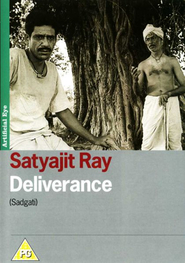
Sadgati Full Story Explained (1981)
Sadgati is a 1981 Hindi television film directed by the legendary Satyajit Ray. It is based on a short story by Munshi Premchand. The film stars Om Puri as Dukhi, a poor Dalit grass cutter. Smita Patil plays his wife Jhuria. Mohan Agashe plays the cruel Brahmin priest Ghasiram. The film is a brutal look at the caste system in rural India. It shows how a simple request for a wedding date leads to a man's death. Ray called it a deeply angry film, like a bow stretched taut. The film was made for Doordarshan and was their first colour production. It won the National Film Award – Special Jury Award. The story is short but devastating. Every scene builds tension until the tragic end. This is not an easy film to watch. But it is an important one. It forces you to see the cruelty of untouchability.
A Deadly Request
Dukhi is a poor Dalit grass cutter. He has just recovered from a high fever. His daughter Dhania needs to get married. He needs the village priest to fix an auspicious date. So he carries a pile of grass as a gift to Ghasiram, the Brahmin. This simple request will cost him his life.
Full Plot
The film is set in a small Indian village. Dukhi, a poor Dalit grass cutter, lives with his wife Jhuria and their daughter Dhania. Dukhi has just recovered from a high fever. He needs to get his daughter married. For that, he needs the village Brahmin priest, Ghasiram, to fix an auspicious date. Dukhi carries a bundle of grass as a gift to the priest's house. His wife Jhuria asks him to eat first and rest. But Dukhi refuses. He is afraid of missing the priest.
At the priest's house, Ghasiram scolds Dukhi for bothering him. He says he has many important tasks. He agrees to help, but only if Dukhi works for him. First, he orders Dukhi to sweep the verandah. Dukhi does it. Then he tells Dukhi to bring a pile of husks from the store room and put it in the cowshed. Dukhi does that too. Finally, Ghasiram orders Dukhi to chop a thick log of wood lying under a banyan tree. Dukhi does not know how to chop wood properly. But he is too afraid to say no.
Dukhi works under the hot sun. He is hungry and exhausted. He has not eaten since morning. Ghasiram's wife sees him and thinks of giving him food. But she stops herself. She does not want to feed an untouchable. Dukhi grows weaker. He rests under the banyan tree. But Ghasiram comes and forces him to get up. He warns Dukhi that if he does not finish the work, he will not fix the wedding date. Dukhi uses all his remaining strength. He lifts the axe and swings at the log. He collapses and dies on the spot.
When Ghasiram discovers the dead body, he panics. He cannot touch Dukhi because of his caste. He asks his wife for advice. She tells him to get other lower caste people to remove the body. Ghasiram goes to them, but they all refuse. They are afraid of getting into trouble with the police. The body lies near the path that Brahmins use to go to the well. They complain that they cannot pass because the path is defiled by a dead untouchable.
As evening falls, Ghasiram decides to act. He ties a rope around Dukhi's ankle. He is careful not to touch the corpse. He drags the body to a dumping ground outside the village. Then he returns and sprinkles holy Ganges water on the spot where the body lay. He wants to purify the ground. Meanwhile, Jhuria waits for Dukhi to come home. She eventually learns that her husband is dead. The film ends with her anguished scream. Dukhi died for nothing. The wedding date was never fixed. The priest faced no consequences.
Act Breakdown
The Request
Dukhi, a poor Dalit, visits the Brahmin priest Ghasiram. He wants an auspicious date for his daughter's wedding. Ghasiram agrees but demands labour in exchange. Dukhi begins sweeping the verandah and carrying husks. He is weak from a recent fever.
The Impossible Task
Ghasiram gives Dukhi the hardest task: chopping a thick log of wood. Dukhi does not know how. He works under the sun without food. Ghasiram's wife refuses to feed him because of his caste. Dukhi collapses from exhaustion.
The Death
Ghasiram forces Dukhi to continue working. Dukhi uses his last strength to lift the axe. He swings and falls dead. The log is still whole. Ghasiram panics. He cannot touch the body. He tries to get others to remove it, but no one agrees.
The Disposal
As night falls, Ghasiram ties a rope around Dukhi's ankle. He drags the body to a dumping ground. He sprinkles holy water to purify the spot. Jhuria learns of her husband's death. The film ends with her scream. Dukhi's sacrifice is meaningless.
Characters
Dukhi
Played by Om Puri
Dukhi is a poor Dalit grass cutter. He is a loving father who wants to arrange his daughter's marriage. He is weak from a recent fever but works tirelessly for the Brahmin priest. He dies from exhaustion and hunger while chopping wood. His death is ignored and his body is dragged away like garbage.
Jhuria
Played by Smita Patil
Jhuria is Dukhi's wife. She is caring and worried about her husband's health. She begs him to eat and rest before going to the priest's house. She waits for him all day, only to learn he is dead. Her scream at the end shows her grief and helplessness.
Ghasiram
Played by Mohan Agashe
Ghasiram is the village Brahmin priest. He is arrogant, cruel, and exploitative. He uses his power to force Dukhi into hard labour. When Dukhi dies, he panics and drags the body away to avoid blame. He shows no remorse and only cares about ritual purity.
Lakshmi
Played by Gita Siddharth
Lakshmi is Ghasiram's wife. She initially thinks of feeding Dukhi but refuses because of his low caste. She advises her husband to get others to remove the body. She is complicit in the cruelty.
Dhania
Played by Richa Mishra
Dhania is Dukhi and Jhuria's daughter. She is the reason Dukhi goes to the priest. Her wedding is the central goal of the story. She does not appear much but her future is destroyed by her father's death.
Scene Highlights
The First Task
Dukhi arrives at Ghasiram's house. He is weak and hungry. Ghasiram orders him to sweep the verandah. Dukhi does it without complaint. The scene shows the power imbalance. The priest sits comfortably while Dukhi works. It sets the tone for the exploitation to come.
The Refusal of Food
Ghasiram's wife sees Dukhi working in the heat. She thinks of giving him some food. But she stops herself. She remembers he is an untouchable. She walks away. This small moment shows the deep-rooted caste prejudice. A simple act of kindness is denied because of birth.
The Final Chopping
Dukhi is exhausted. He rests under the banyan tree. Ghasiram comes and forces him to get up. He threatens to cancel the wedding date. Dukhi lifts the axe with trembling hands. He swings once, twice, and collapses. The camera stays on his still body. The silence is deafening.
The Dragging
Ghasiram ties a rope around Dukhi's ankle. He carefully avoids touching the corpse. He drags the body through the village. The camera shows the dust and the rope. It is a dehumanising image. Dukhi is treated like a dead animal. The scene is hard to watch.
Jhuria's Scream
Jhuria waits for Dukhi to come home. She eventually learns he is dead. She lets out a long, anguished scream. The camera holds on her face. The scream is filled with grief and anger. It is the emotional climax of the film. It stays with the viewer long after.
Cast & Context
Sadgati brought together some of the finest actors of Indian parallel cinema. Om Puri was known for his powerful performances in films like Aakrosh and Ardh Satya. Smita Patil was a celebrated actress known for her roles in Manthan and Bhumika. This was their first collaboration with Satyajit Ray. Mohan Agashe, a trained psychiatrist and actor, played the villainous priest. The pairing of Om Puri and Smita Patil as a struggling couple was a highlight. Their natural acting made the tragedy feel real. Audiences trusted them to deliver authentic performances.
Themes
Caste Oppression
The film shows how the caste system dehumanises Dalits. Dukhi is treated like an animal. He is forced to work for free. He is denied food because of his caste. Even in death, his body is considered impure. The Brahmins avoid touching him. The system destroys Dukhi and leaves the priest untouched.
Exploitation of the Poor
Ghasiram uses his position to exploit Dukhi. He demands labour in exchange for a simple service. Dukhi has no power to refuse. He works until he dies. The rich and powerful always take from the poor. The poor have no way out.
Hypocrisy of Ritual Purity
Ghasiram is obsessed with purity. He sprinkles holy water after dragging the body. But he himself caused the death. He is the one who is impure. The film shows that the caste system's focus on ritual purity is a mask for cruelty. The priest is morally corrupt.
Silence of the Oppressed
Dukhi never speaks up. He does not complain about the work. He does not ask for food. He does not say he is too weak. His silence leads to his death. The other Dalits also stay silent. They refuse to move the body out of fear. The system silences everyone.
Music & Soundtrack
ComposerSatyajit Ray
The music for Sadgati was composed by Satyajit Ray himself. The film has no songs. The background score is minimal and haunting. It uses traditional Indian instruments. The music builds tension during Dukhi's labour. It becomes silent at the moment of his death. The score adds to the film's grim atmosphere.
Similar Films
Both films star Om Puri as a oppressed Dalit man. Both are angry critiques of the caste system. Both are intense and tragic.
Both films are set in rural India and deal with social exploitation. Smita Patil stars in both. Both have a strong social message.
Both films are directed by Satyajit Ray. Both are based on literary works. Both critique Indian society and its hierarchies.
Both films are directed by Satyajit Ray. Both show the harsh realities of rural poverty. Both have a deeply humanistic perspective.
Ending Explained
The ending of Sadgati is tragic and bleak. Dukhi dies while trying to chop a log of wood for the priest. He collapses from exhaustion, hunger, and illness. His body lies under the banyan tree. Ghasiram panics. He cannot touch the body because Dukhi is an untouchable. He asks other Dalits to remove it, but they refuse. They are afraid of the police. The Brahmins complain that the path is defiled. As night falls, Ghasiram ties a rope around Dukhi's ankle. He drags the body to a dumping ground outside the village. He is careful not to touch the corpse. Then he returns and sprinkles holy Ganges water on the spot. He thinks this purifies the ground. Meanwhile, Jhuria waits for Dukhi. She eventually learns he is dead. The film ends with her heart-wrenching scream. There is no justice. The priest faces no punishment. Dukhi's death is meaningless. The title 'Sadgati' means salvation or deliverance. But Dukhi finds neither. The film leaves the audience with anger and sorrow. It is a powerful indictment of a system that allows such cruelty.
Sadgati is a must-watch for anyone interested in Indian cinema or social issues. It is a short film, only about 50 minutes long. But it packs a powerful punch. The performances by Om Puri and Smita Patil are outstanding. The direction by Satyajit Ray is masterful. The film is not entertaining. It is disturbing and sad. It forces you to confront the cruelty of the caste system. Some viewers may find the slow pace difficult. But the film's message is timeless. If you want a film that makes you think and feel, watch Sadgati. It is a masterpiece of anger and sorrow.
Frequently Asked Questions
Sadgati is a Hindi word that means 'salvation' or 'deliverance'. In the film, the title is ironic. Dukhi, the main character, does not find salvation. He dies a miserable death. The title points to the hypocrisy of the caste system.
No, Sadgati is not based on a true story. It is based on a short story of the same name by the famous Hindi writer Munshi Premchand. Premchand wrote many stories about the struggles of poor villagers. The story is fiction but reflects the real cruelty of the caste system.
Sadgati was directed by the legendary Indian filmmaker Satyajit Ray. Ray is known for films like Pather Panchali and Apur Sansar. He also composed the music for this film. Sadgati was made for Doordarshan and was their first colour television film.
Dukhi died from exhaustion, hunger, and a recent illness. He was forced to do hard labour under the hot sun by the Brahmin priest Ghasiram. He had not eaten all day. He collapsed while trying to chop a thick log of wood. The priest did not let him rest.
Sadgati won the National Film Award – Special Jury Award (feature film) in 1981. The award was given to the director Satyajit Ray. The film was praised for its powerful storytelling and its harsh critique of the caste system.