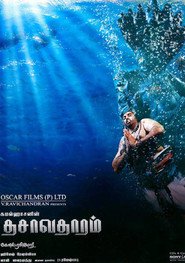
Dasavathaaram Full Story Explained (2008)
Imagine one actor playing ten different roles in a single movie. That is exactly what Kamal Haasan does in Dasavathaaram, a 2008 Tamil epic science fiction action film. He plays a 12th-century priest, a modern scientist, a Japanese fighter, an American mercenary, and even US President George W. Bush. The story jumps across centuries and continents, connecting a deadly bioweapon, a stolen idol, and the 2004 Indian Ocean tsunami. Directed by K. S. Ravikumar and co-starring Asin, this film became the first South Indian movie to earn over ₹200 crore worldwide. It is a wild, emotional, and thought-provoking ride about fate, faith, and the chaos of life.
A priest drowns with God
In the 12th century, a devout Vaishnavite priest named Rangarajan Nambi refuses to let King Kulothunga II destroy a sacred Vishnu idol. The king orders Nambi to be tied to the idol and thrown into the sea. Nambi drowns, but his sacrifice sets the stage for a story that spans 800 years. The idol sinks to the ocean floor, waiting to be found again.
Full Plot
The film opens in the 12th century. King Kulothunga II, a Chola emperor, orders the destruction of a Vishnu idol. A Vaishnavite priest named Rangarajan Nambi refuses to obey. The king has Nambi tied to the idol and thrown into the sea. Nambi drowns, but the idol sinks to the ocean floor.
Jump to 2004. Govindarajan Ramaswamy is a Tamil American biotechnologist working in the United States. His boss, Dr. Sethu, has created a synthetic virus as a bioweapon. When a lab monkey dies after eating the virus, Govind realizes how deadly it is. He discovers that Dr. Sethu plans to sell the virus to terrorists. Govind steals the only vial and runs away. During the escape, the vial accidentally gets shipped to India inside a package.
Govind follows the package to Chidambaram, Tamil Nadu. The package reaches an elderly woman named Krishnaveni, who is mentally unstable. She hides the vial inside a Vishnu idol in her home. Govind arrives and tries to retrieve it, but Krishnaveni's granddaughter Andal thinks he is trying to steal the idol. Meanwhile, Christian Fletcher, an ex-CIA mercenary, is hired to retrieve the virus. He kills Govind's friend Suresh and his wife Yuka. Fletcher follows Govind to India.
Multiple subplots unfold. Yuka's brother Shingen, a Japanese martial artist, arrives to avenge her death. Telugu police officer Balram Naidu investigates Govind and labels him a terrorist. The vial gets accidentally swapped with a medicine cooler belonging to Avatar Singh, a Punjabi singer with throat cancer. A social activist named Vincent Poovaraghan and a giant tailor named Khalifullah Khan also get involved. Everyone is chasing the same small vial.
Fletcher takes hostages and demands the virus. After a series of chases and confrontations, the vial ends up back inside the Vishnu idol. Govind learns that sodium chloride can weaken the virus. He decides to immerse the vial in the ocean. A final fight breaks out at a construction site near the coast. Fletcher grabs the vial and swallows the virus. But then the 2004 Indian Ocean tsunami hits. The massive wave kills Fletcher and washes the virus away.
Govind, Andal, and others survive. Andal believes the tsunami was divine intervention. Govind questions why so many innocent people had to die. They confess their love for each other. Govind is honored at a global event attended by world leaders. The final shot shows the Vishnu idol washed ashore, completing the cycle that began in the 12th century.
Characters
Govindarajan Ramaswamy
Played by Govind
A Tamil American biotechnologist who discovers a deadly bioweapon. He steals the vial to prevent it from falling into terrorist hands. Govind is rational, brave, and determined. He survives the tsunami and is honored for his efforts.
Christian Fletcher
An ex-CIA mercenary hired to retrieve the virus. He is ruthless and kills anyone in his way, including Govind's friend and his wife. Fletcher swallows the virus during the final fight but dies when the tsunami hits.
Andal
Krishnaveni's great-granddaughter and Govind's love interest. She is devout and protective of her family's Vishnu idol. At first she distrusts Govind, but later helps him. She survives the tsunami and believes it was divine intervention.
Rangarajan Nambi
A 12th-century Vaishnavite priest who refuses to let King Kulothunga II destroy a Vishnu idol. He is executed by drowning along with the idol. His sacrifice sets the thematic backdrop for the entire story.
Shingen Narahashi
A Japanese martial artist and Yuka's brother. He arrives in India to avenge his sister's death at Fletcher's hands. He protects Govind during the final fight. His fate after the tsunami is not shown.
Balram Naidu
A Telugu police officer who initially labels Govind as a terrorist. He pursues the vial and Fletcher throughout the film. He is determined and by-the-book. His fate after the tsunami is not shown.
Themes
Faith vs. Reason
The film constantly pits religious faith against scientific rationality. Andal sees the tsunami as divine intervention, while Govind sees it as a natural disaster. The movie does not take sides, leaving the audience to decide.
The Butterfly Effect
Small actions in the 12th century lead to massive consequences in 2004. Nambi's sacrifice, the sinking of the idol, and the hiding of the vial all connect. The film shows how tiny events can change the world.
Sacrifice for the Greater Good
Nambi sacrifices his life to protect the idol. Govind risks everything to stop the bioweapon. Both characters put the safety of others above their own lives. The film honors this kind of selflessness.
Chaos and Destiny
The film suggests that life is a mix of random chaos and predetermined fate. The tsunami is both a natural disaster and a divine solution. Characters argue about whether events are planned or accidental.
Ending Explained
The ending of Dasavathaaram is both emotional and philosophical. After the tsunami hits, Govind and Andal survive along with a few others. The virus is destroyed because Fletcher swallowed it and died in the wave. Govind is relieved but also troubled. He looks at the destruction around him and questions why so many innocent people had to die. Andal believes the tsunami was God's way of stopping the virus. Govind, as a scientist, cannot accept that a loving God would kill thousands to save millions. They argue but eventually confess their love for each other. The film then shows Govind being honored at a global event. World leaders applaud him for his bravery. In the final shot, the camera reveals the Vishnu idol from the 12th century washed ashore, covered in sand. The idol has returned after 800 years. The message is clear: sacrifice, faith, and science can all coexist. The director leaves the audience with a question: was the tsunami a miracle or a tragedy? The answer is left for each viewer to decide.
Frequently Asked Questions
Kamal Haasan plays ten different roles in the film. They include a 12th-century priest, a modern scientist, a Japanese fighter, an American mercenary, a Telugu police officer, a Punjabi singer, a centenarian woman, a social activist, a giant tailor, and US President George W. Bush.
No, Dasavathaaram is a fictional story. However, it uses real historical events like the 2004 Indian Ocean tsunami and the reign of King Kulothunga II as backdrops. The characters and the bioweapon plot are entirely fictional.
The Vishnu idol connects the 12th-century prologue to the modern story. Nambi dies protecting it, and 800 years later, the vial is hidden inside it. The idol represents faith, sacrifice, and the idea that some things are worth dying for.
The film required extensive prosthetic makeup for Kamal Haasan's ten roles. Each makeup session took up to nine hours. The film was also shot in multiple countries including the US, Japan, Malaysia, and Thailand. The post-production work, including the tsunami visual effects, took a long time.
Dasavathaaram was a massive commercial success. It became the first South Indian film to earn over ₹200 crore worldwide. It was the highest-grossing Tamil film of all time until it was surpassed by Enthiran in 2010.