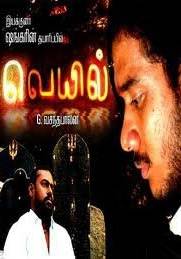
Veyil Full Story Explained (2006)
Veyil is a 2006 Tamil drama film directed by Vasanthabalan. It stars Pasupathy, Bharath, Bhavana, and Priyanka Nair. The story follows two brothers, Murugesan and Kathir, growing up in a small Tamil village. Murugesan runs away from home as a teenager after his father humiliates him. He returns 20 years later as a broken man. His younger brother Kathir welcomes him with open arms. But Murugesan struggles with guilt, shame, and a father who still rejects him. This is a raw, emotional story about failure, family, and sacrifice. The film won several awards for its honest storytelling and powerful performances.
A boy tied to a tree
Murugesan is a young boy living in a Tamil village. He goes to watch a movie without permission. His father catches him smoking a cigarette. In front of everyone, his father ties him to a tree and beats him. Murugesan feels completely humiliated. That night, he steals money from home and runs away.
Full Plot
Veyil is the story of two brothers, Murugesan and Kathir, set in a small Tamil village. As children, they are close and playful. Their father is strict and often beats them. One day, young Murugesan goes to watch a movie without telling anyone. His father catches him smoking a cigarette. In front of the entire village, the father ties Murugesan to a tree and beats him badly. Murugesan feels completely humiliated. That night, he steals some money from home and runs away. He is only a teenager.
Murugesan travels to a nearby town and starts working at a small cinema hall. He grows up into a man, played by actor Pasupathy. He falls in love with a woman named Thangam, played by Bhavana. They are happy together. But Thangam's father disapproves of their relationship. He refuses to let them marry. In anger and despair, Thangam commits suicide. Murugesan is shattered. He loses the only person he loved. The cinema hall also closes down. Murugesan has no job and no hope. He becomes an alcoholic and lives a miserable life.
After 20 years, Murugesan decides to return to his village. He is a broken man with nothing. He reaches his old home. But his father refuses to let him enter. The father is still angry about the stolen money and the years of absence. Murugesan stands outside, rejected. His mother cries but cannot convince her husband. Then Kathir, Murugesan's younger brother, arrives. Kathir is now a successful man. He runs an advertising agency and a small recording studio. He is played by actor Bharath. Kathir forces their father to accept Murugesan back. He brings his brother into the house with love.
For a while, the family is happy again. Murugesan works with Kathir. He feels loved and wanted. But trouble comes when rivals attack Kathir's recording studio. They beat Kathir badly. Murugesan sees his brother hurt and decides to take revenge. He tracks down the goons and fights them. The fight is brutal and bloody. Murugesan uses a knife and kills several men. In the final struggle, he is stabbed and dies. His sacrifice protects Kathir from future attacks. The father finally breaks down and cries, realizing how much Murugesan loved the family. The film ends with Murugesan's death, but his love and sacrifice live on.
Characters
Murugesan
Murugesan is the elder brother. As a child, he runs away from home after his father humiliates him. He grows up alone, falls in love, loses his love to suicide, and becomes an alcoholic. He returns home after 20 years as a failure. In the end, he sacrifices his life to protect his younger brother Kathir.
Kathir
Kathir is Murugesan's younger brother. He grows up to be a successful man running an advertising agency and a recording studio. He loves his brother deeply and brings him back home after 20 years. He is attacked by rivals but survives. He mourns Murugesan's sacrifice at the end.
Thangam
Thangam is the woman Murugesan falls in love with. She loves him back but her father disapproves. When her father refuses to let them marry, she commits suicide in anger. Her death breaks Murugesan and sends him into a spiral of alcoholism and despair.
Father
The father is a strict and angry man. He beats young Murugesan publicly for smoking, which causes Murugesan to run away. He rejects Murugesan when he returns after 20 years. Only after Murugesan's death does he break down and realize his son's love.
Mother
The mother is loving but helpless. She cannot stop her husband from beating Murugesan. She cries when Murugesan returns but cannot convince her husband to accept him. She loves both her sons deeply and suffers silently.
Themes
Failure and Redemption
Murugesan is a failure in every way. He loses his love, his job, and his dignity. But his final act of sacrifice redeems him. The film shows that even a person who fails at everything can be a hero through love and sacrifice.
Family and Forgiveness
The story is about a family torn apart by anger and pride. The father cannot forgive Murugesan for years. Kathir forgives and loves unconditionally. In the end, the father finally breaks down. The film shows that forgiveness is hard but necessary for healing.
Brotherly Love
The bond between Murugesan and Kathir is the heart of the film. Kathir never stops loving his brother, even after 20 years. Murugesan gives his life to protect Kathir. Their love is pure and selfless.
The Cost of Violence
Murugesan chooses violence to protect his brother. He kills several men and dies himself. The film shows that violence has a heavy cost. It does not glorify the fight — it shows the blood and pain.
Ending Explained
In the final scenes, Murugesan tracks down the goons who attacked his brother Kathir. He fights them in a brutal street battle. He uses a knife and kills several men. But in the struggle, he is stabbed fatally. He dies on the street, alone. Kathir arrives too late to save him. The father, who had rejected Murugesan for years, finally breaks down and cries. He realizes that Murugesan loved the family deeply and gave his life to protect them. The mother mourns her son. The film ends with a sense of loss but also of love. Murugesan, who failed at everything in life, succeeded in the one thing that mattered — protecting his brother. The director leaves the audience with a message: love and sacrifice are what truly define a person, not success or failure.
Frequently Asked Questions
No, Veyil is not based on a true story. It is an original story written by director Vasanthabalan. However, the emotions and family conflicts feel very real and relatable.
The music for Veyil was composed by G.V. Prakash Kumar. It was his debut as a music composer. The songs and background score were praised for blending well with the film's emotional tone.
Veyil won several Tamil film awards. It won the Best Regional Film award at the 54th National Film Awards. Pasupathy won critical acclaim for his performance. The film was praised for its realistic storytelling and direction.
Murugesan ran away because his father tied him to a tree and beat him in public. He was humiliated for watching a movie and smoking a cigarette. He stole money and left home that night, unable to face his father again.
Veyil means 'sunshine' or 'sun's heat' in Tamil. The title reflects the harsh, hot setting of the village and the emotional heat of the family conflicts. It also symbolizes the burning love and sacrifice of the elder brother.