Sunil Sikand
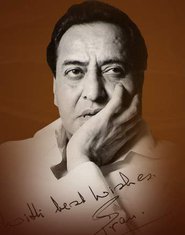
Sunil Sikand is an Indian director, best known for Tamil cinema. Sunil Sikand began their career in 1984. With 30 credits to their name, Sunil Sikand remains one of the most prolific and celebrated talents in the industry. Sunil Sikand is one of the most closely watched talents of their generation, with a rapidly growing body of acclaimed work.
Career Milestones
Film debut
View film →Highest rated: Farishta (6.8)
View film →Sunil Sikand by the Numbers
If you watched every Sunil Sikand film back-to-back, you'd be at it for roughly 4 hours. Most-paired with Danny Denzongpa — 2 films together.
Filmography
See all 30 credits →Collaboration Network
The Constellation
Top 2 most-paired collaborators. Bubble size and line thickness reflect how many films they share with Sunil Sikand.
Career Analytics
Language Distribution
Films by Decade
Top Co-Actors
See all →Sunil Sikand has worked most frequently with Danny Denzongpa (2 films), and Pran (2 films).

Legacy & Influence
Sunil Sikand is a respected figure in Indian cinema, primarily recognized for his work as a film producer during the 1970s and 1980s. His most significant and enduring contribution is the production of the landmark film 'Sholay' (1975), directed by Ramesh Sippy. As a producer under the banner Sippy Films, Sikand played a crucial financial and managerial role in bringing this ambitious project to fruition. 'Sholay' is widely regarded as a watershed moment in Indian cinematic history, revolutionizing the action-adventure genre, setting new benchmarks in technical craft, storytelling, and box office success. Its iconic status, memorable characters, dialogues, and music have cemented it as a cultural touchstone for generations. Beyond 'Sholay', Sikand's production career included other notable films such as 'Seeta Aur Geeta' (1972) and 'Shaan' (1980), which further solidified his association with high-quality, commercially successful mainstream entertainers. His career trajectory exemplifies the role of the producer as a key architect in the classic Bollywood studio model, providing the infrastructure and support for visionary directors to realize their epic projects. While often operating behind the scenes, his legacy is inextricably linked to the creation of one of Indian cinema's most influential and beloved films, ensuring his name remains an integral part of the industry's historical narrative.